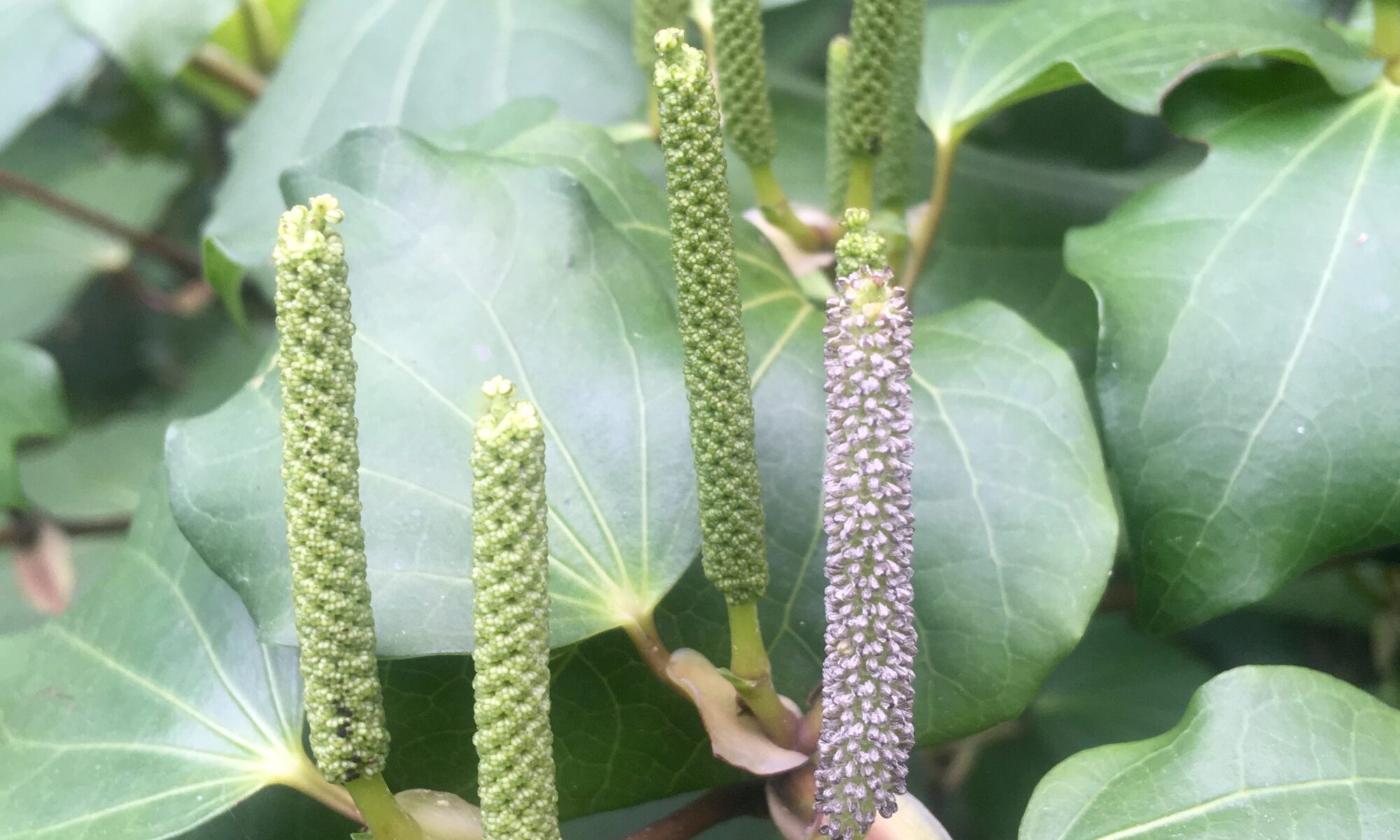
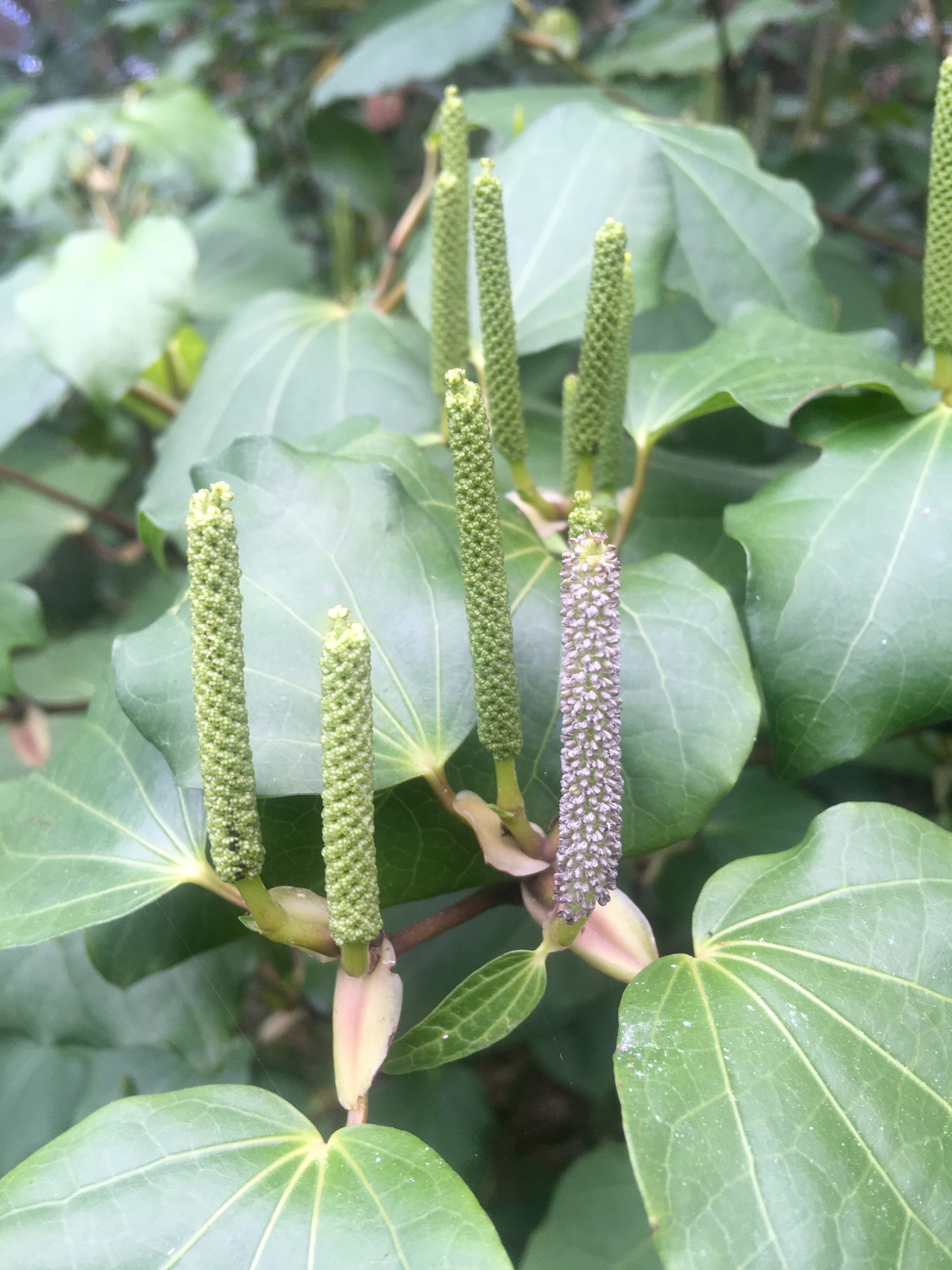
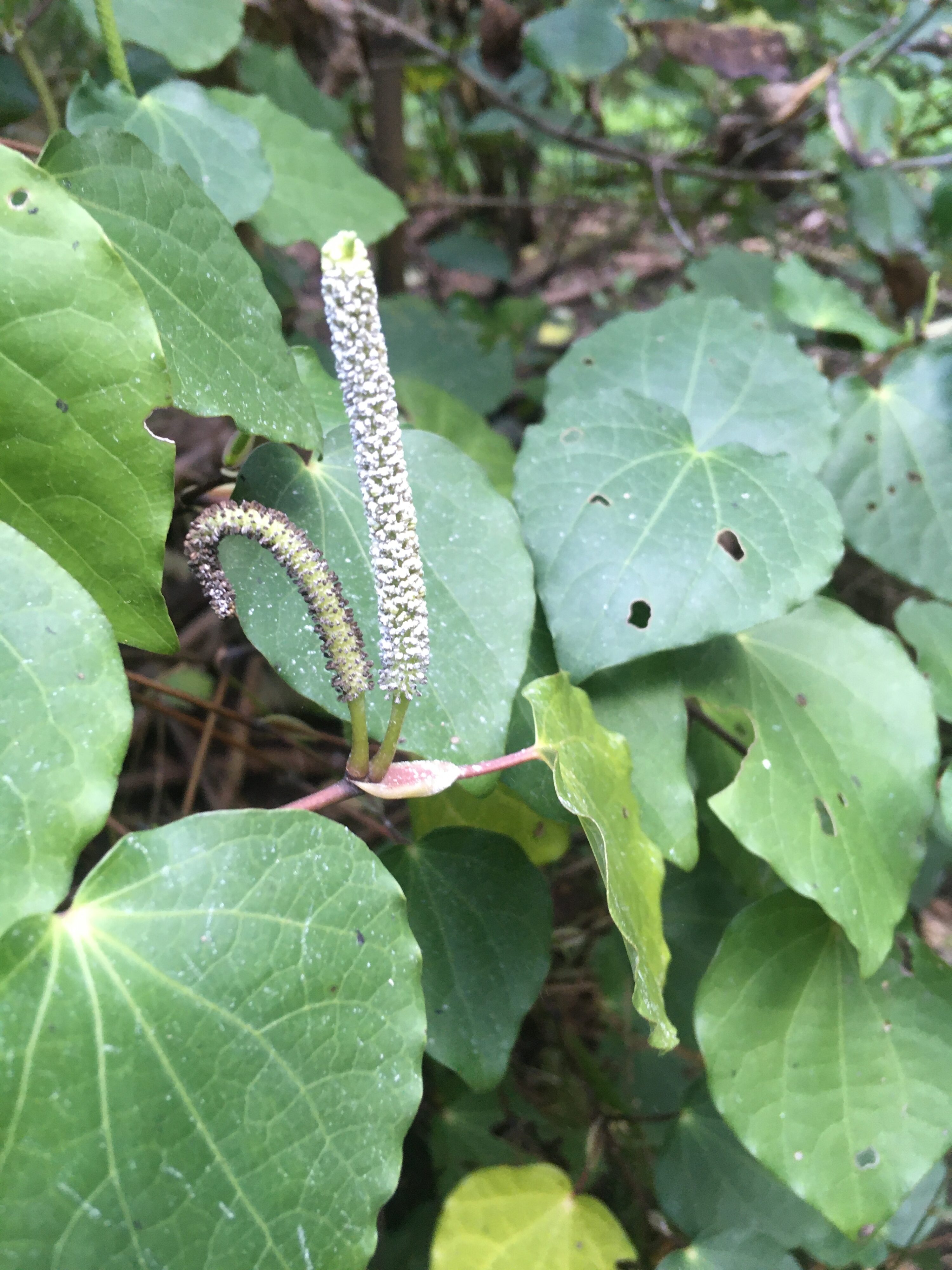
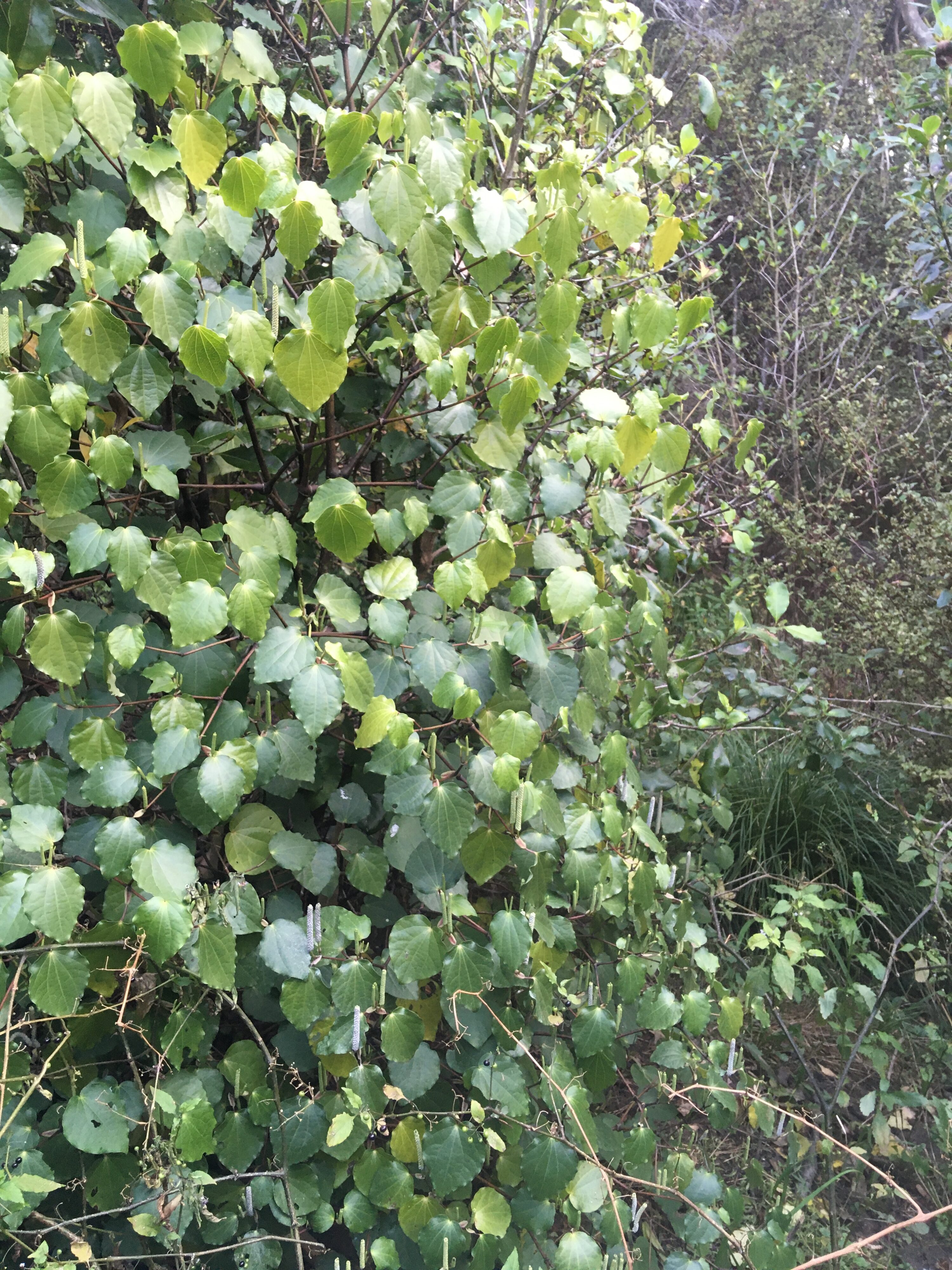
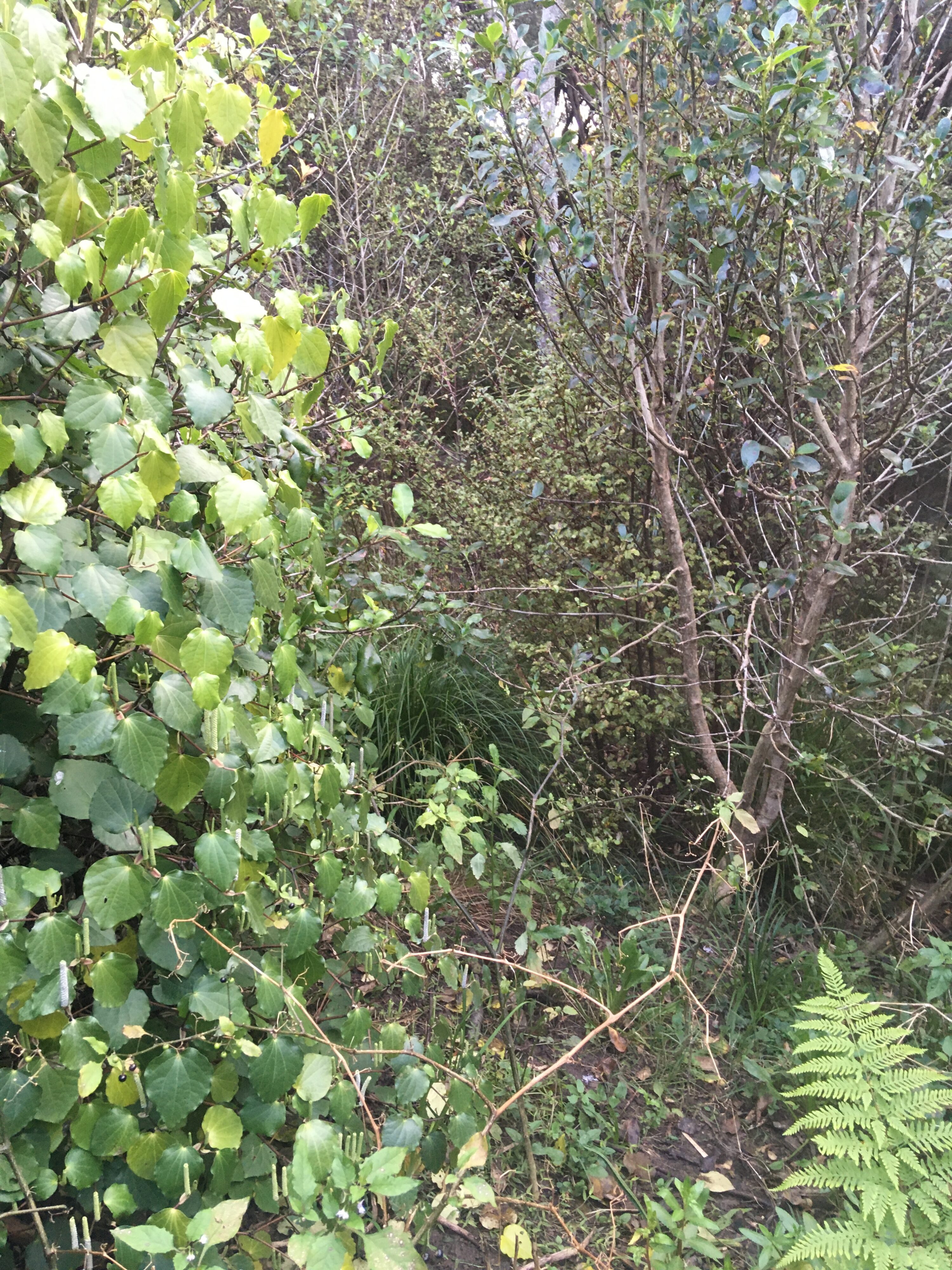
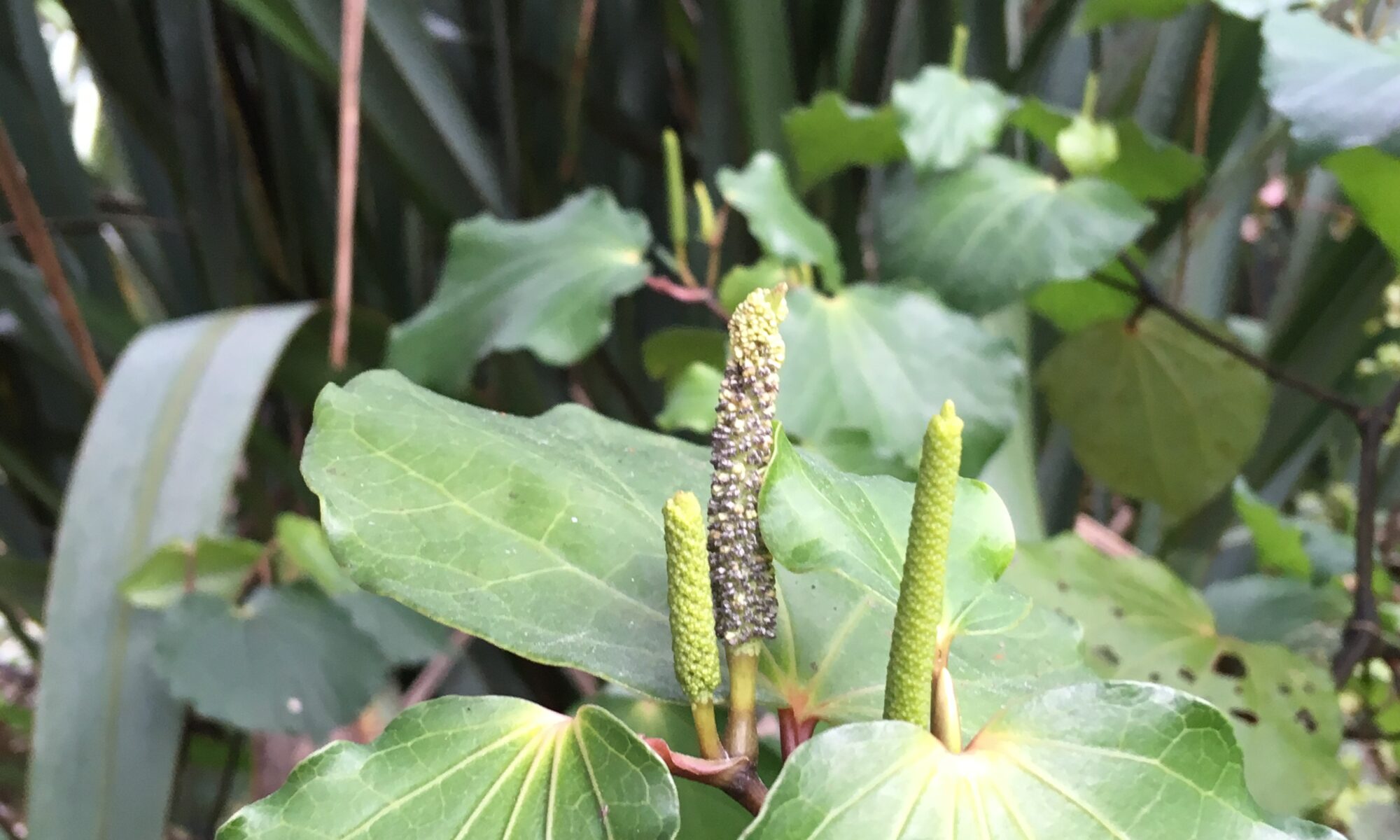
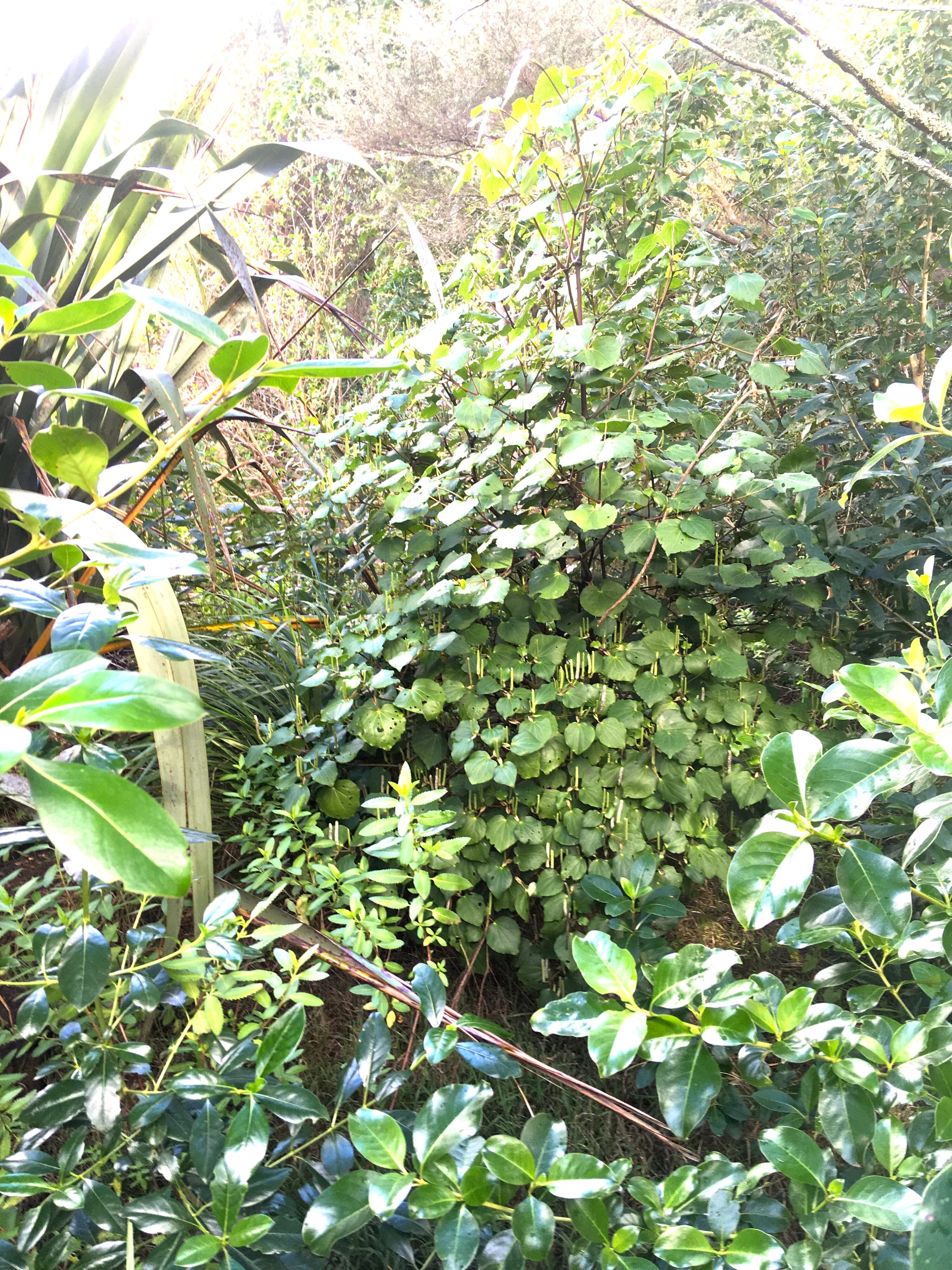
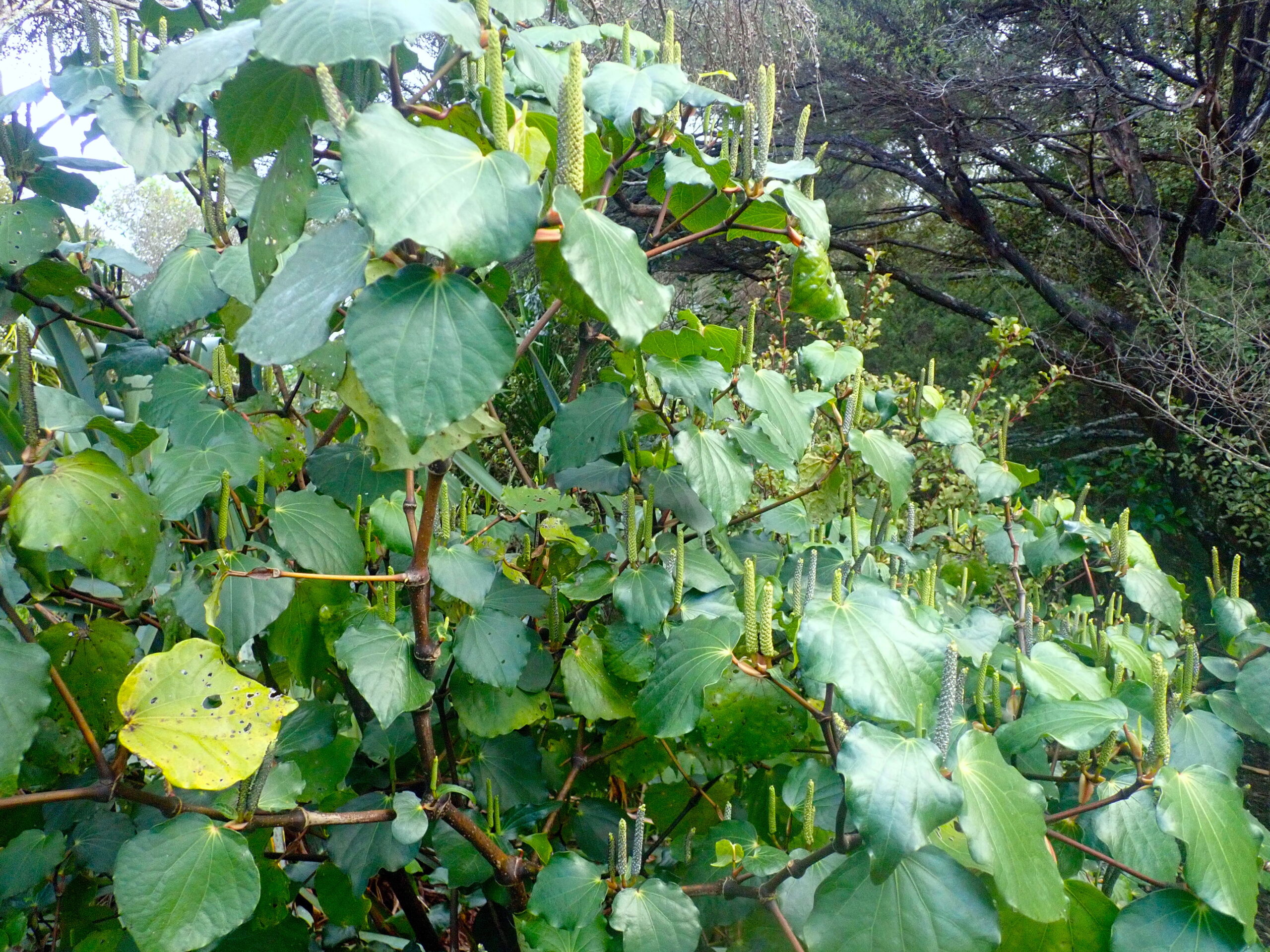
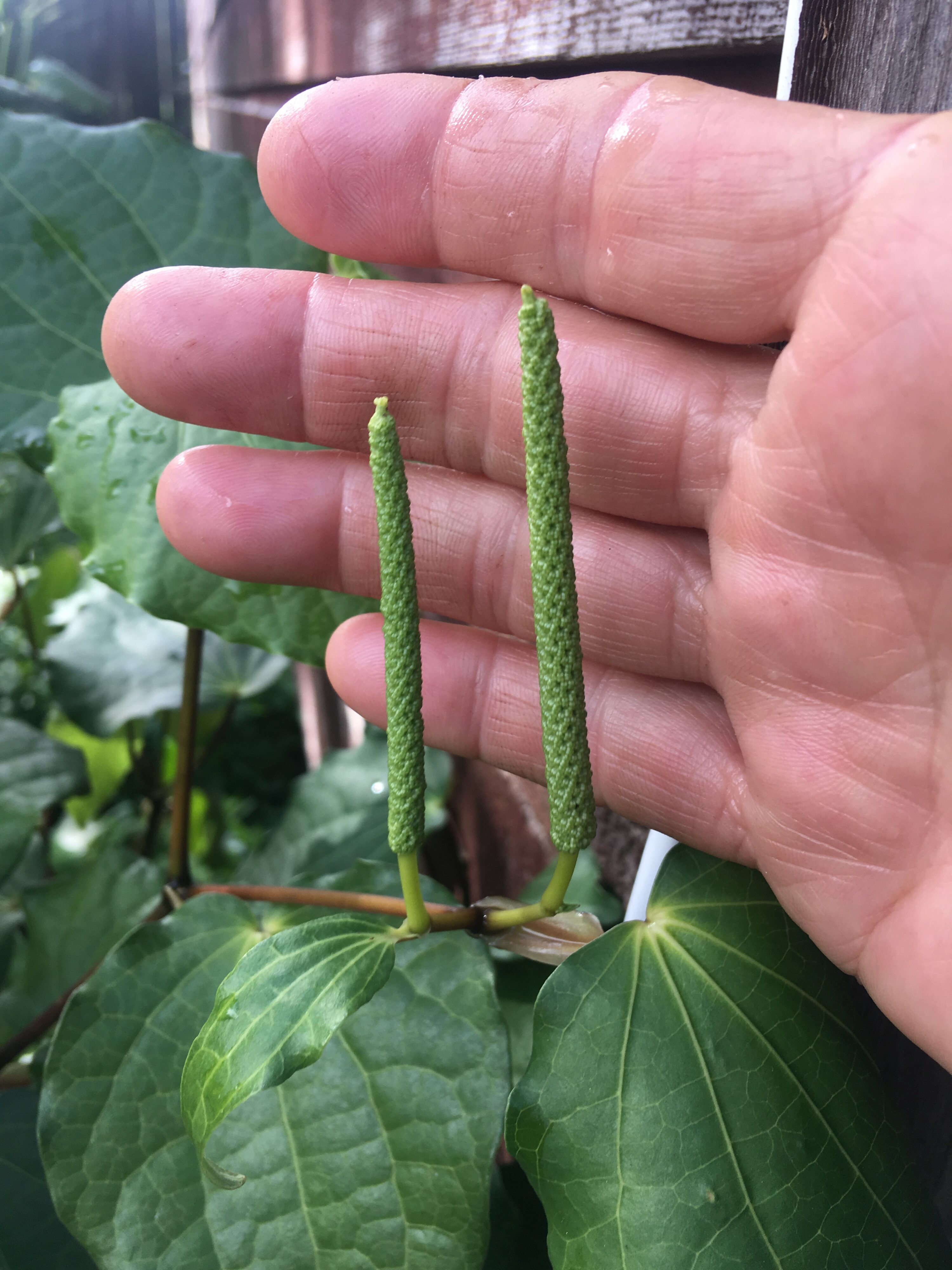
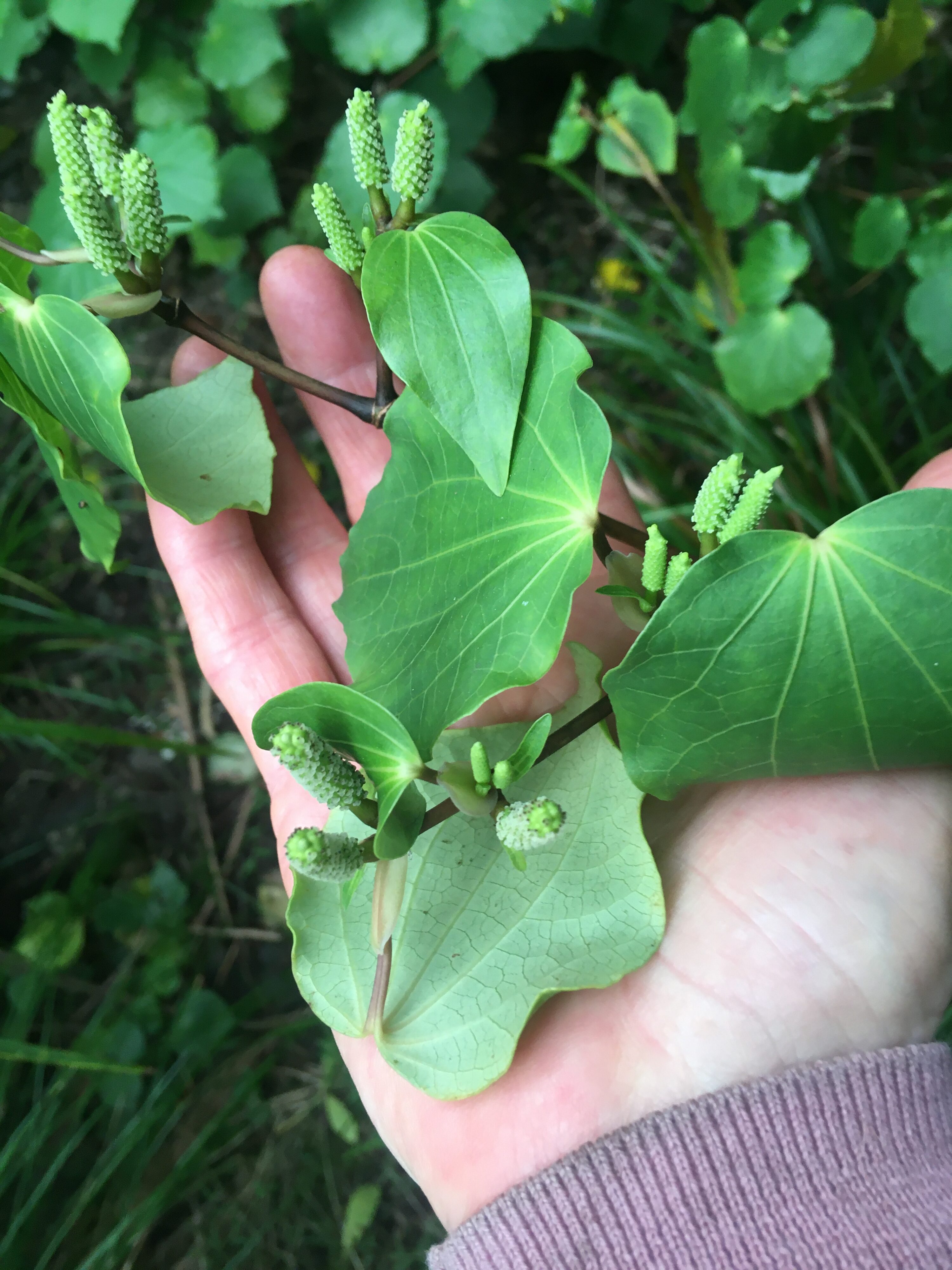
Last week, visiting an area we had freed from honeysuckle and other weeds in 2019, we were delighted to see the first flowering of a male kawakawa.
We were surprised to see it mature so soon after we had planted it in 2020 as a 10 cm high seedling.
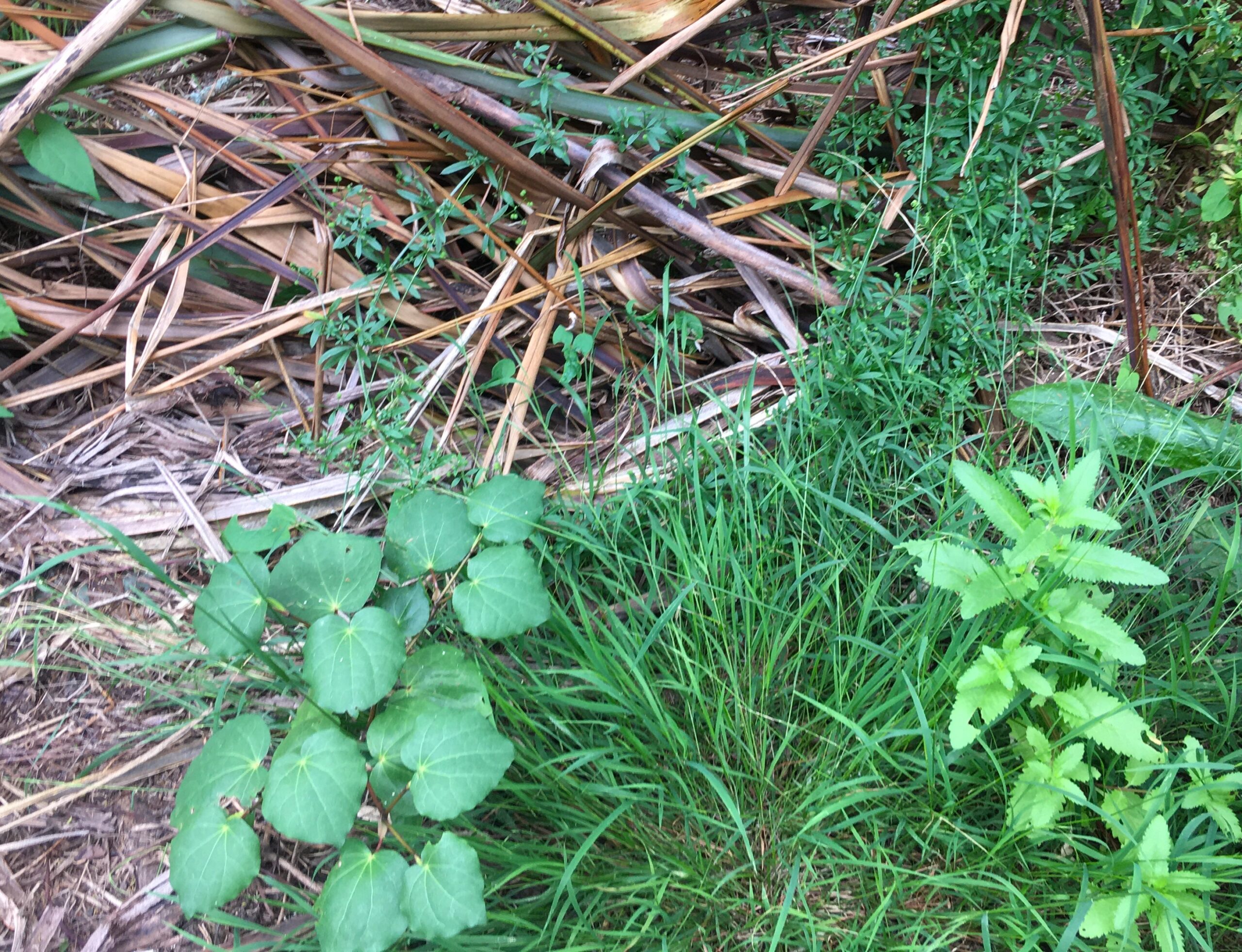
The same tree is pictured below, then 20-30cm high, in December 2020. Beside it are wild native Weeping grass, toatoa, and (behind, on the remnants of a harakeke shade fence) the common harmless weed “cleavers”.
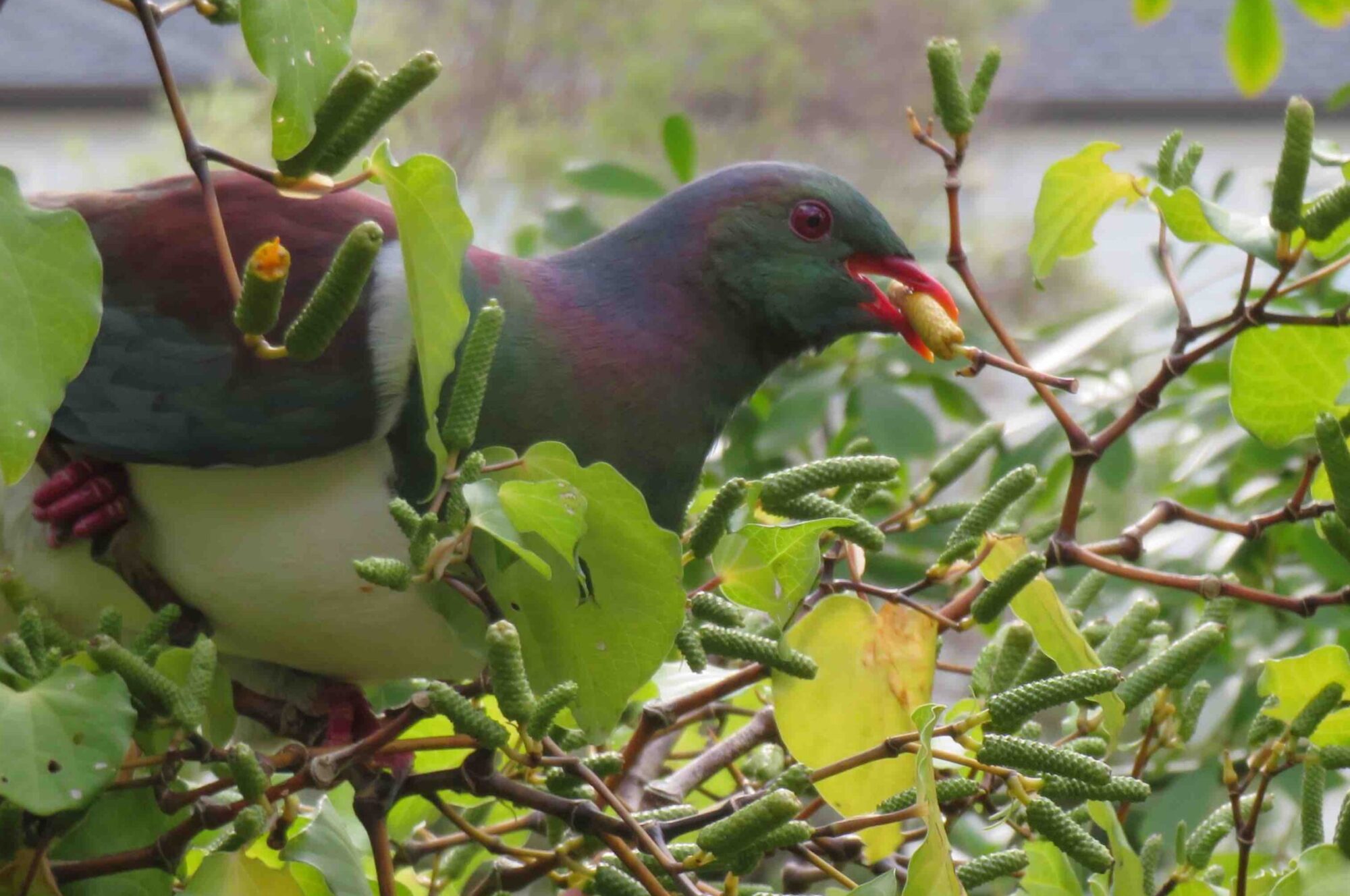
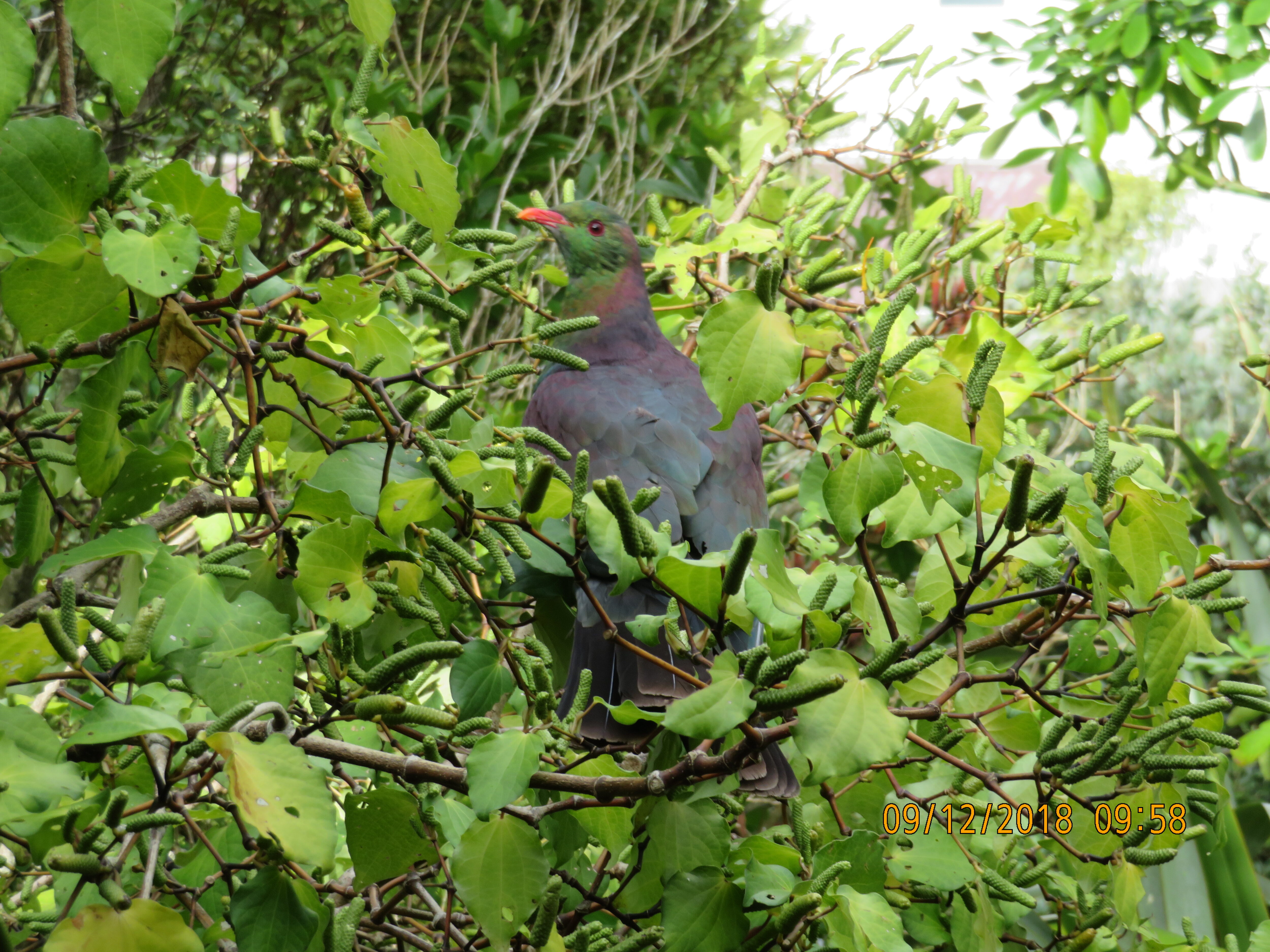
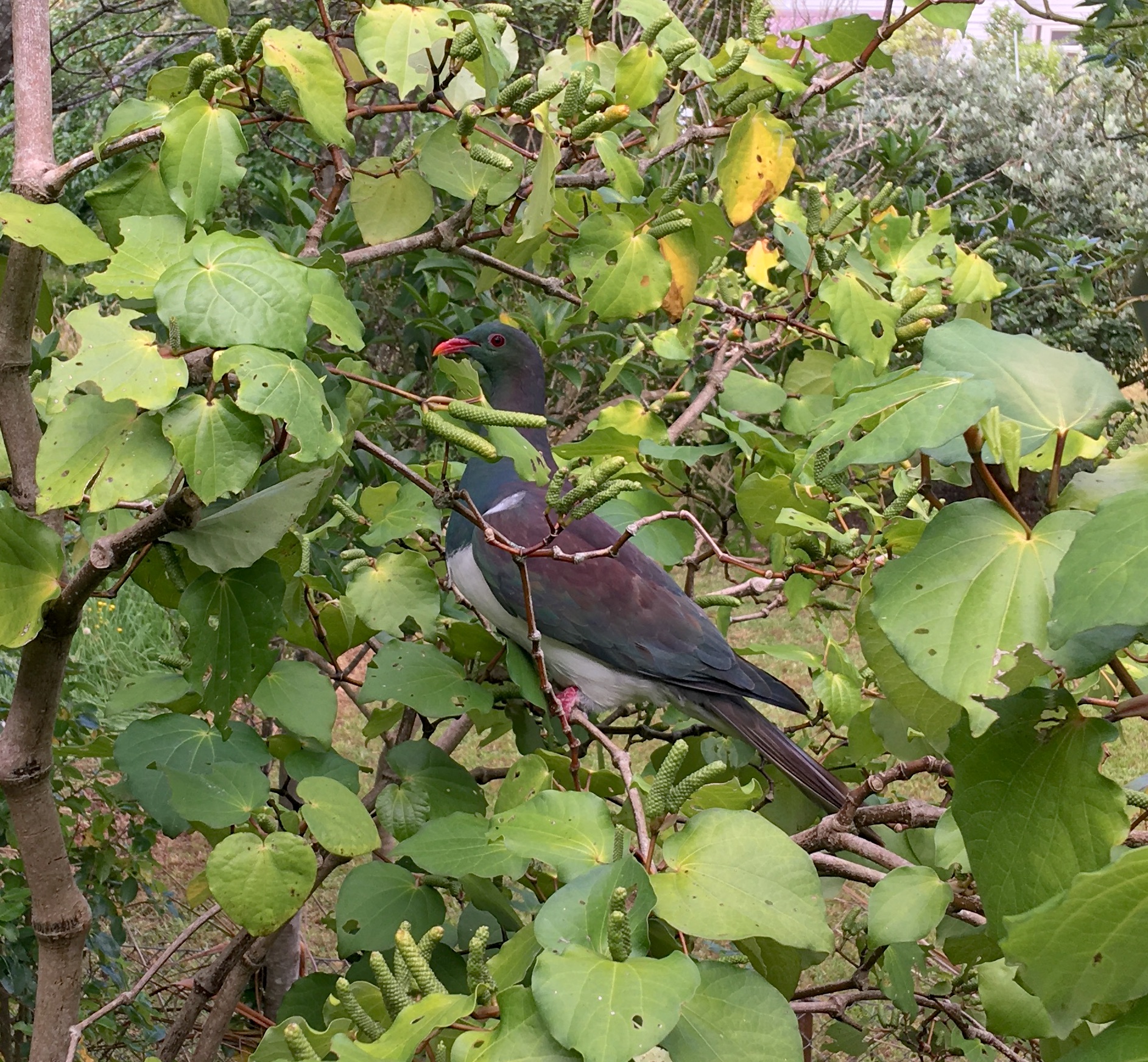
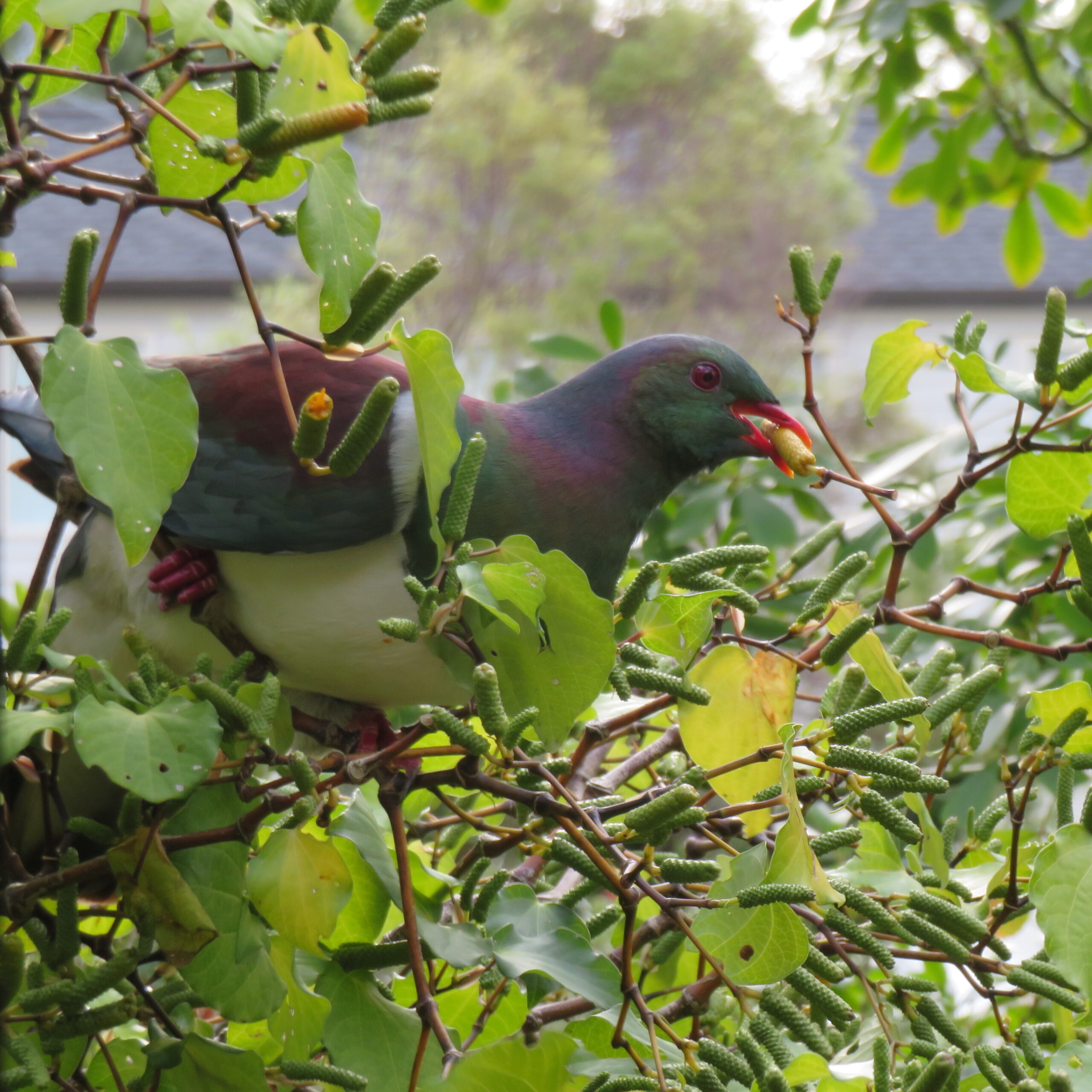
Both in the wild and in our home garden, we love to see the Kawakawa flowers forming each year, the female trees promising to attract kereru once fruit have formed in early Summer.
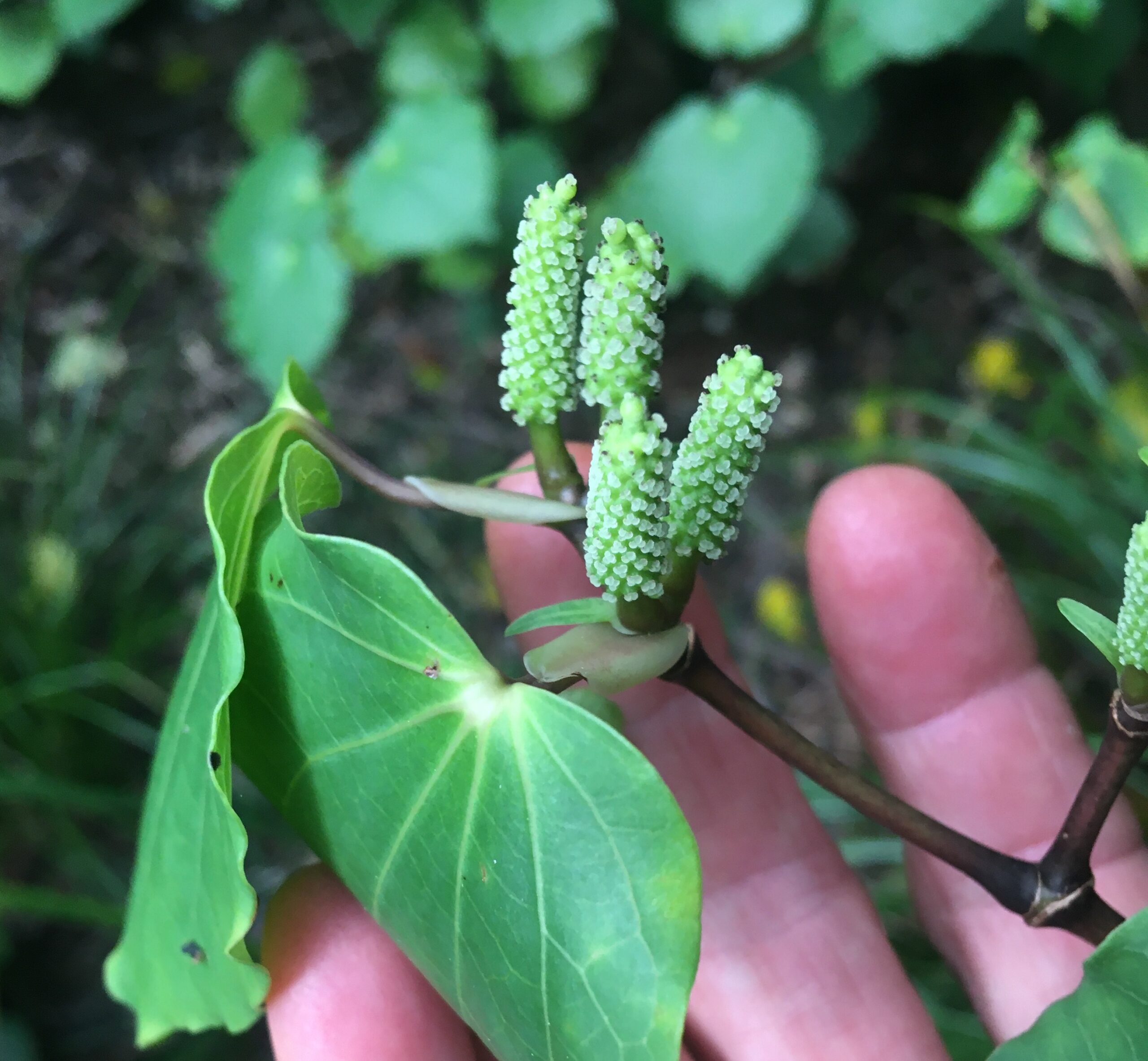
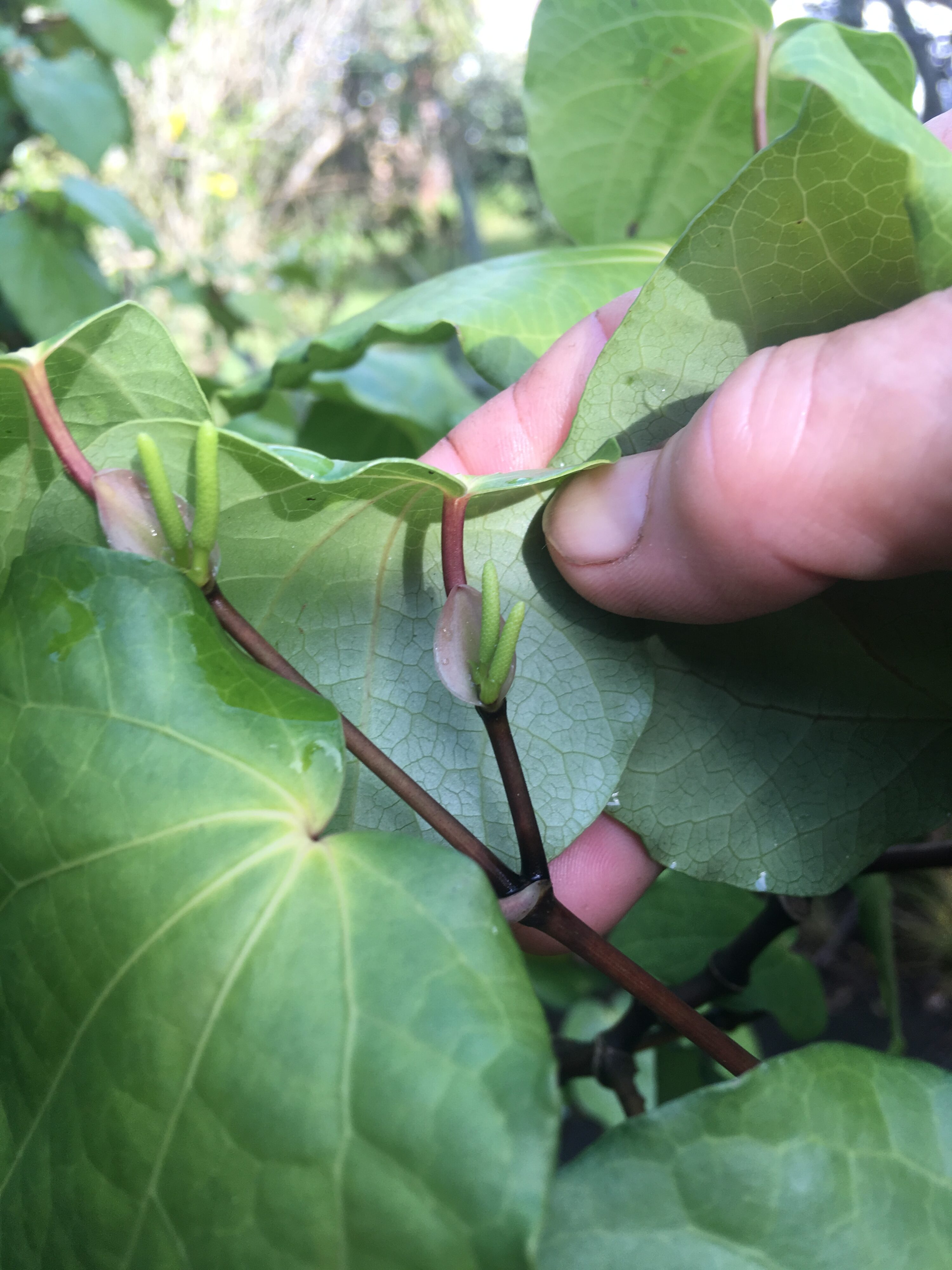
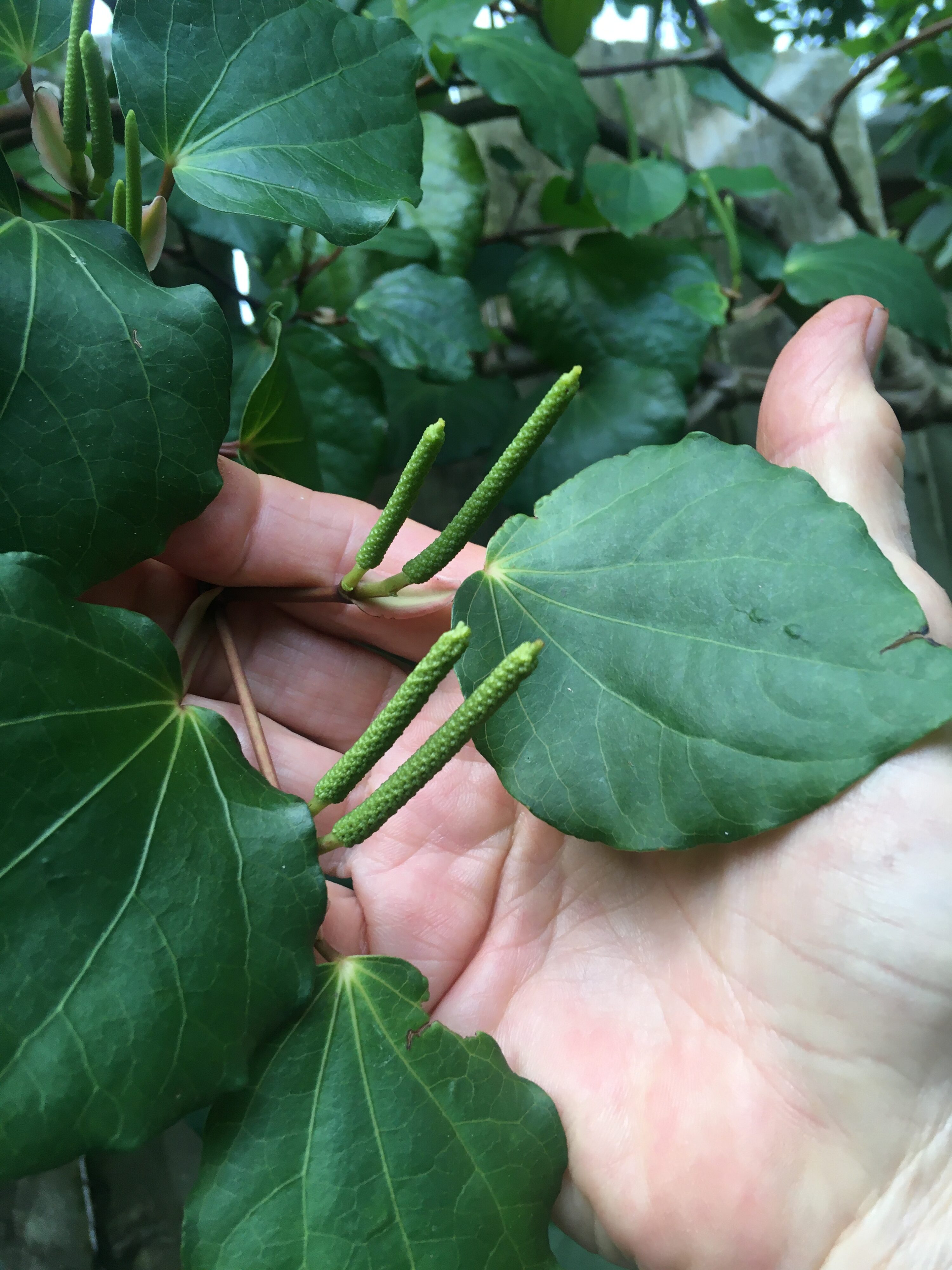
We see two distinct forms in the flowers, because kawakawa is one of those trees that can be either male or female. Both produce long thin flower spikes – the tiny dots are flowers -but only the female produces fruit.
The flower spikes of male trees are longer, thinner and upright, like candlesticks. Below are male kawakawa in various stages of flowering:
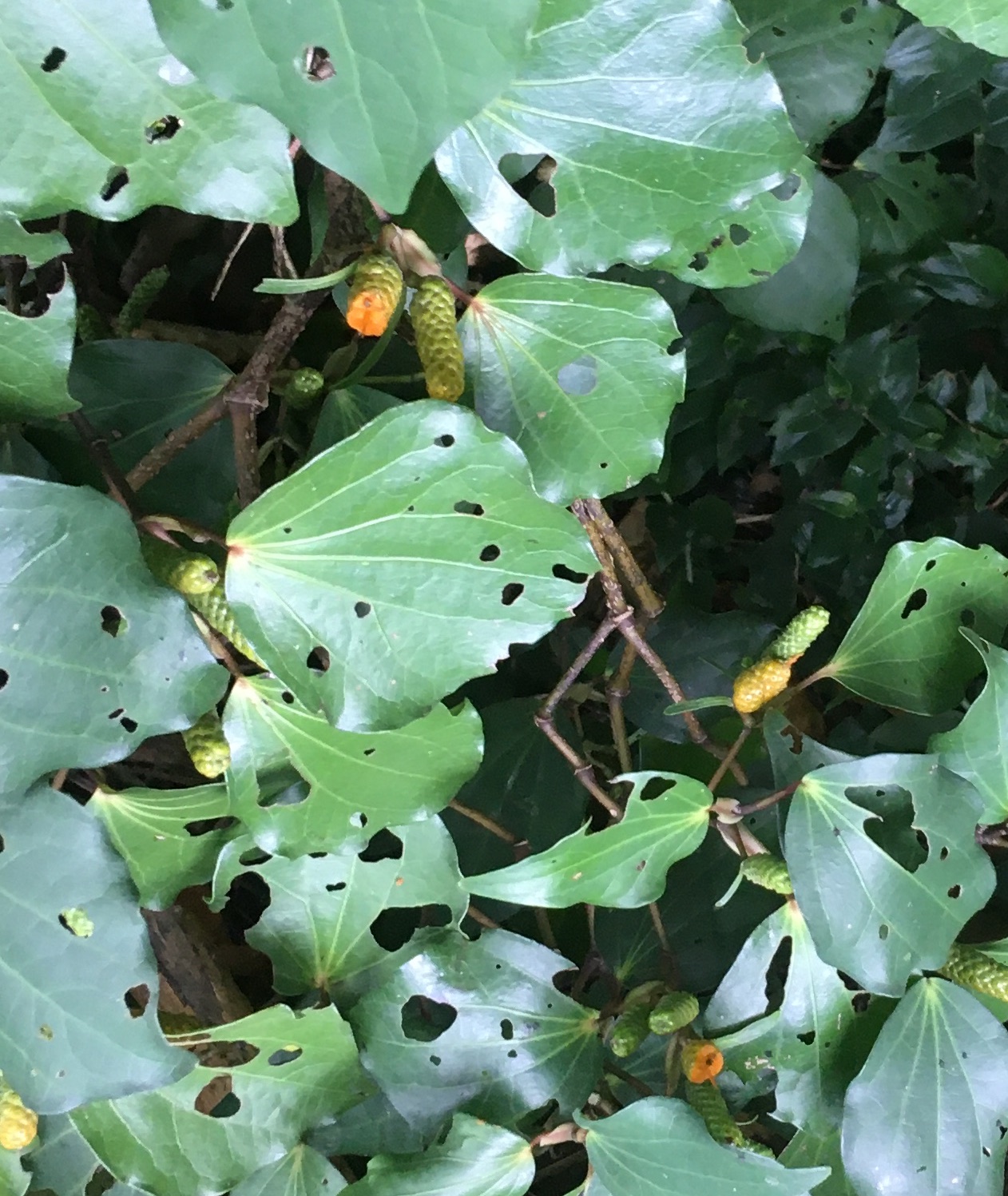
In contrast, the flower spikes on female trees are shorter and stouter, and in Summer will gradually turn entirely orange to become a soft, juicy fruit enjoyed by blackbirds, thrushes, tui and kereru.
Below are female kawakawa trees with fruit in various stages of development:
kereru have already eaten the riper ends of some of these partially ripe fruit
This year we will try to remember to get a good photo of fully ripe fruit. Finding a whole fully ripe fruit in this tree can be difficult, since at least one kereru checks out the unripe crop each year, visiting frequently thereafter to nibble on a few unripe fruit. Once the fruit reach the partially-ripe stage pictured above, one or several kereru visit the tree many times a day, and spend a lot of time in it eating.