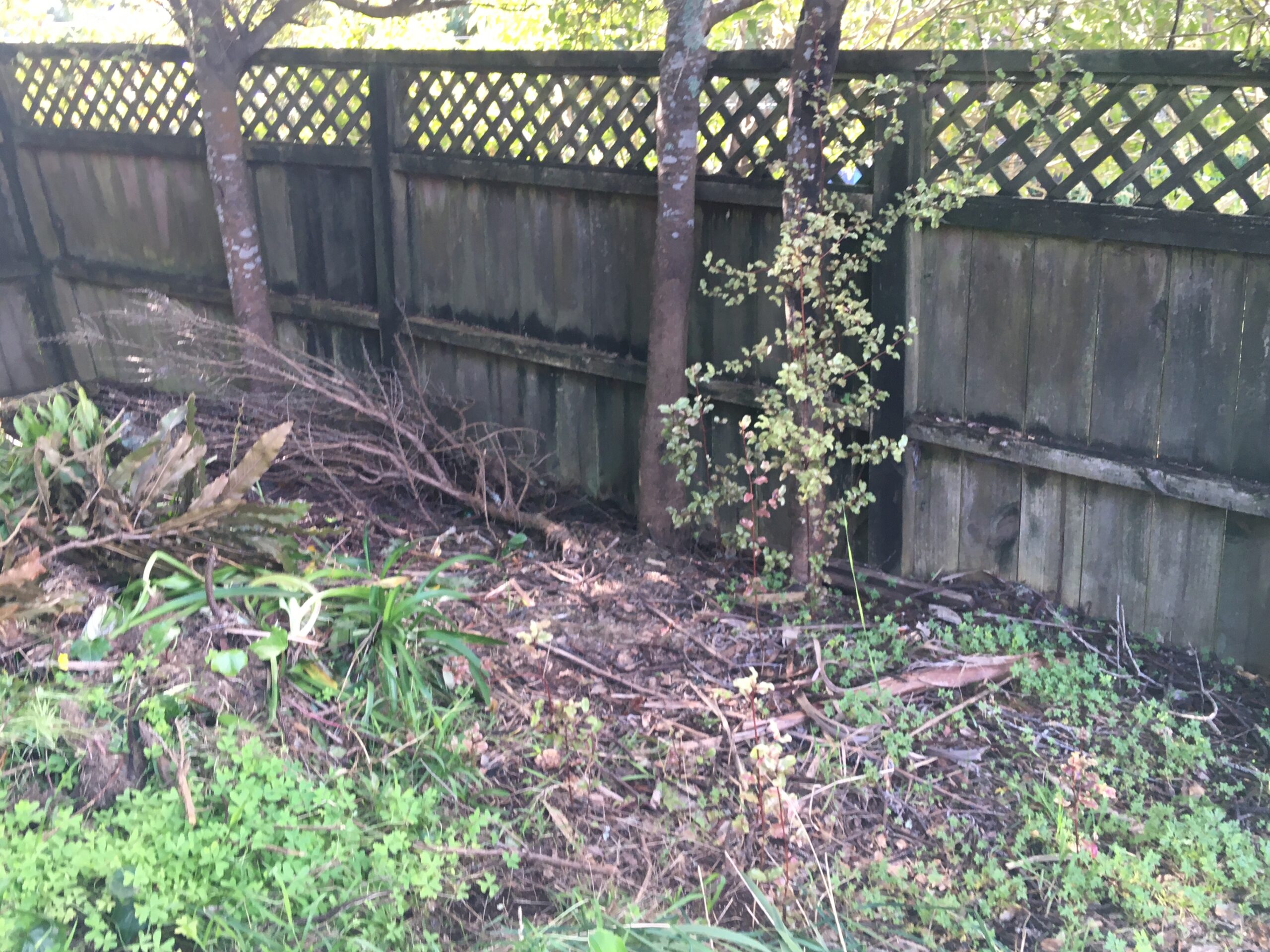
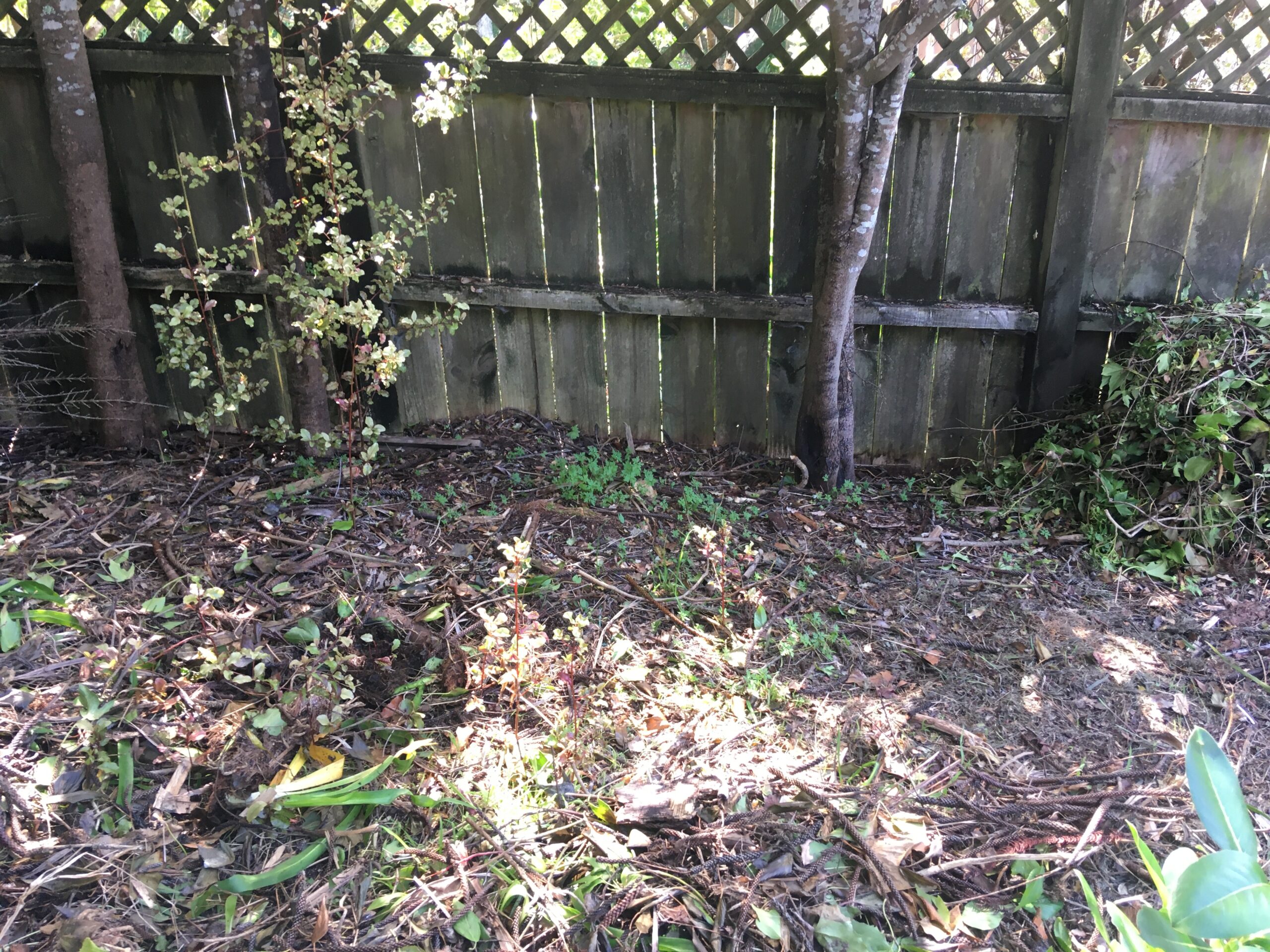
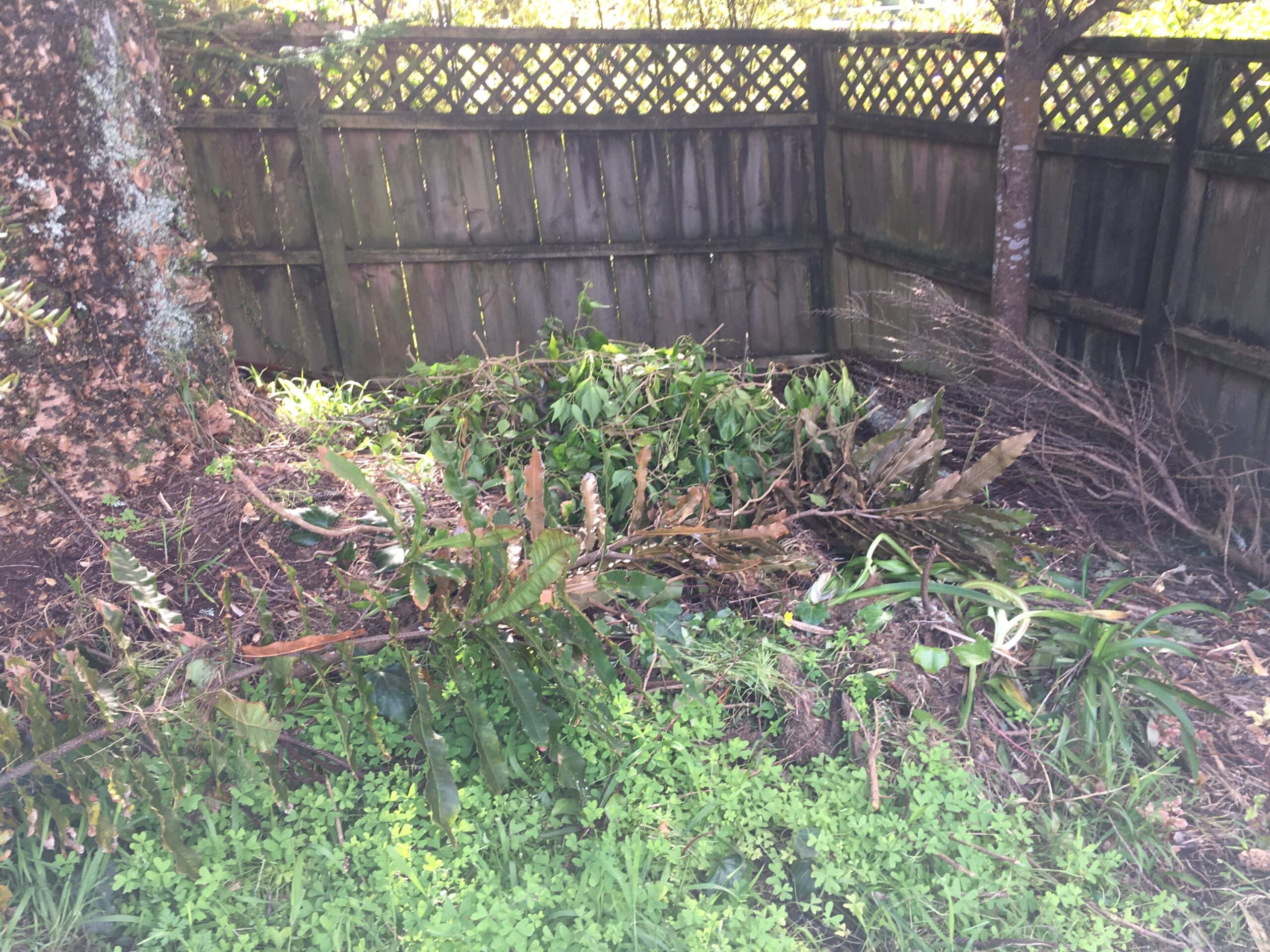
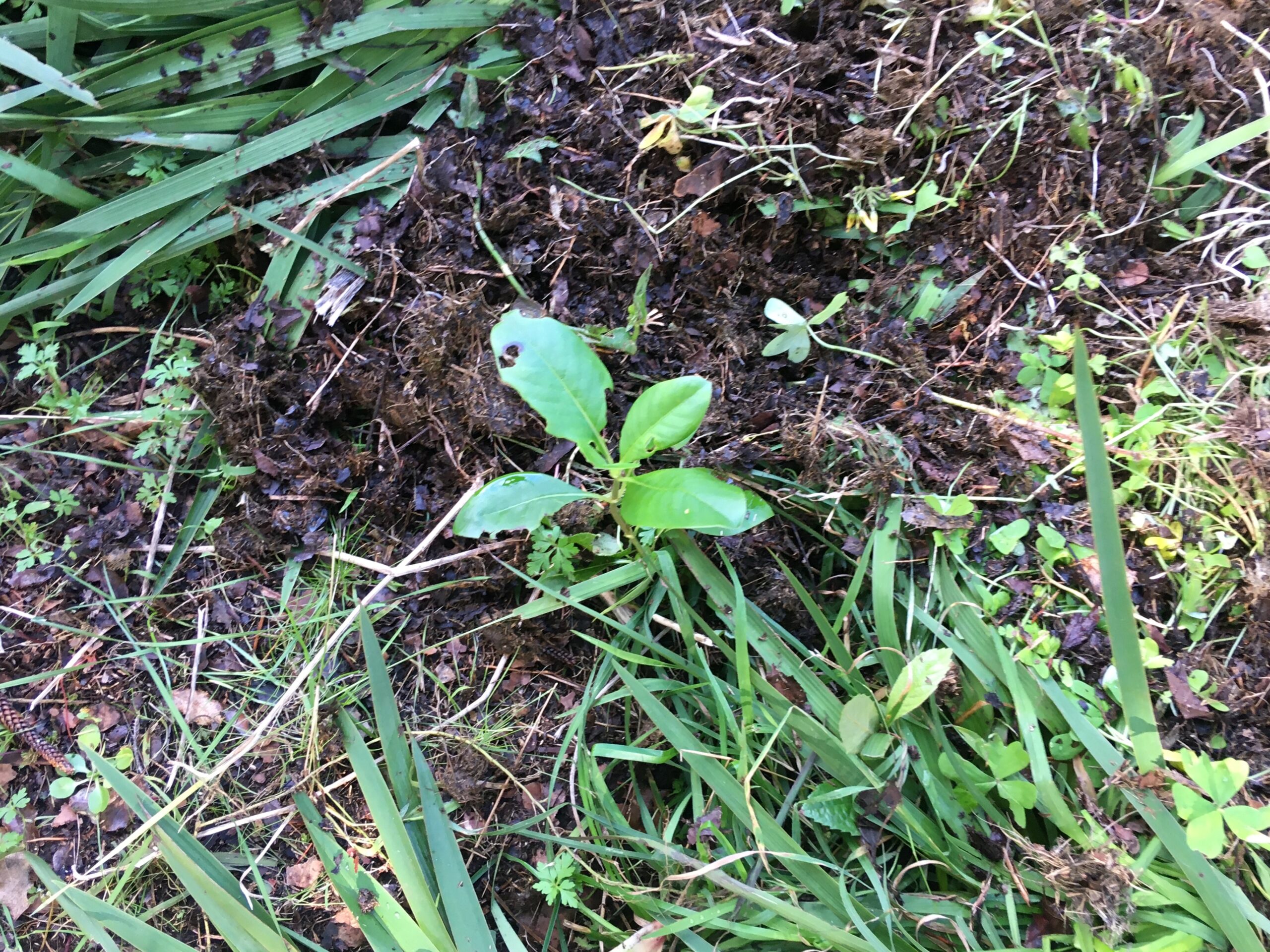
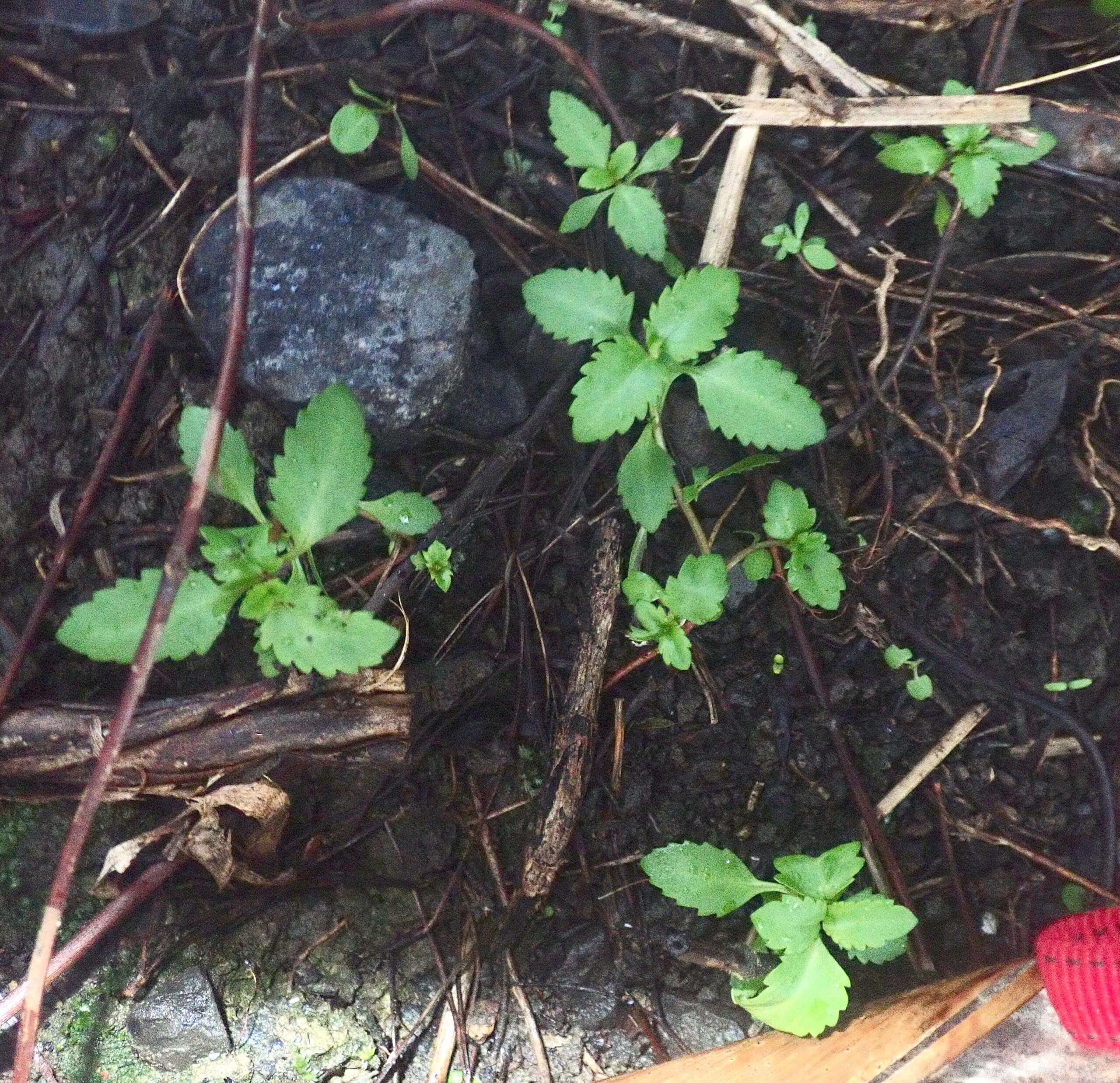
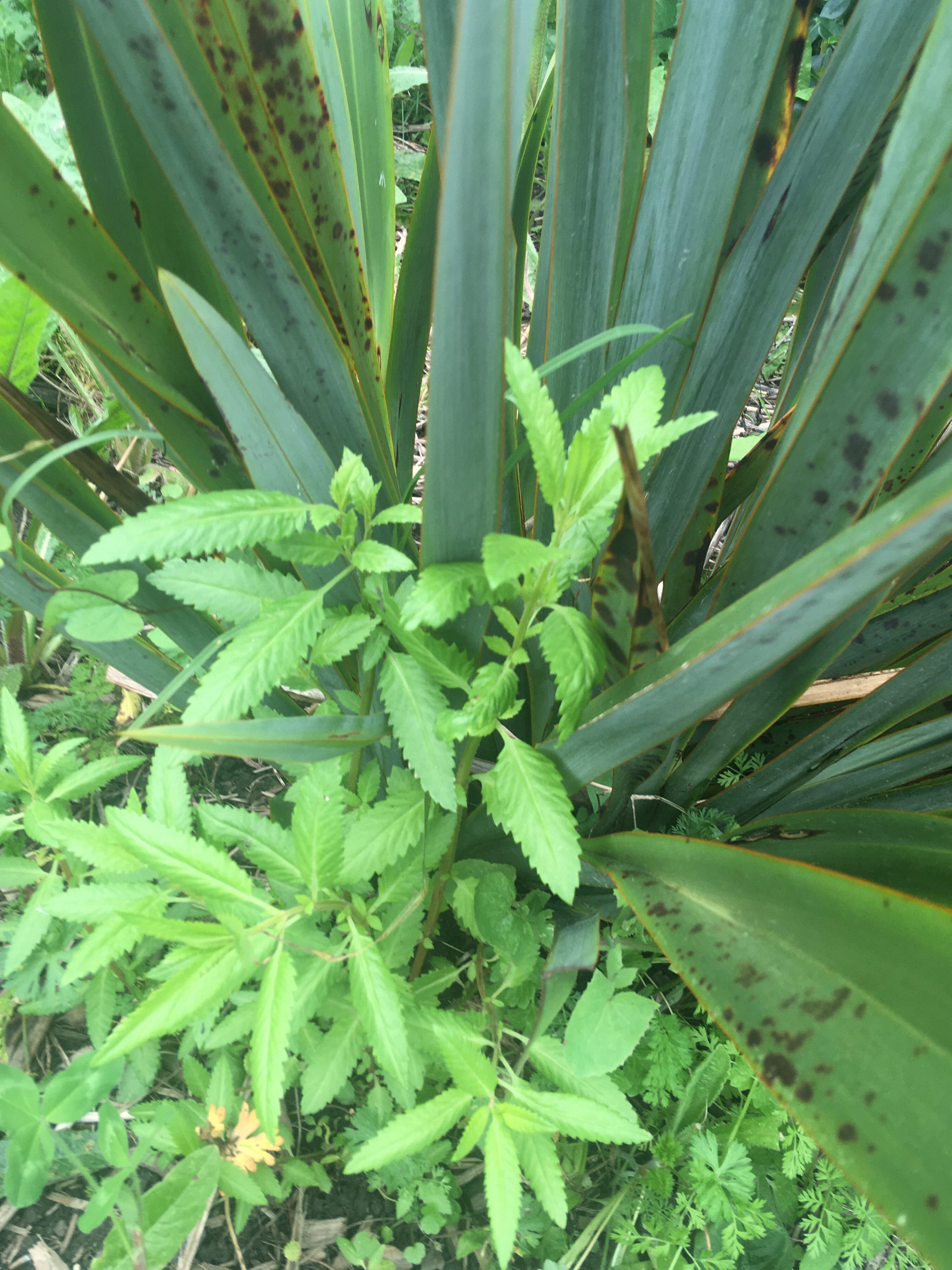
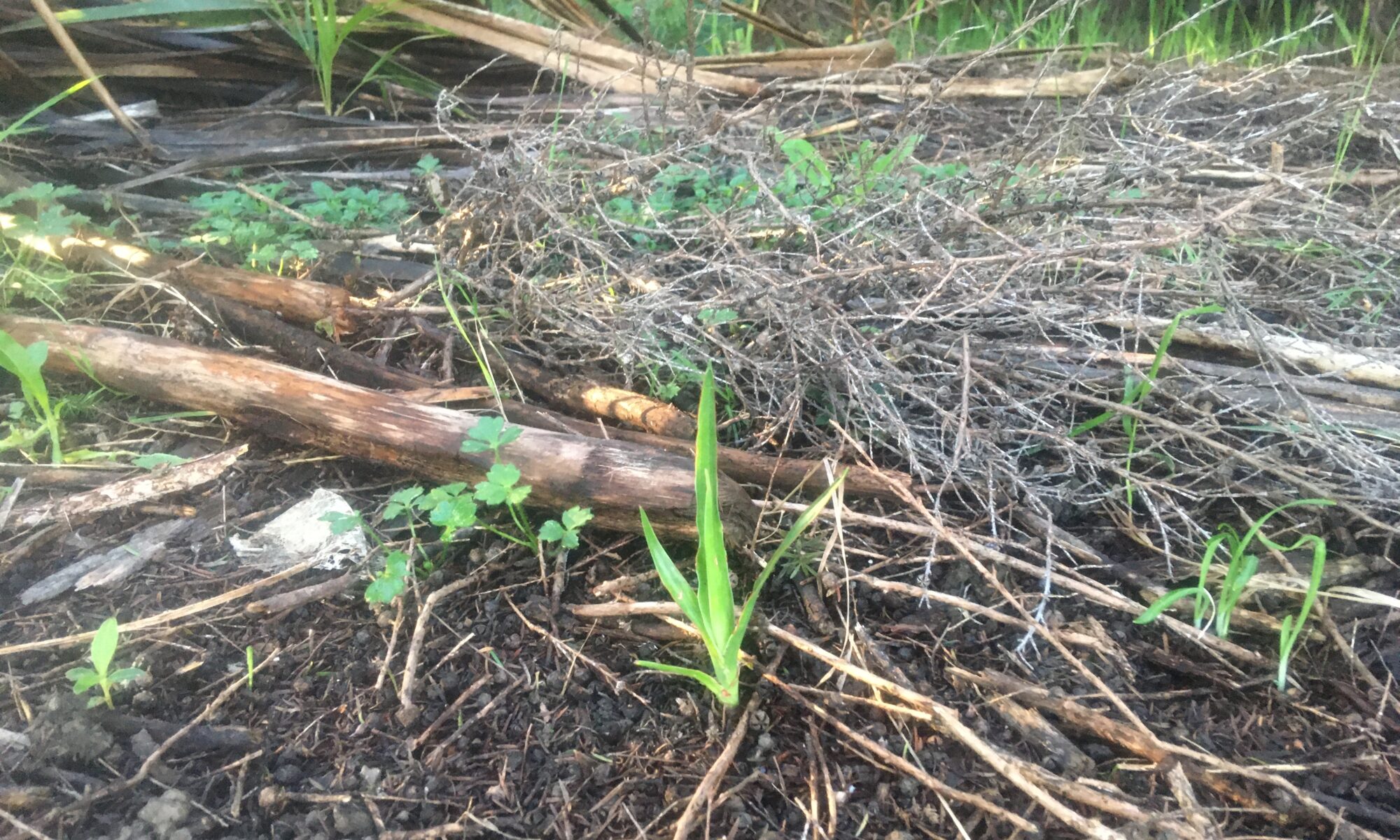
We have re-activated our little cottage nursery that supplied Council restoration projects and home gardens from about 2004-2006. Hundreds of native seeds fall and grow, even in our own little garden and gravel driveway, so we have been potting them up in recycled pots with roughly-composted wood chip mulch so our garden restoration clients can have free plants for planting season (or earlier if they have a loose soil and are prepared to water them…but Autumn is much easier!)
We are now offering 10-20 plants (depending on size), in a limited range of species – this year we concentrated on kawakawa, karamu, nikau and Carex – free with every 10 hours of gardening or habitat restoration, while stocks last.
We will look after the plants till autumn.
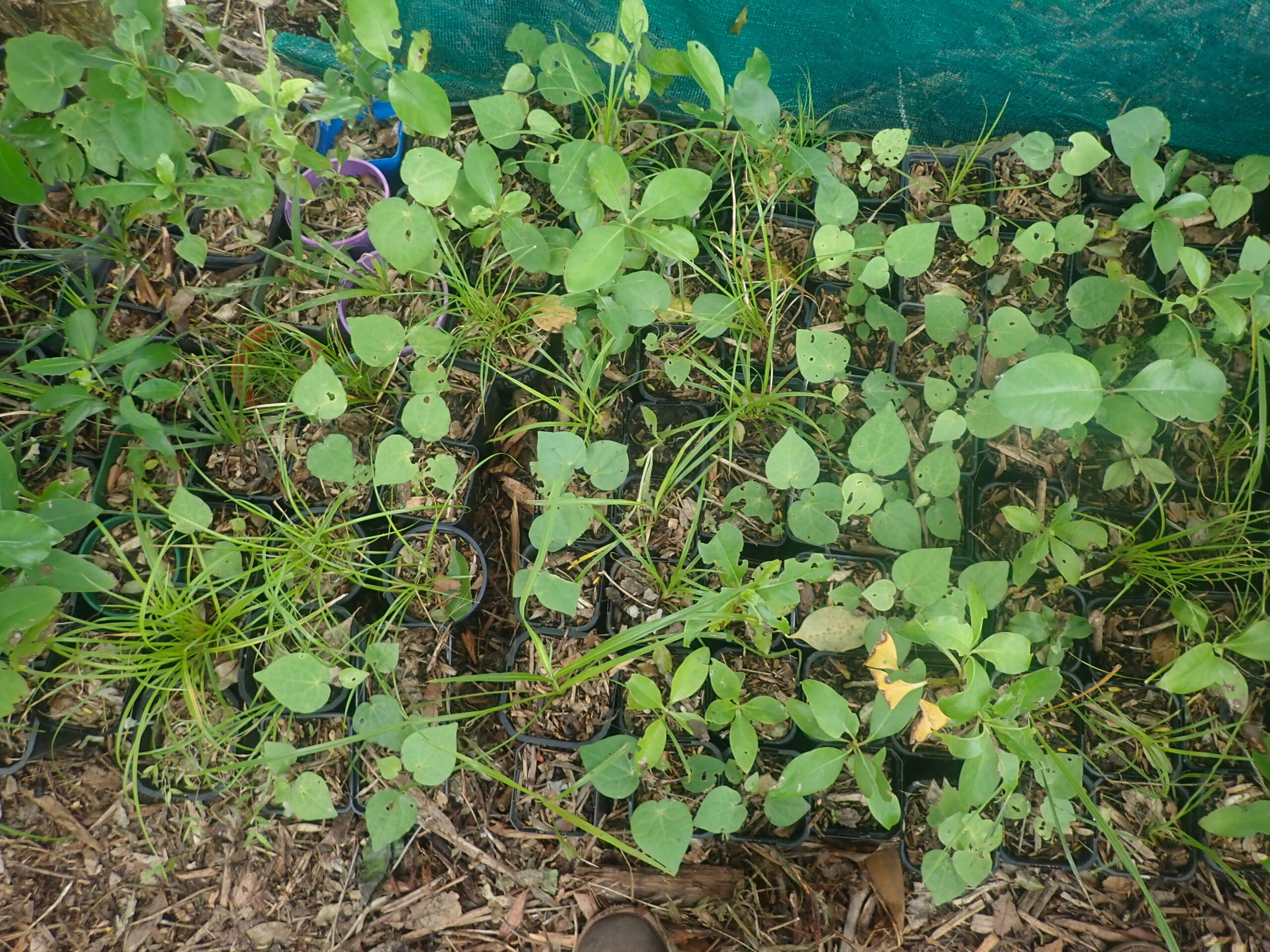
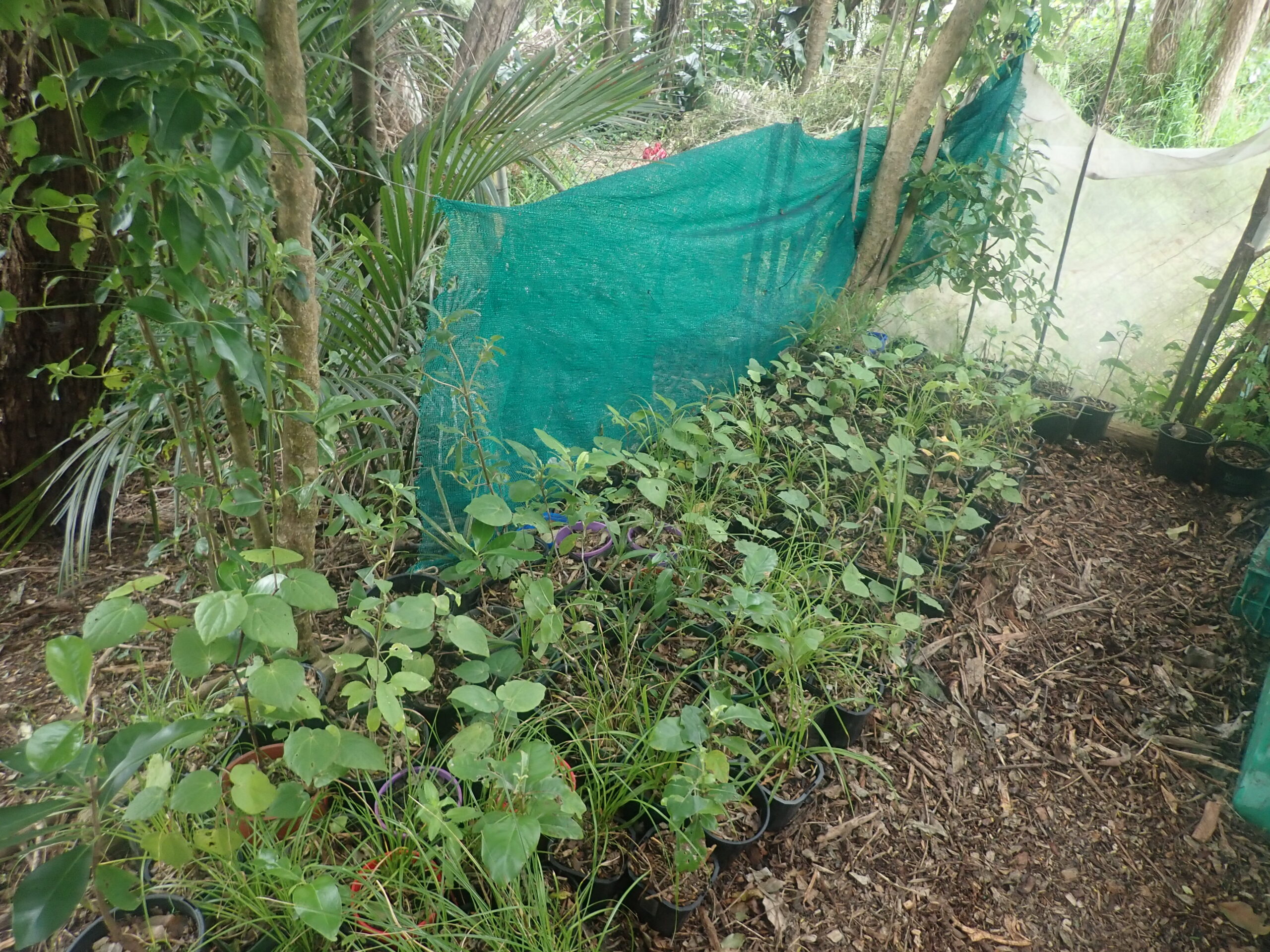
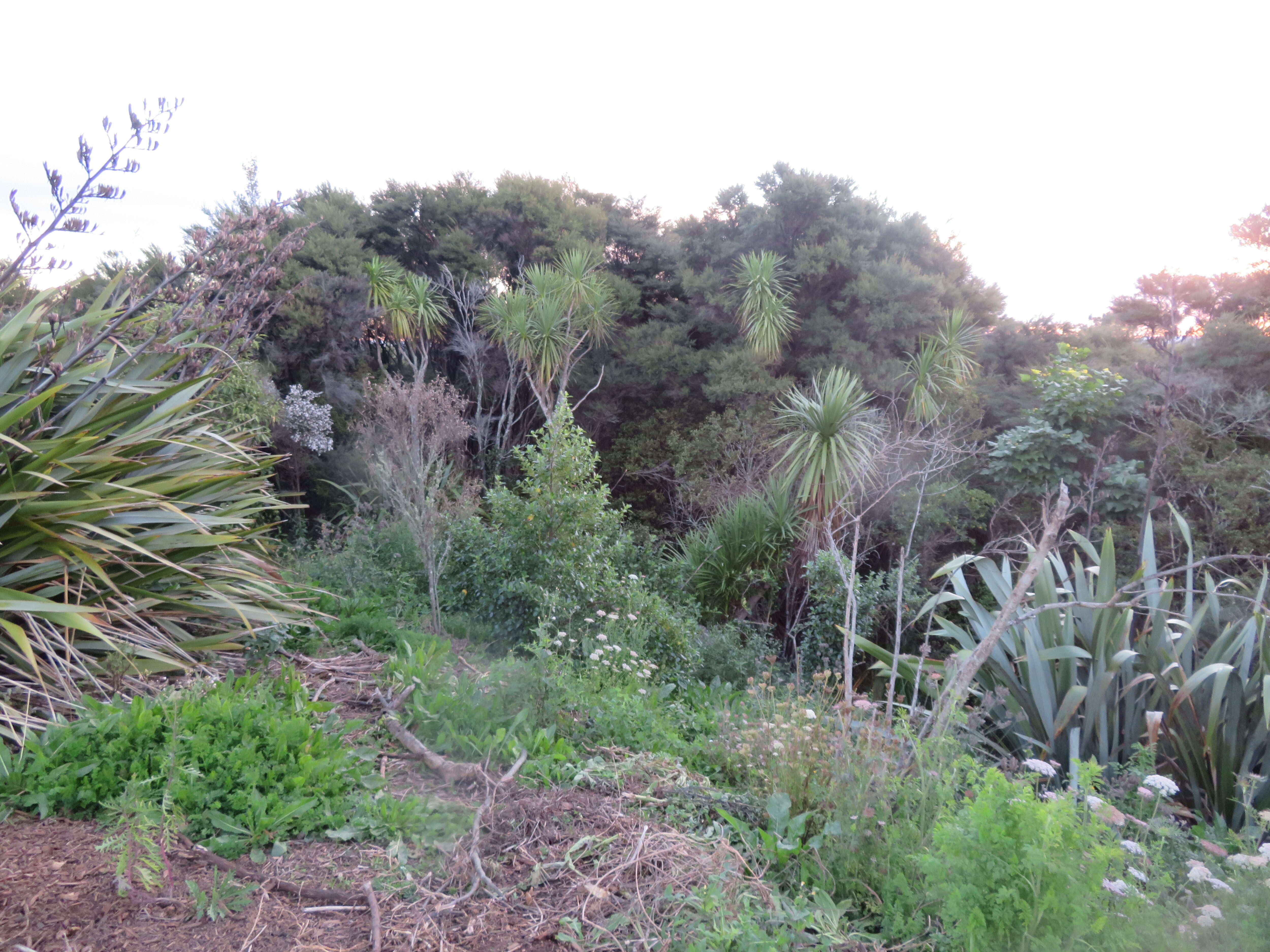
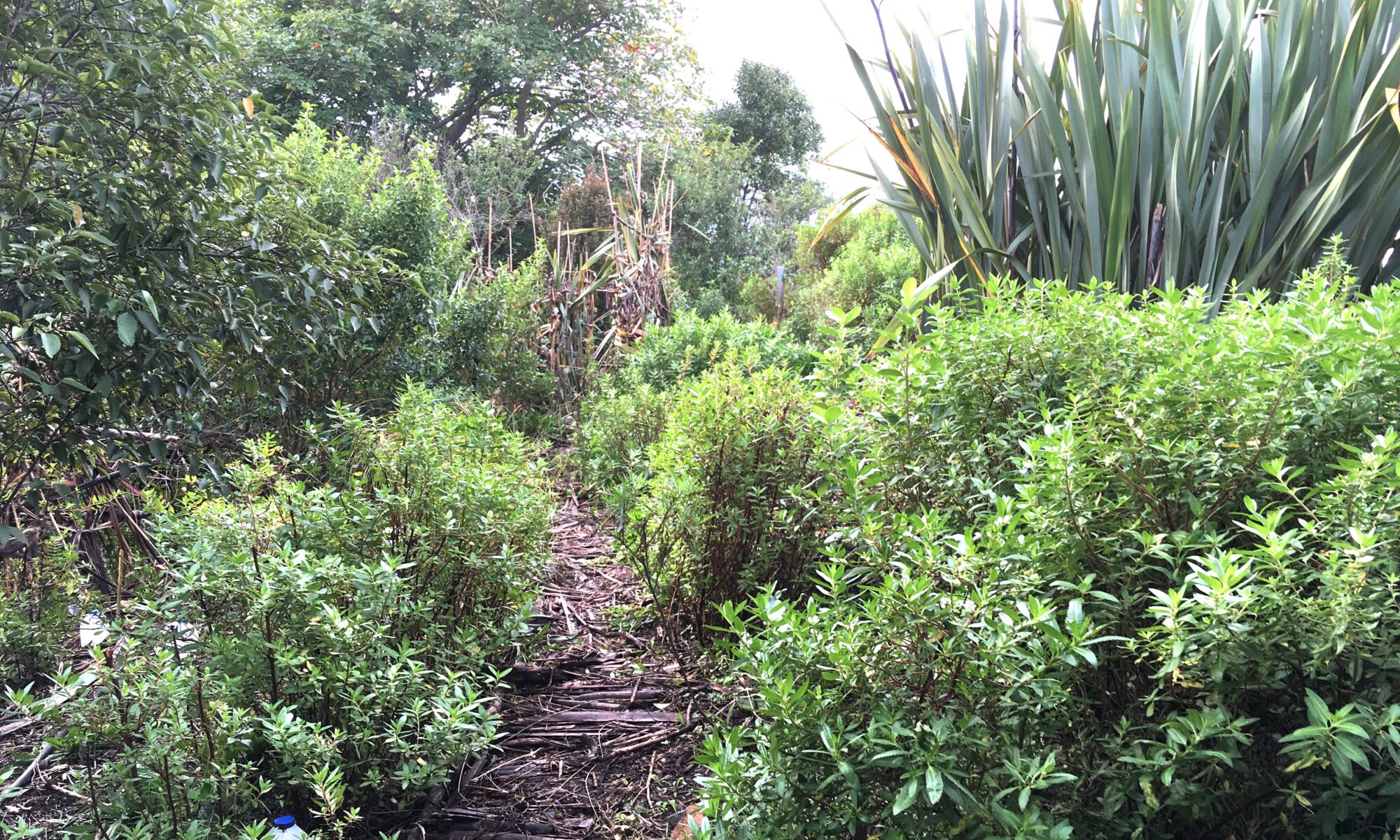
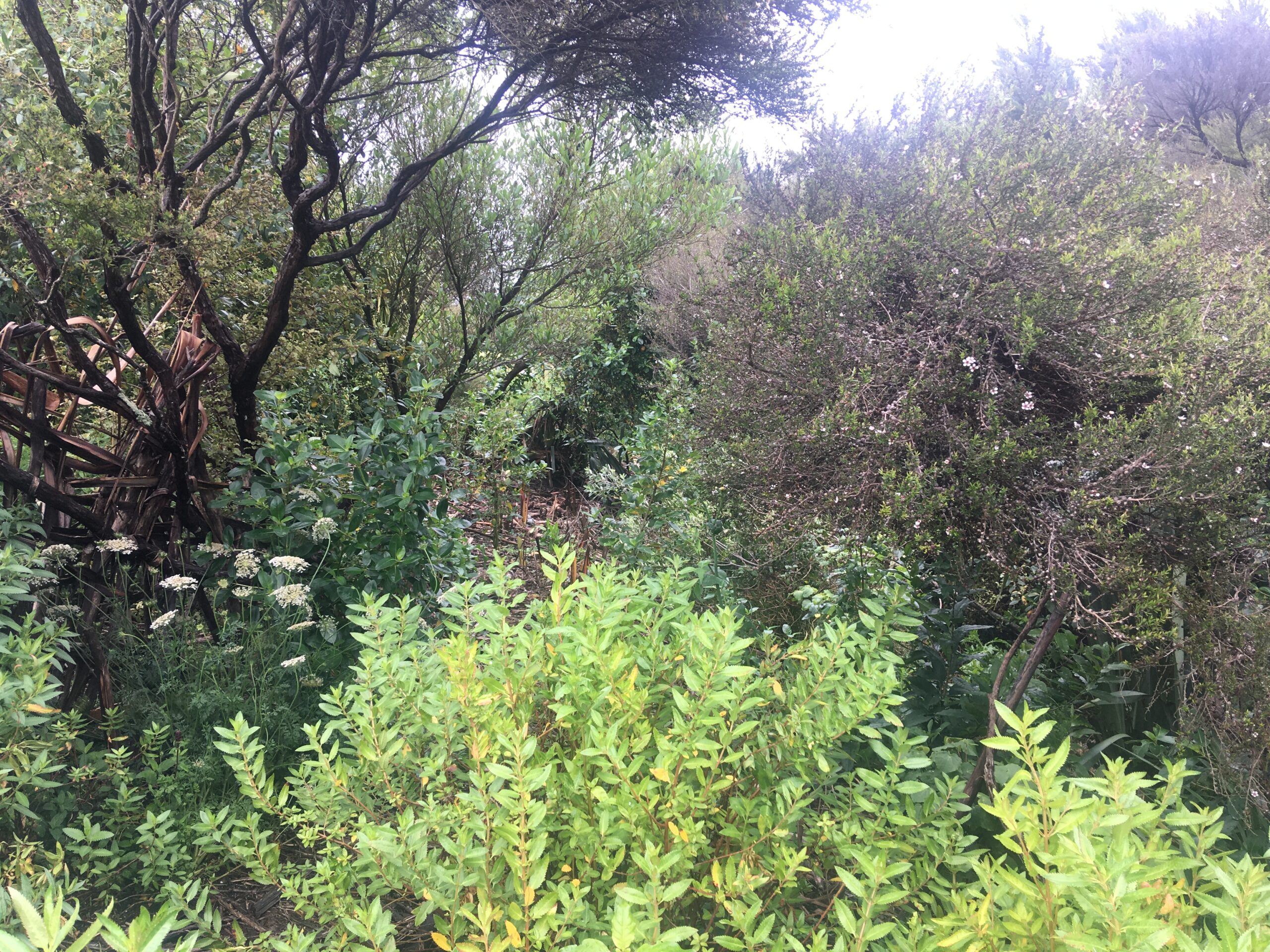
Here’s what they look like at present:
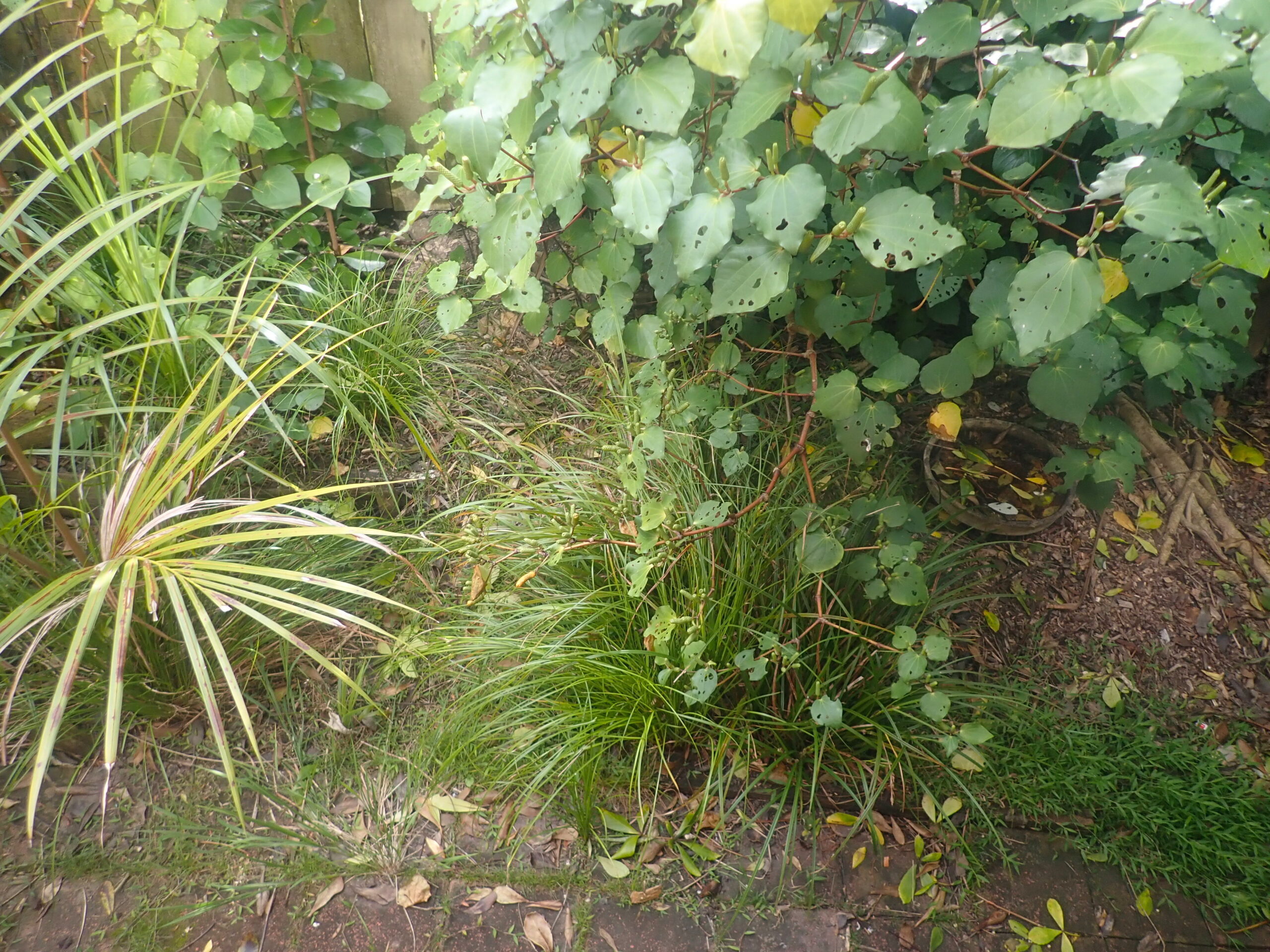
North Shore Wilds nursery plants, November 2023NSW nursery plants November 23
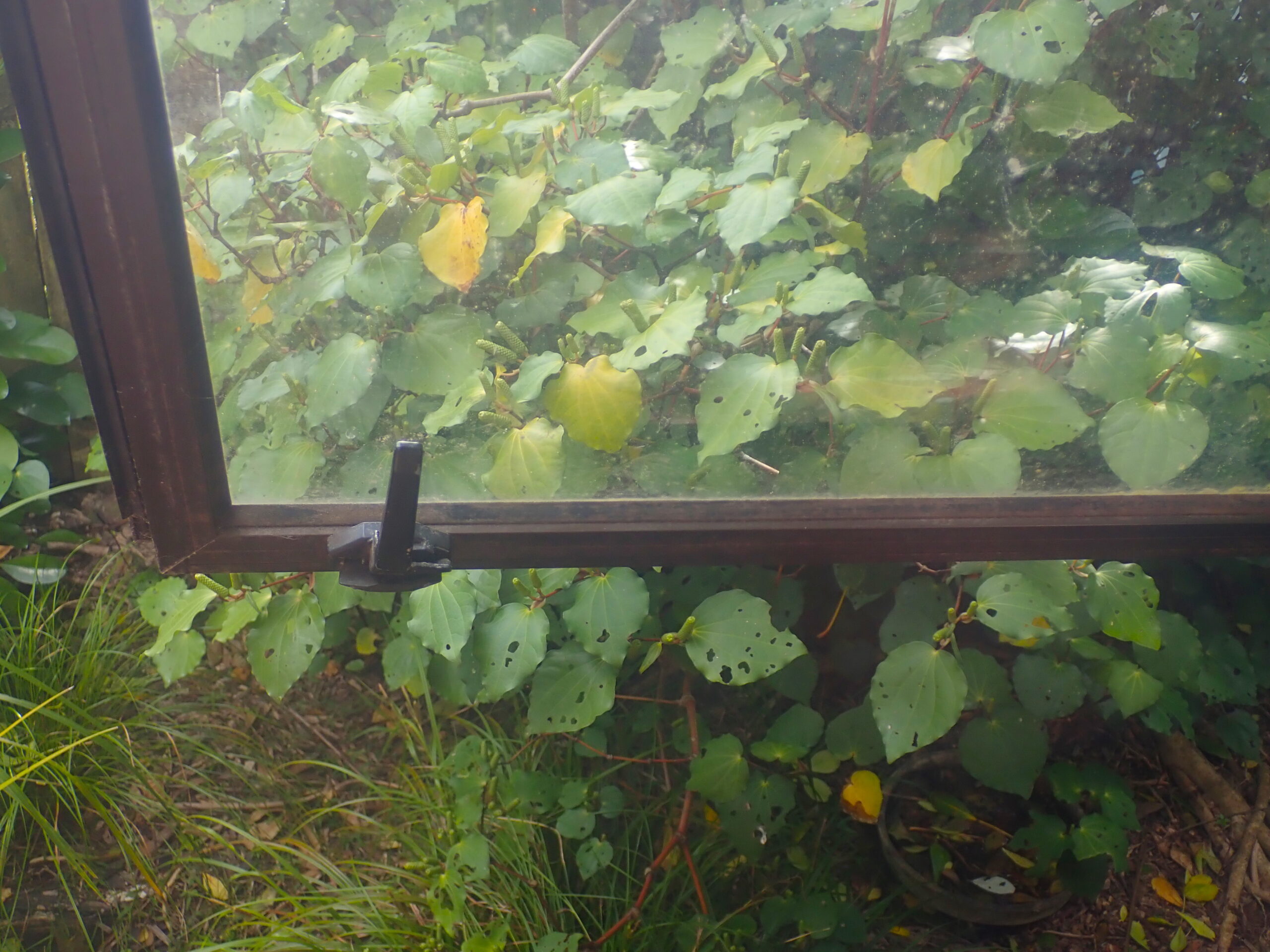
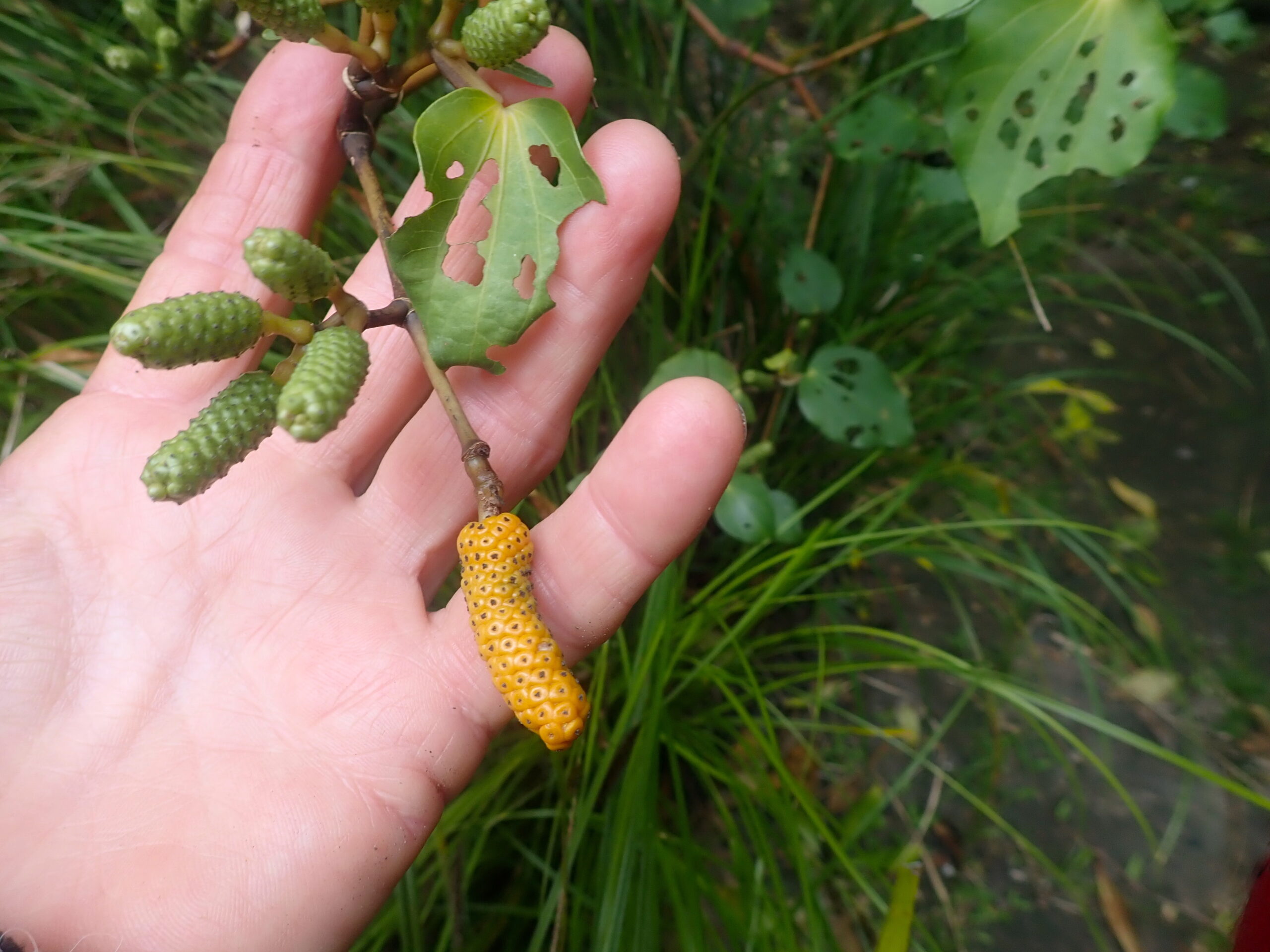
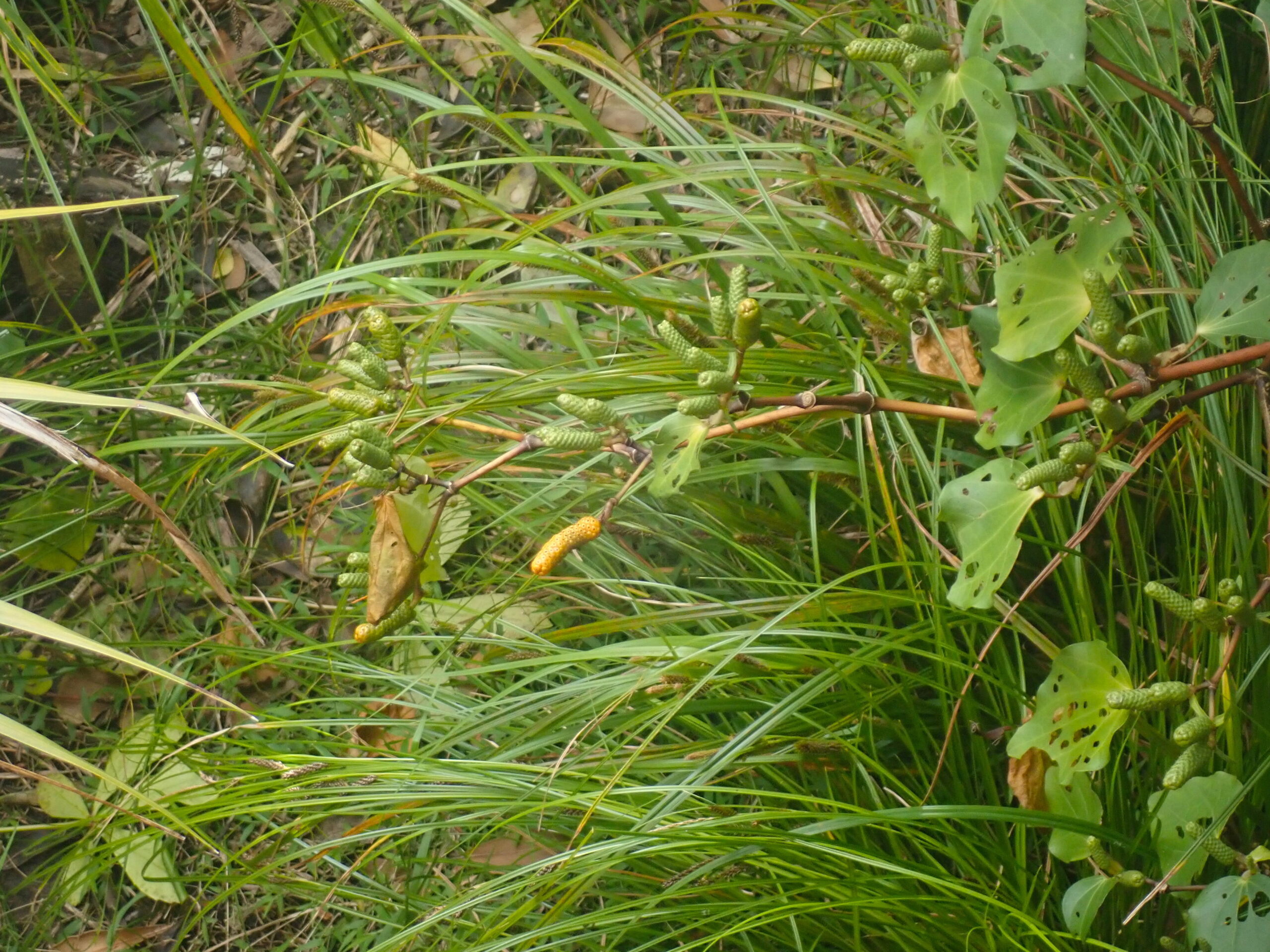
Following the development of the kawakawa fruit observed in earlier posts, I noticed a few ripe fruit on the tree outside this dining room window.
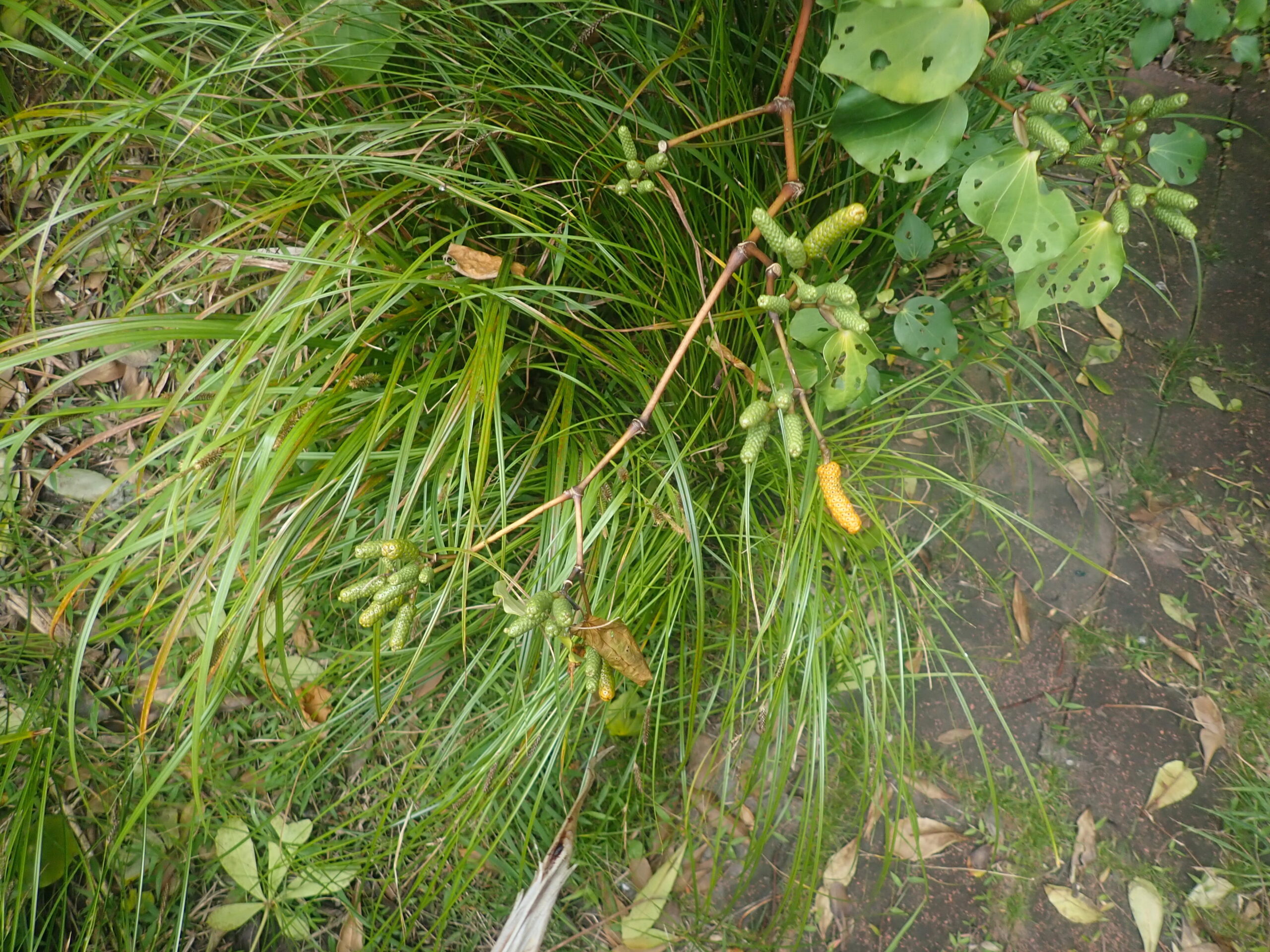
ripening and unripe kawakawa seen through open dining room window
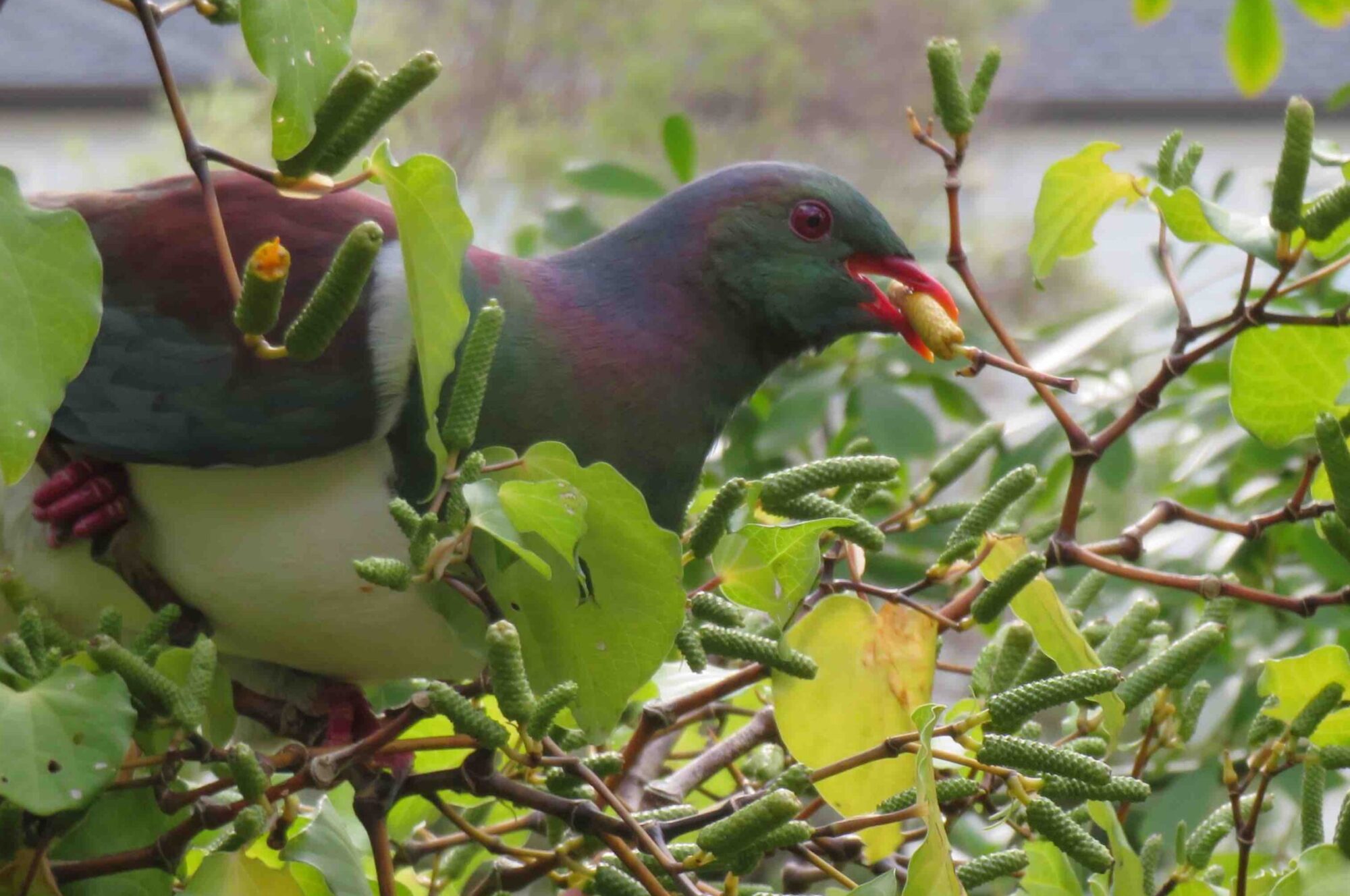
In summer kereru clamber in the taller branches of the tree, alone, in pairs, and one year with a chick, all within a metre of this window.
Fortunately for the kereru, who are far too trusting for their own good, a dog keeps the garden cat-free, and the dog can’t reach this part of the garden.
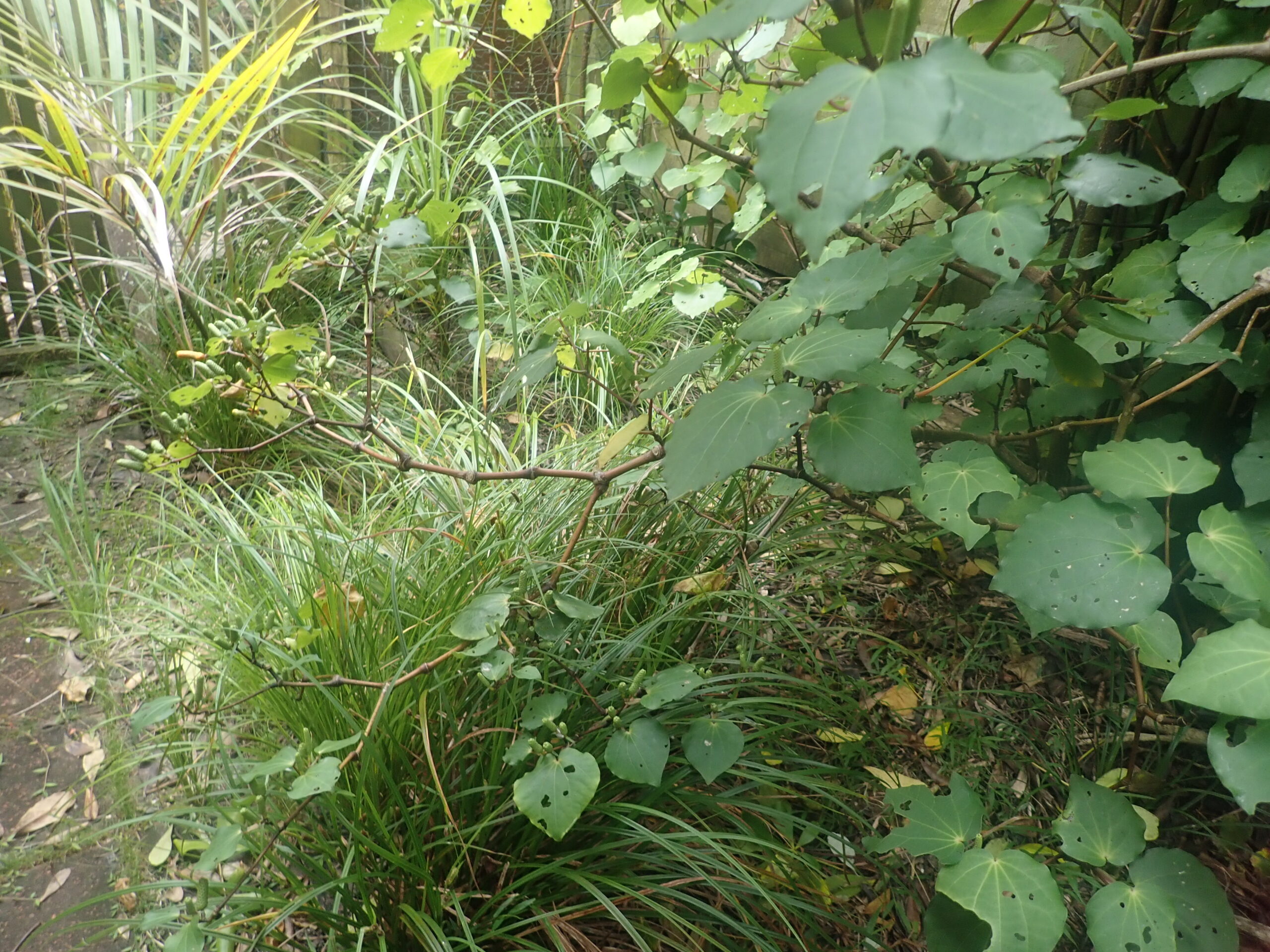
A low branch outside the window has ripening and unripe fruit overhanging purei (Carex lambertiana)
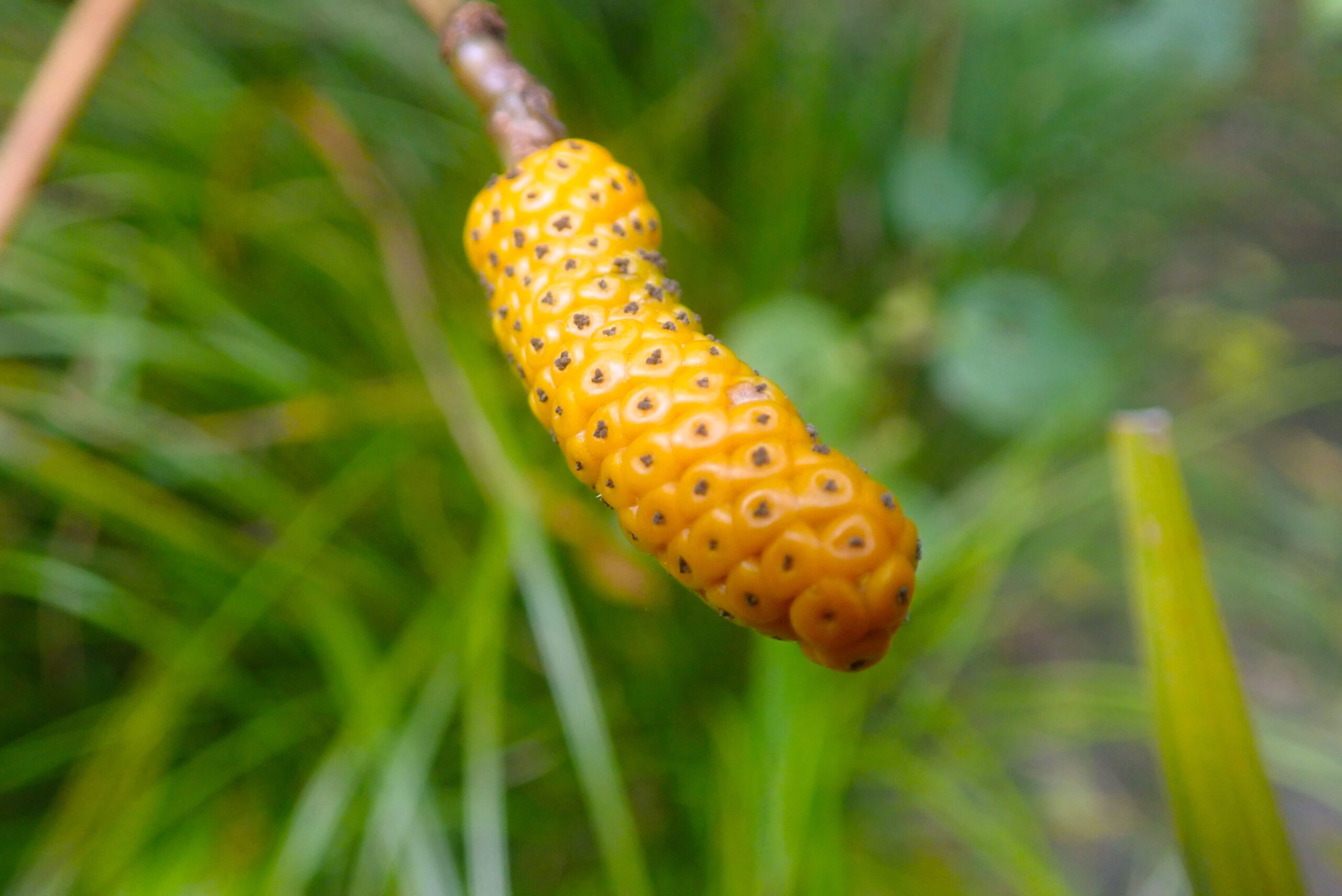
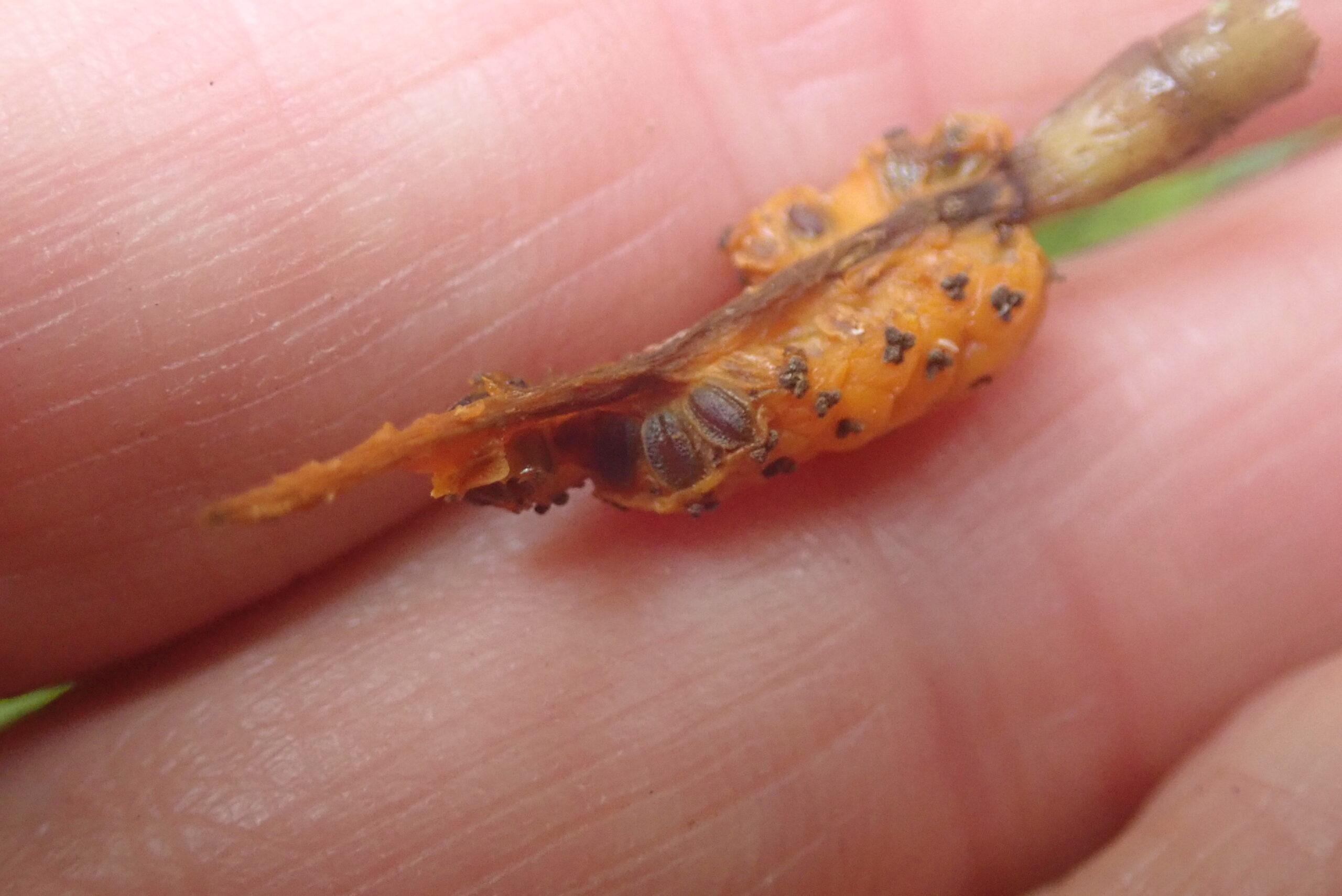
Above: a fully ripe kawakawa fruit, found half-eaten on the ground, discloses the many seeds within the orange flesh of a single fruit
The wood of the kawakawa is soft, easily pruned to keep this paved path clear.
Wild native sedges and grasses and moss are allowed to cover the earth under the tree, and the smaller plants are allowed to spread to fill the gaps between paving tiles, keeping out most of the dandelions, creeping buttercup and other weeds.
The native kawakawa looper makes holes in the kawakawa leaves.
These holes are said to correspond to the leaves with the strongest medicinal value, perhaps because of substances produced in those leaves in response to the caterpillars eating the leaves.
Another explanation is that the caterpillars know which leaves are the best to eat.
Either way, this 2 square metres of clay is cool and refreshing to look out on through hot summers, hosts a lot of wildlife, lets morning light play on the windows all year round, and, with fallen leaves and twigs mulching the ground naturally, requires almost no attention to stay beautiful and weed-free.
One evening last week, putting out the compost turned into an after-dinner garden wander – a weed to pull out here, a “volunteer” tomato seedling to pop in there – and I realized this is how it will be for the rest of the summer, just like every other year; the cool stillness of evening and gentle sounds of roosting birds keeps me outside till dusk.
For this shade-loving gardener, it has already become too hot for work in the afternoons except under or among big trees.
It occurred to me that there may be people who would like an evening garden ecology assessment, learning session or even their weeding done, when they are home and can collaborate or advise.
For morning or evening garden restoration services, or forest restoration anytime, contact us.
In the 5 months we have been working with some of our gardening clients, they have learned to recognise and make use of the wild native trees, shrubs and grasses that spontaneously grow all over the North Shore, from the soil’s seedbank from former forest and wetland, or from seed and spores brought by birds or wind.
In this time, even small areas of mown lawn, or gardens containing only the common non-native ornamental species, have produced a few tanekaha, rewarewa and kahikatea seedlings, lots of baby Cabbage trees (Cordyline australis), five-finger (Pseudopanax), Karamu (Coprosma robusta) and mapou, (often referred to as Pittosporum, though it is actually Myrsine australis), and numerous native grasses, sedges and creeping ground covers.
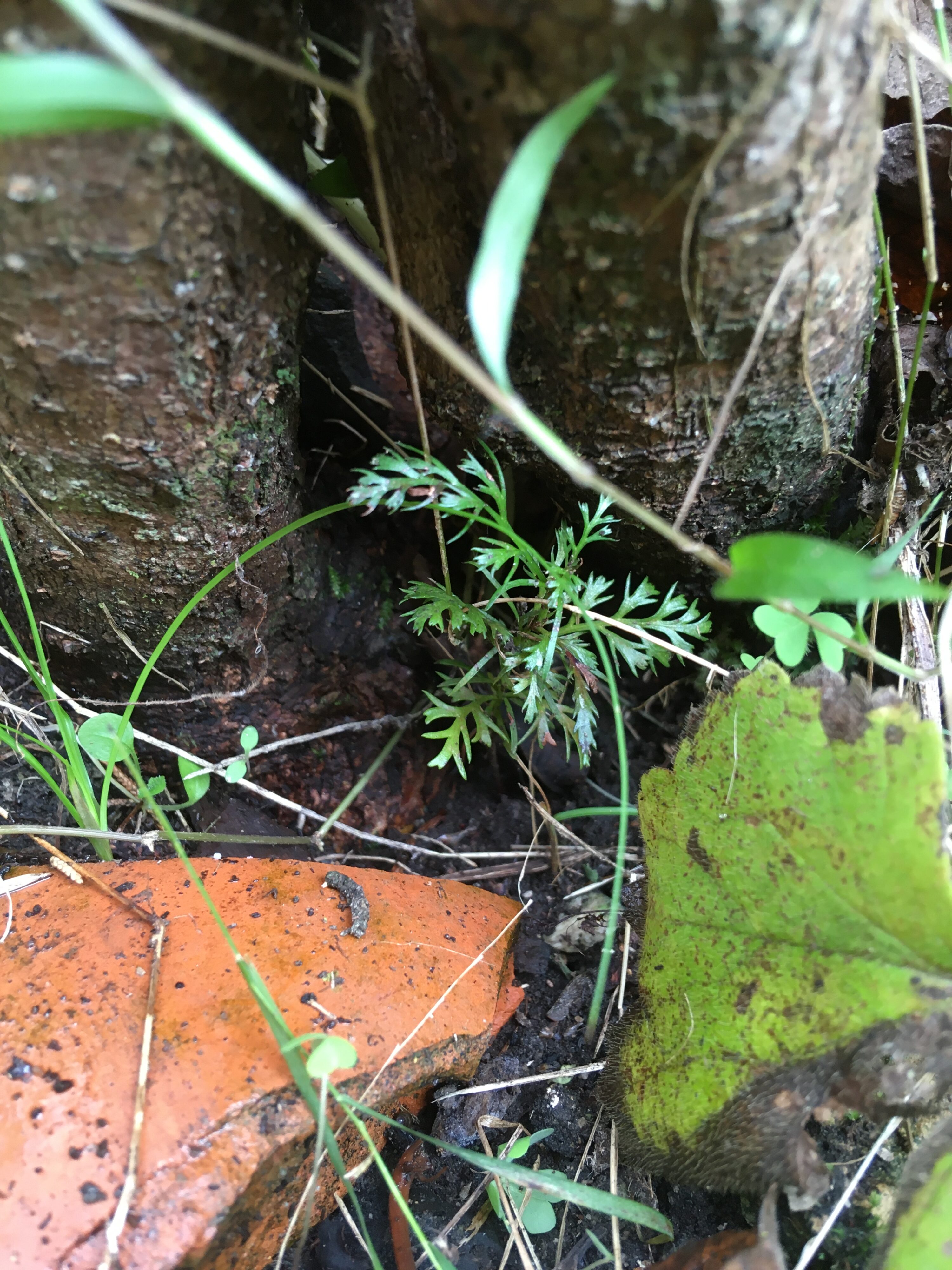
Wild tanekaha seedling hidden among Clivia in a small garden of ornamental shrubs
Of course, those who are lucky enough to have a patch of native bush in or beside their garden, and some undisturbed areas of ground, have seen all kinds of forest species emerge and thrive, including native vines, ferns and orchids, and the less common “forest giants” like tanekaha, kahikatea, rewarewa and kauri.
wild karamu seedlings found among ivy and other weeds in a large weedy garden, a small area of which is now being restored to dense wild native vegetation
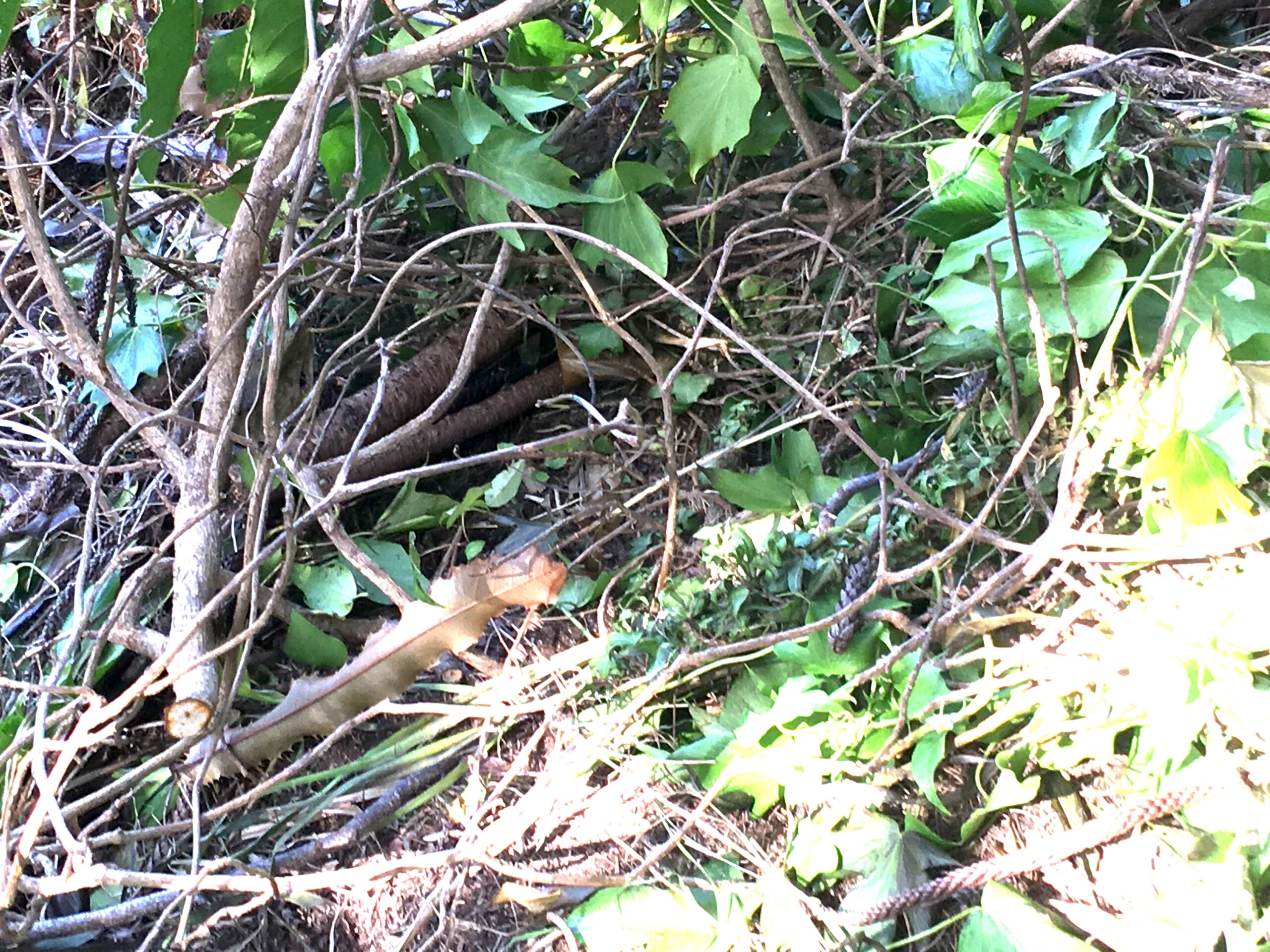
wild rewarewa seedling discovered while weeding under a Norfolk pine, now protected with some cut ivy and uprooted weeds
For new clients, or as a “stand-alone” service, we provide a 1.5 hour assessment of your garden’s potential for visual transformation and the recreation of diverse native pant communities, solely through plant identification, soil protection and chemical-free weed control.
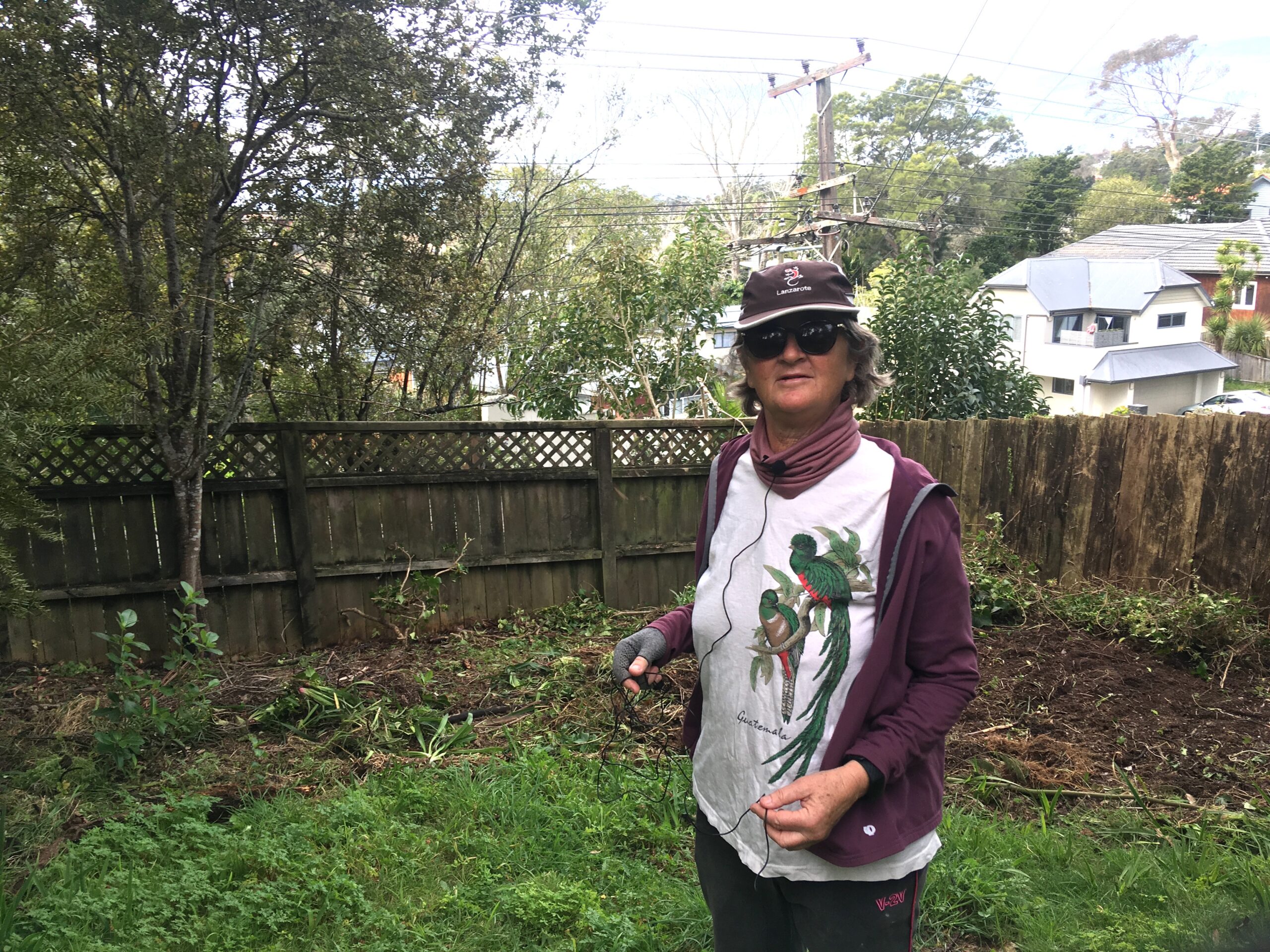
Our client Michelle has a large front garden on a slope above a quiet road. Around the edges of this garden there are several large exotic trees, and numerous smaller native trees.
Michelle in her garden – transformation begun
When we started working on this garden transformation, the fences on all three sides were overhung by ivy, which had climbed the fences and the smaller native trees on the other side of the fences, and about 10 metres up a large Norfolk pine. There was also some honeysuckle growing through and under the fence, with some remaining beyond our reach on the steeply sloping roadside berm.
Michelle loves walking in the local bush, and dreamed of enjoying some of that ambience in her own large garden. Once she learned it was possible, she became keen to create a shady little bush-walk by converting the lawn and weedy borders of an unused part of her own large garden to a mostly-wild native plant community, solely by weeding, protecting the weeded ground from trampling and desiccation, and nurturing the wild native seedlings that would arise.
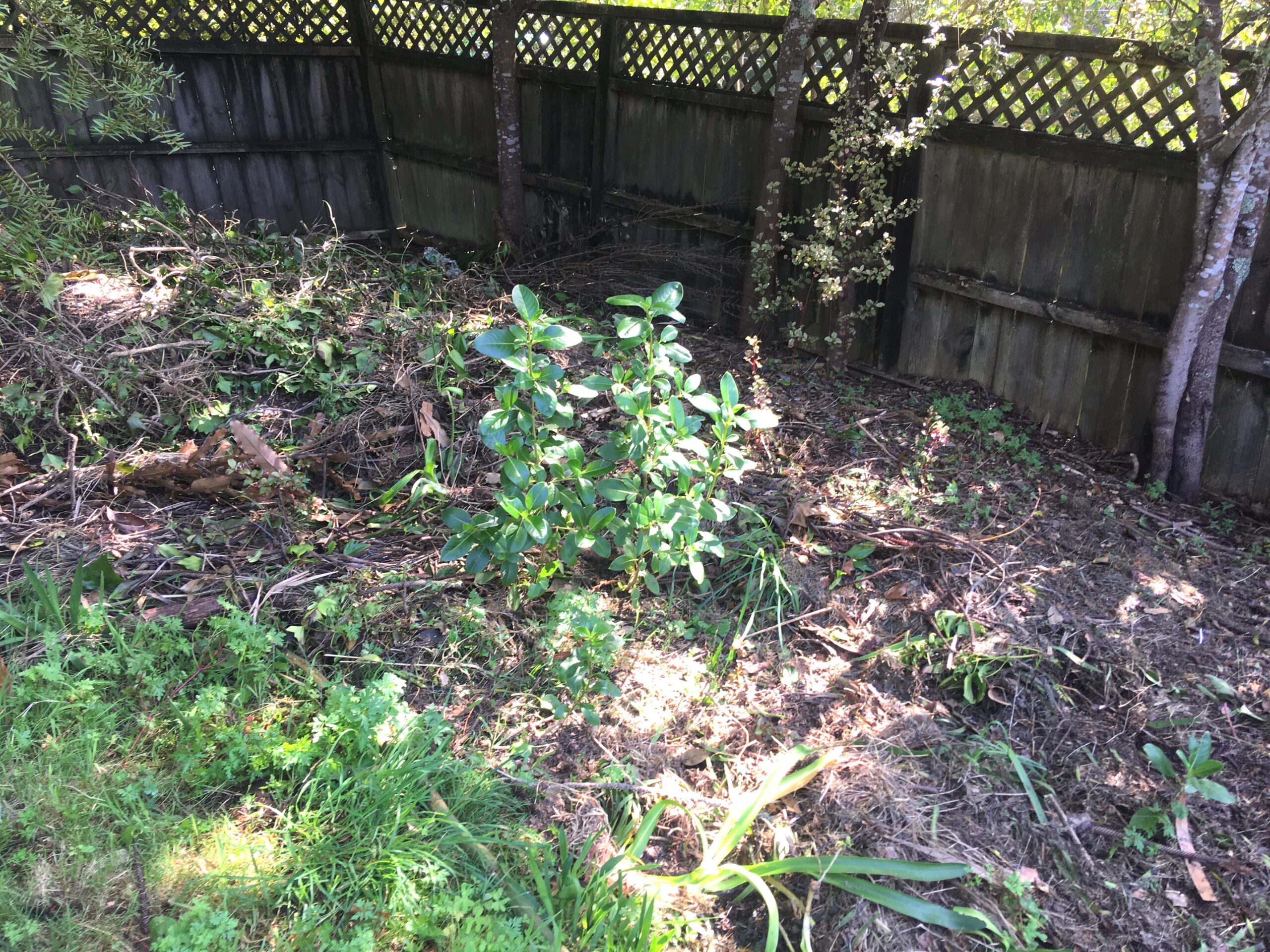
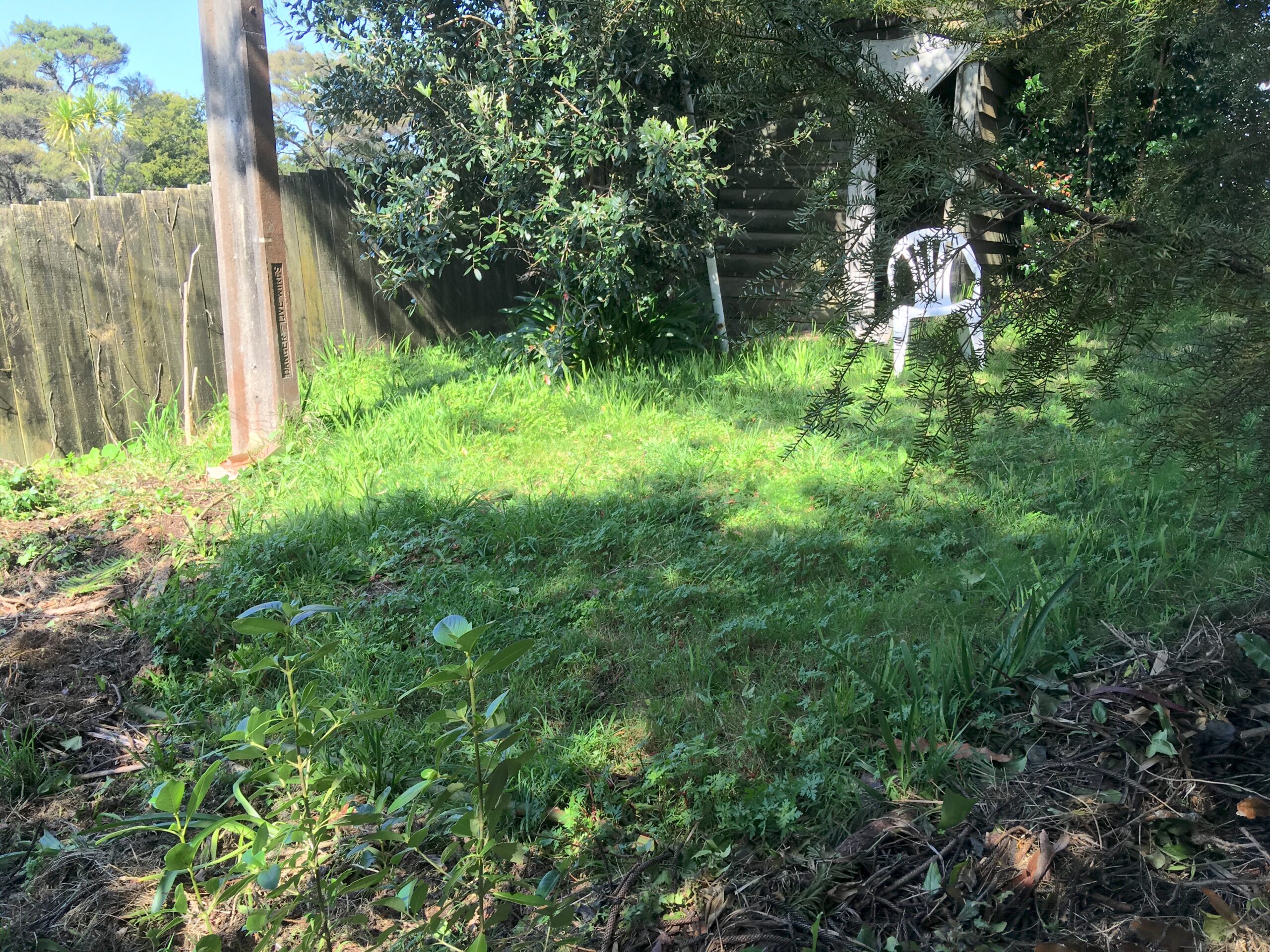
lawn behind woodshed, with juvenile wild karamu in foreground
We set about cutting and uprooting as much as possible of the ivy,
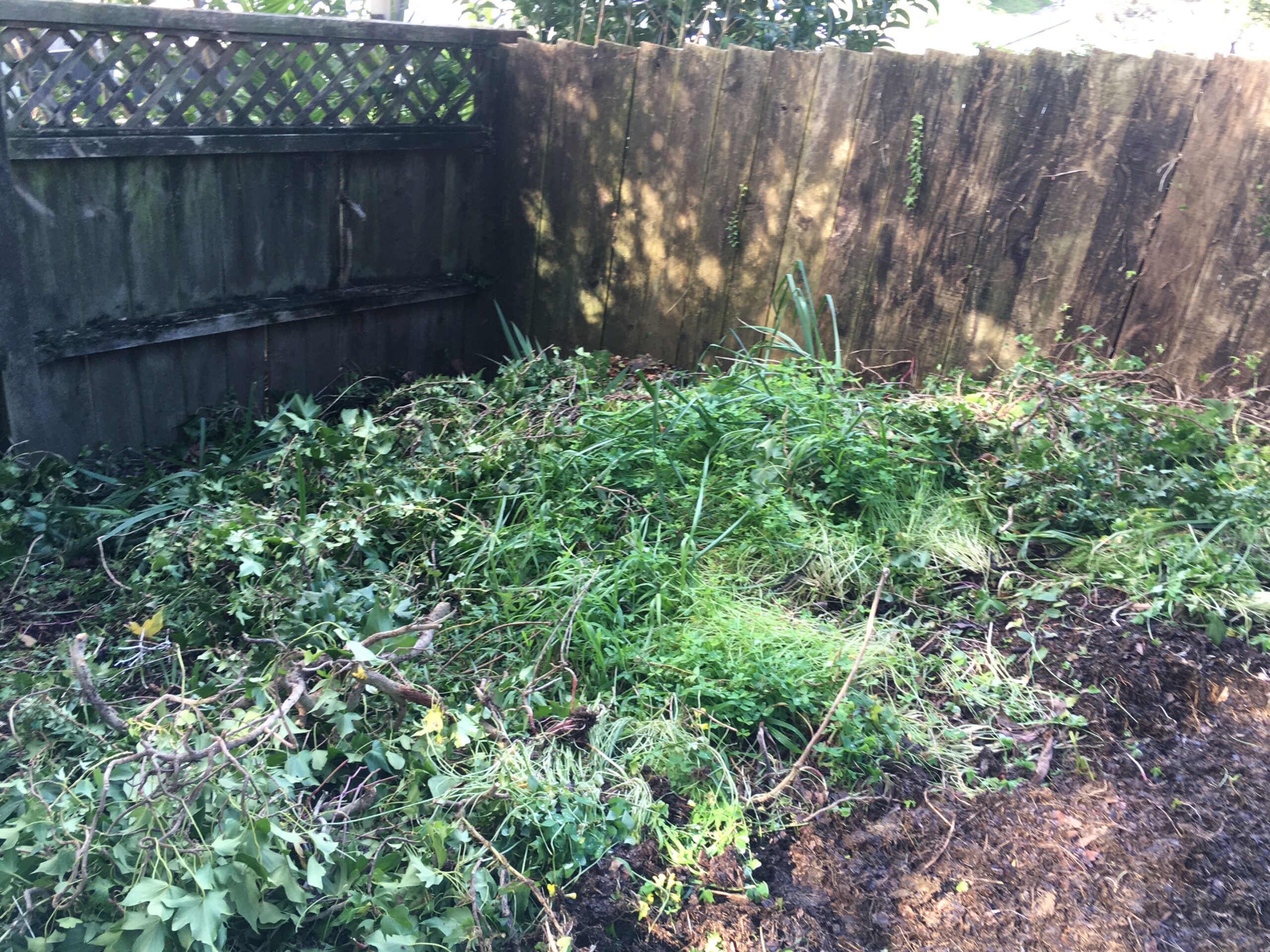
oxalis and grass weeds uprooted and/or suppressed with pulled weeds and cut ivy from the fenceline
and cut, uprooted or suppressed the major weeds around the edges.
Weeds turning into rich soil, with a pile of cut ivy foreground left, drying until it can be spread as mulch
A wild mapou juvenile against the fence, mapou seedlings in the foregroundh, and (lower left) a remnant of a large clump of Agapanthus being successively suppressed then uprooted
Hundreds of tree privet seedlings in the borders were easily uprooted while the ground was wet during winter, and larger ones, along with other tree weeds, were suppressed with a versatile pruning technique that leads to the weed-tree’s death over a year or two.
foreground – a newly uprooted Agapanthus (left) and 4 or 5 wild mapou seedlings (centre foreground -yellowish leaves and reddish stems)
at the base of a large Norfolk pine and a young totara, (left) a wild Macadamia seedling being suppressed by pruning, and helping to suppress other weeds, including ivy and Agapanthus which were later uprooted easily
Many native tree seedlings had already arisen wild among the weeds, and were released over a month or so to provide the basis of the new bush garden. As is usually the case, karamu was the commonest wild native,
one of the many wild karamu seedlings found hidden by the invasive and very dominant Blue corn-lily (Aristea ecklonii – suppressed, top left and foreground – later easily uprooted)
but as the hand weeding proceeded over the next few months we also discovered many wild mapou and houpara seedlings, and several rewarewa.
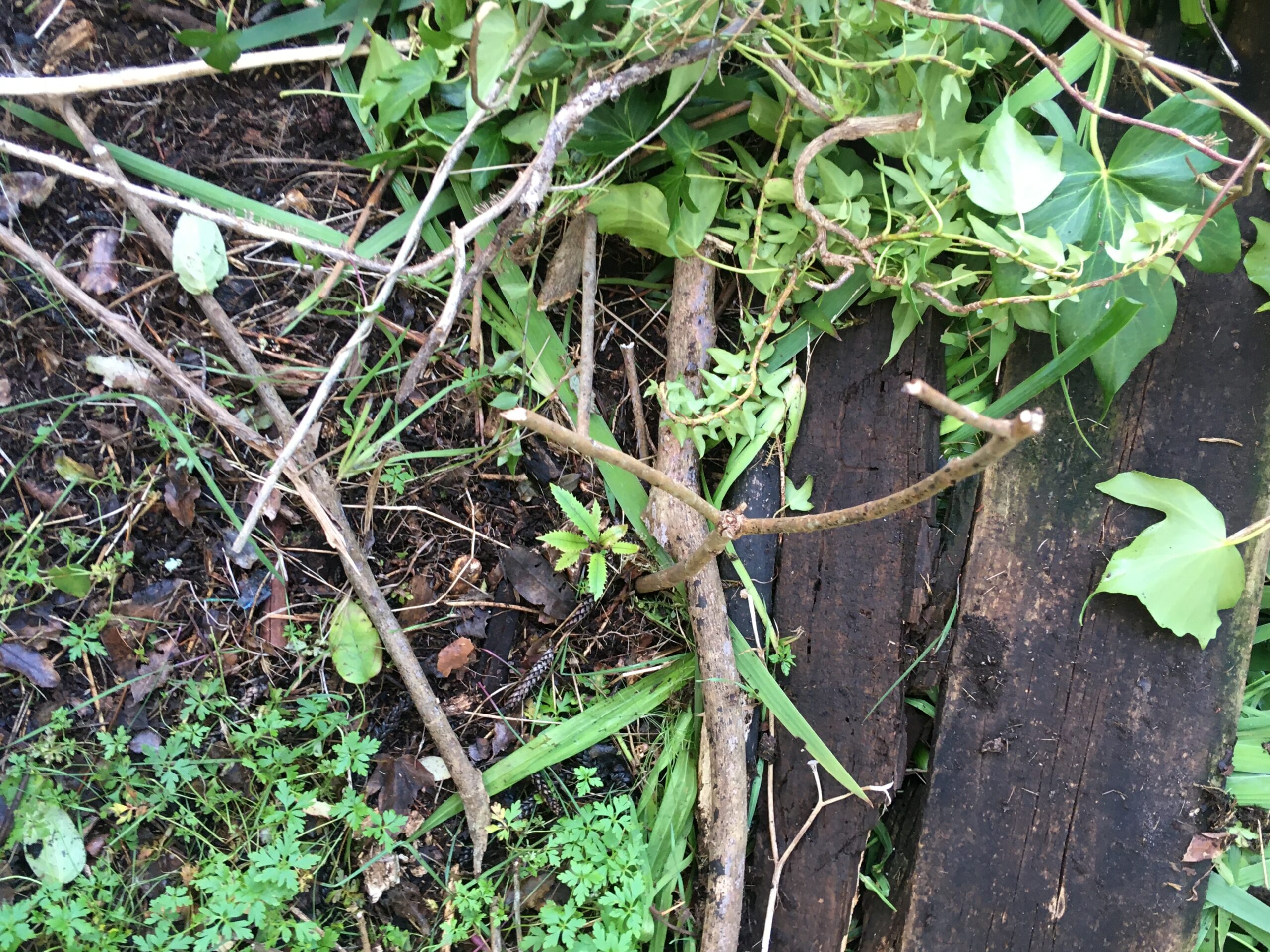
rewarewa seedling, mulched with loose weeds and shaded with cut ivy branch
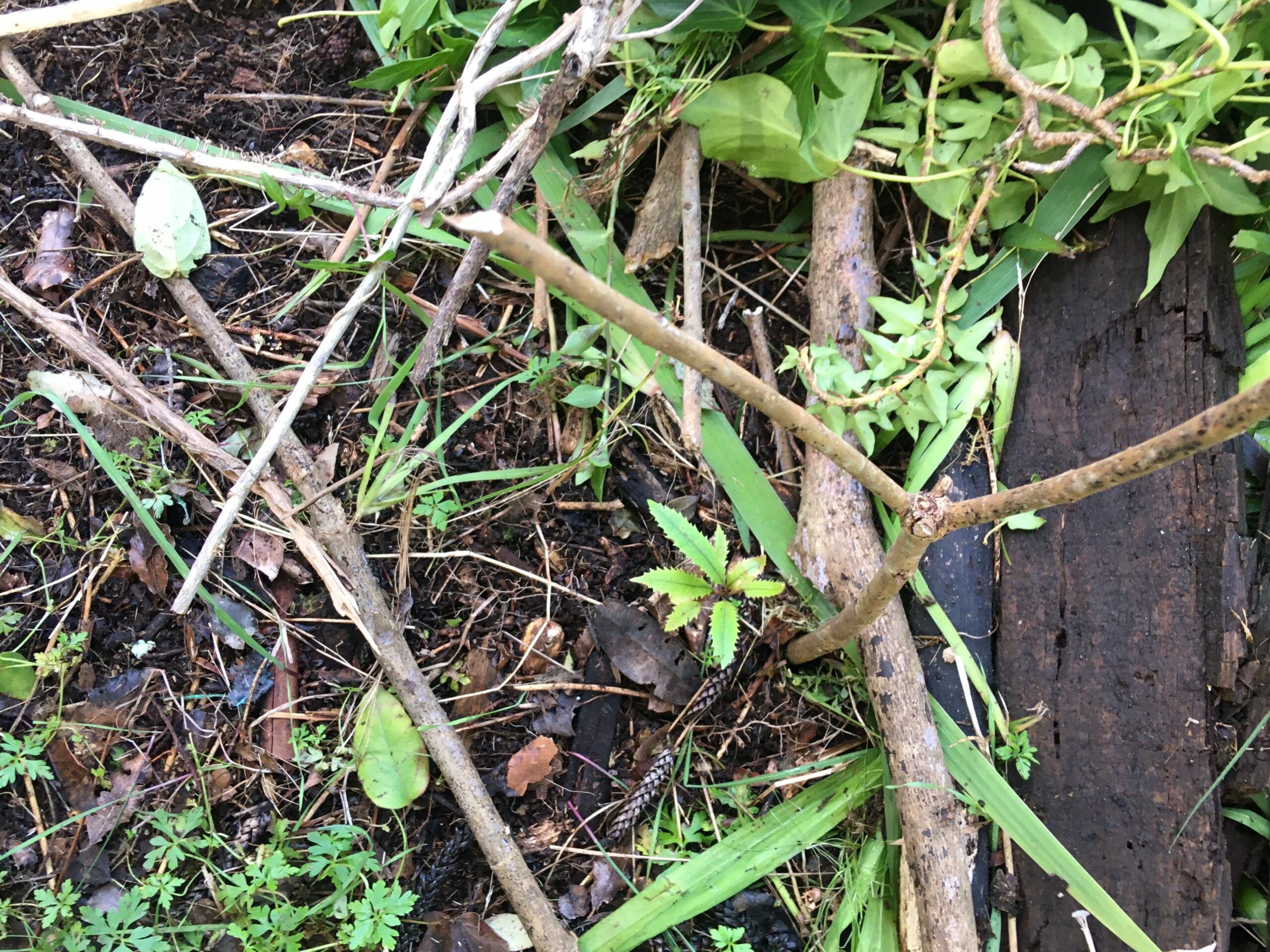
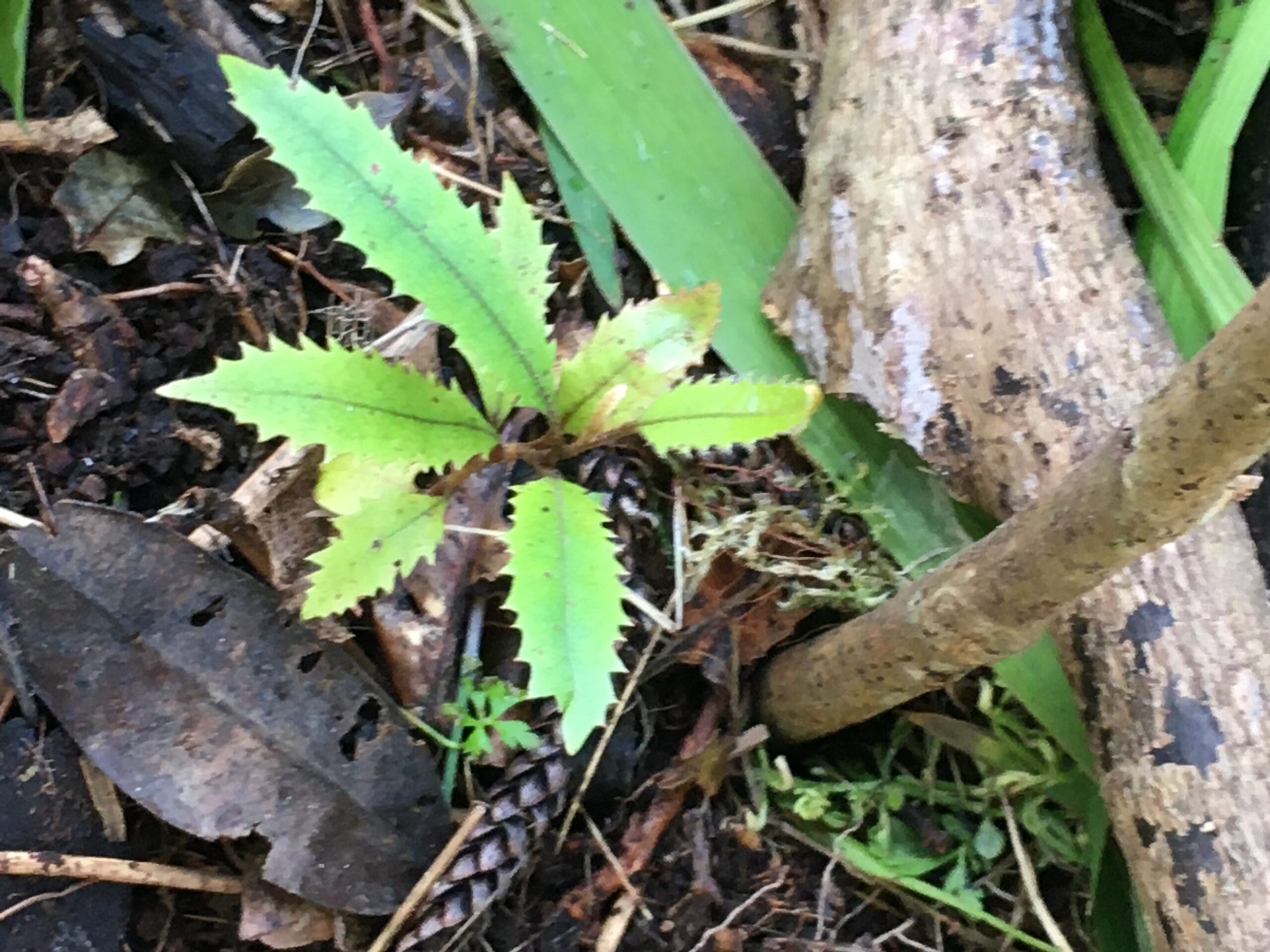
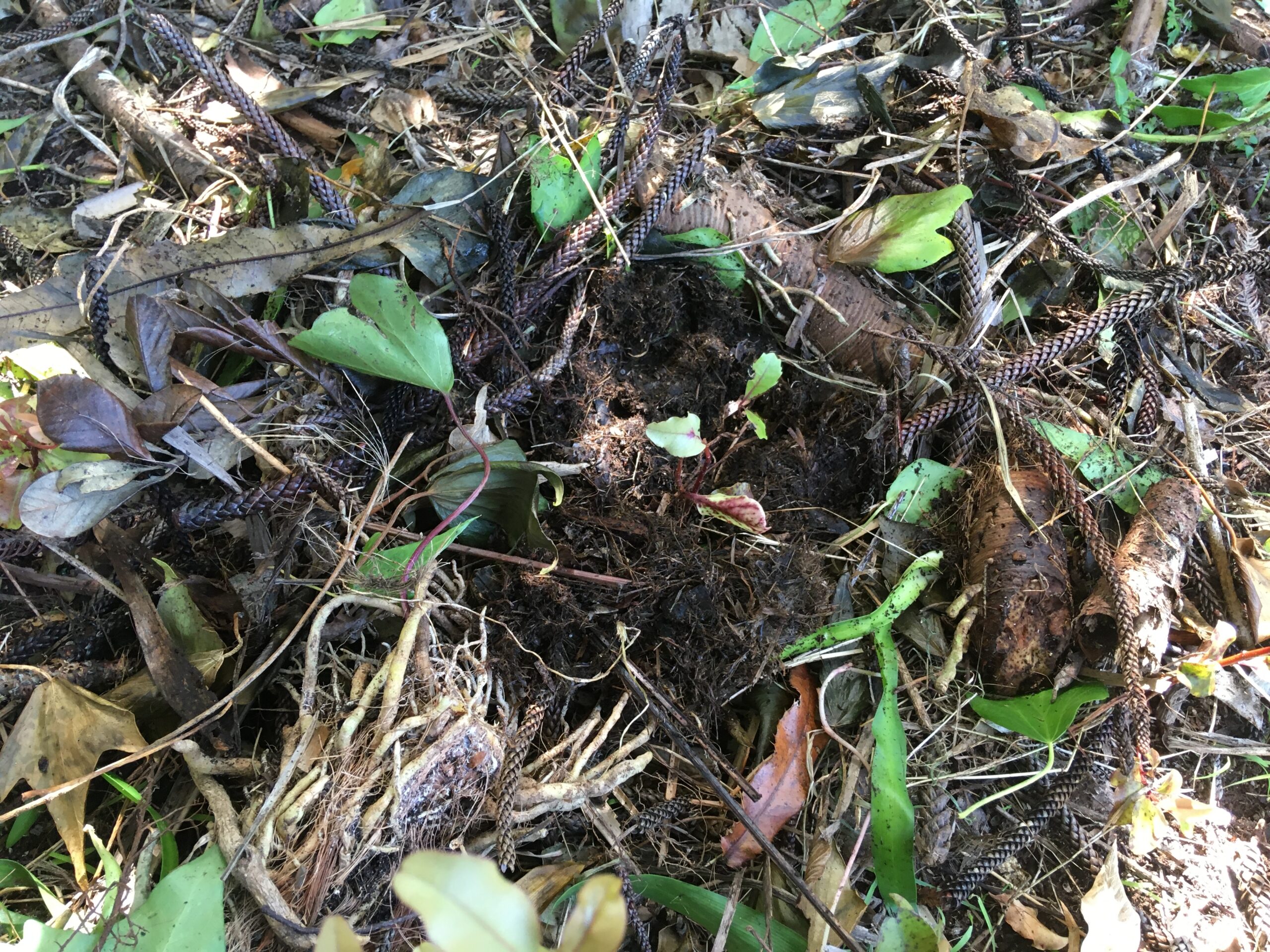
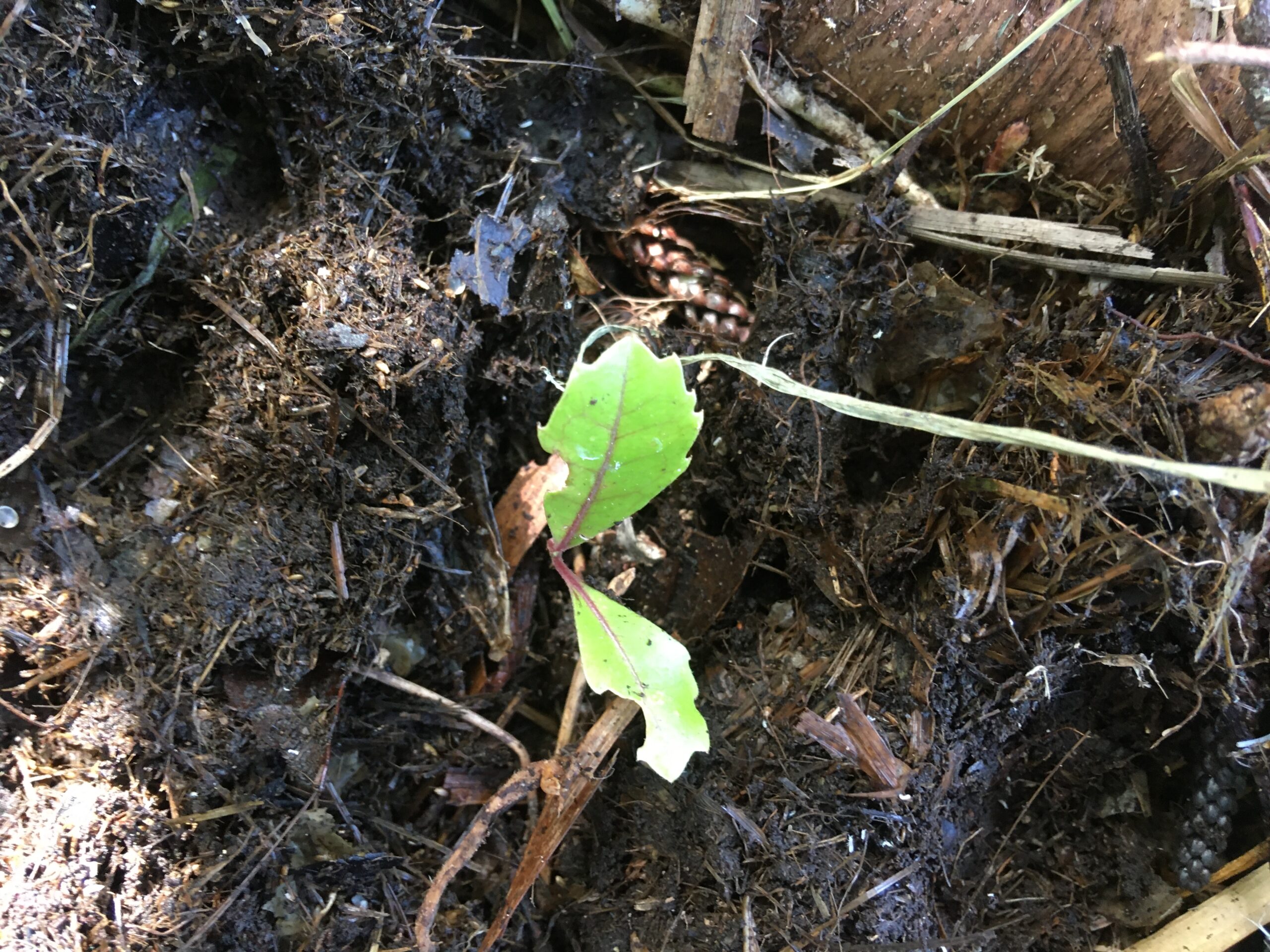
Today we were thrilled to find two wild seedlings of pigeonwood (porokaiwhiri, Hedycarea arborea).
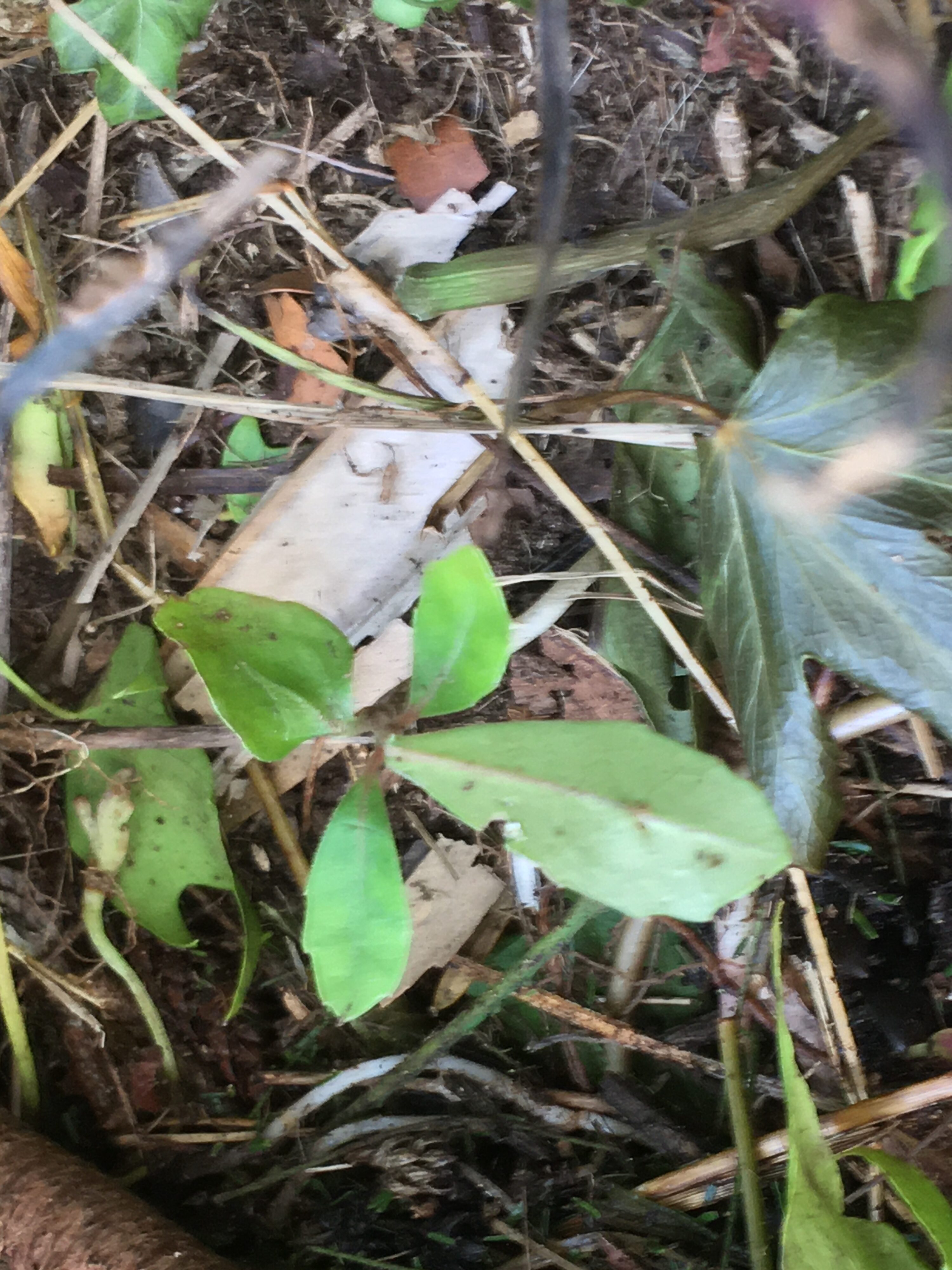
pigeonwood seedling #1 – newly discovered, mulched and protected with uprooted Agapanthus roots and other weedsclose-up of pigeonwood seedling #1pigeonwood seedling #2 – newly discovered, and protected with mulch of Agapanthus roots and ivyclose-up of pigeonwood seedling #2
We have seldom seen pigeonwood outside of forest reserves. These seedlings have appeared in Michelle’s garden under a large Norfolk pine and young totara, with many species of trees and shrubs nearby, including those that attract birds that feed on berries.
There are no pigeonwood in this or neighbouring gardens, so a bird has fed on pigeonwood somewhere else, then come to Michelle’s garden to eat; perhaps the berries of native karamu, mapou or houpara (five-finger), or the exotic (and invasive) cotoneaster, ginger or Mexican fan or bangalow palms.
These two pigeonwood seedlings germinated among ground-covering weeds including Aristea ecklonii (Blue Corn lily), oxalis, ground-runners of ivy, kikuyu and Veldt grass. Fortunately we had suppressed most of these weeds a few months ago, leaving all the loose weed material as a thick mulch to rot those that did not uproot easily.
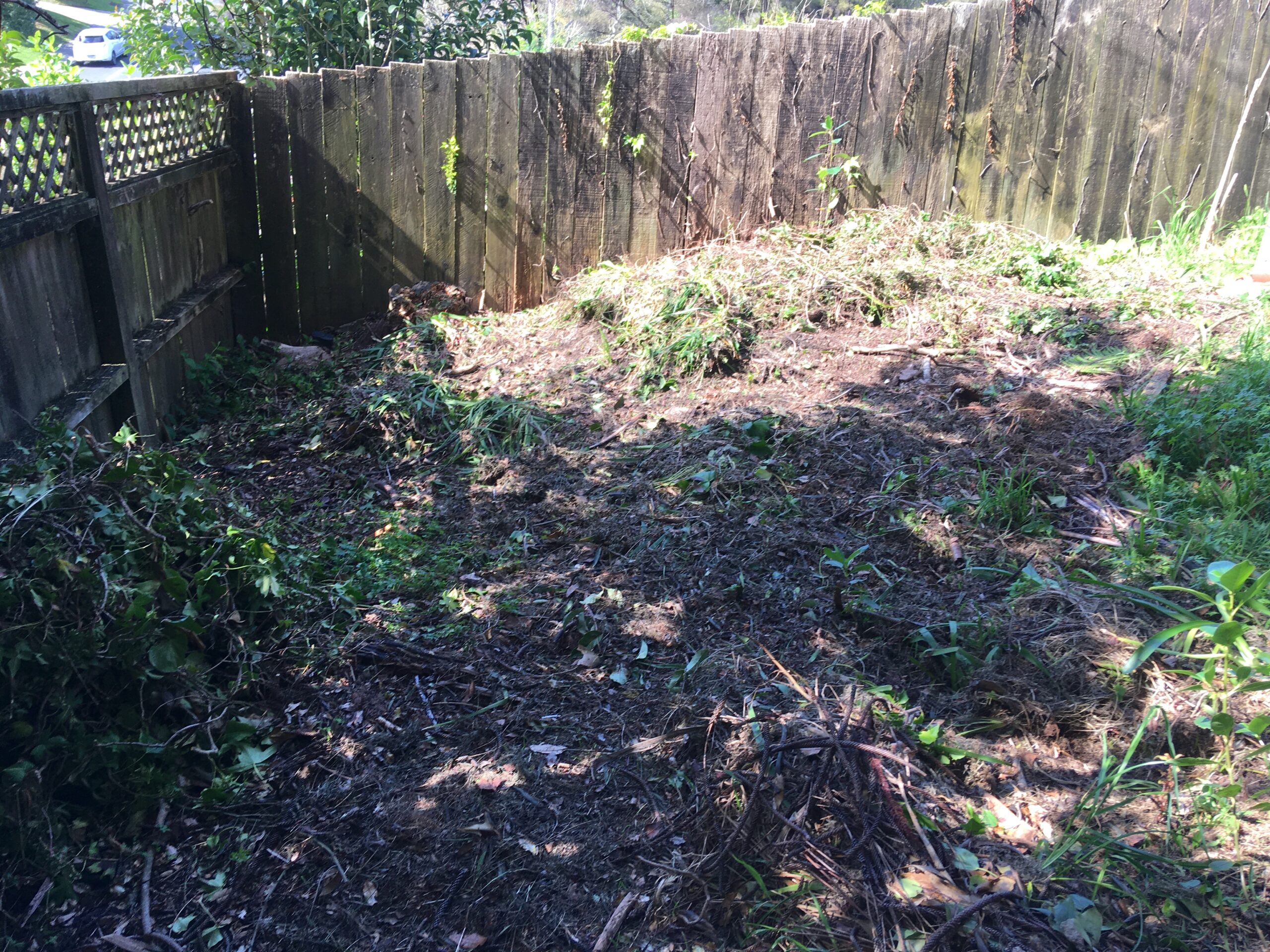
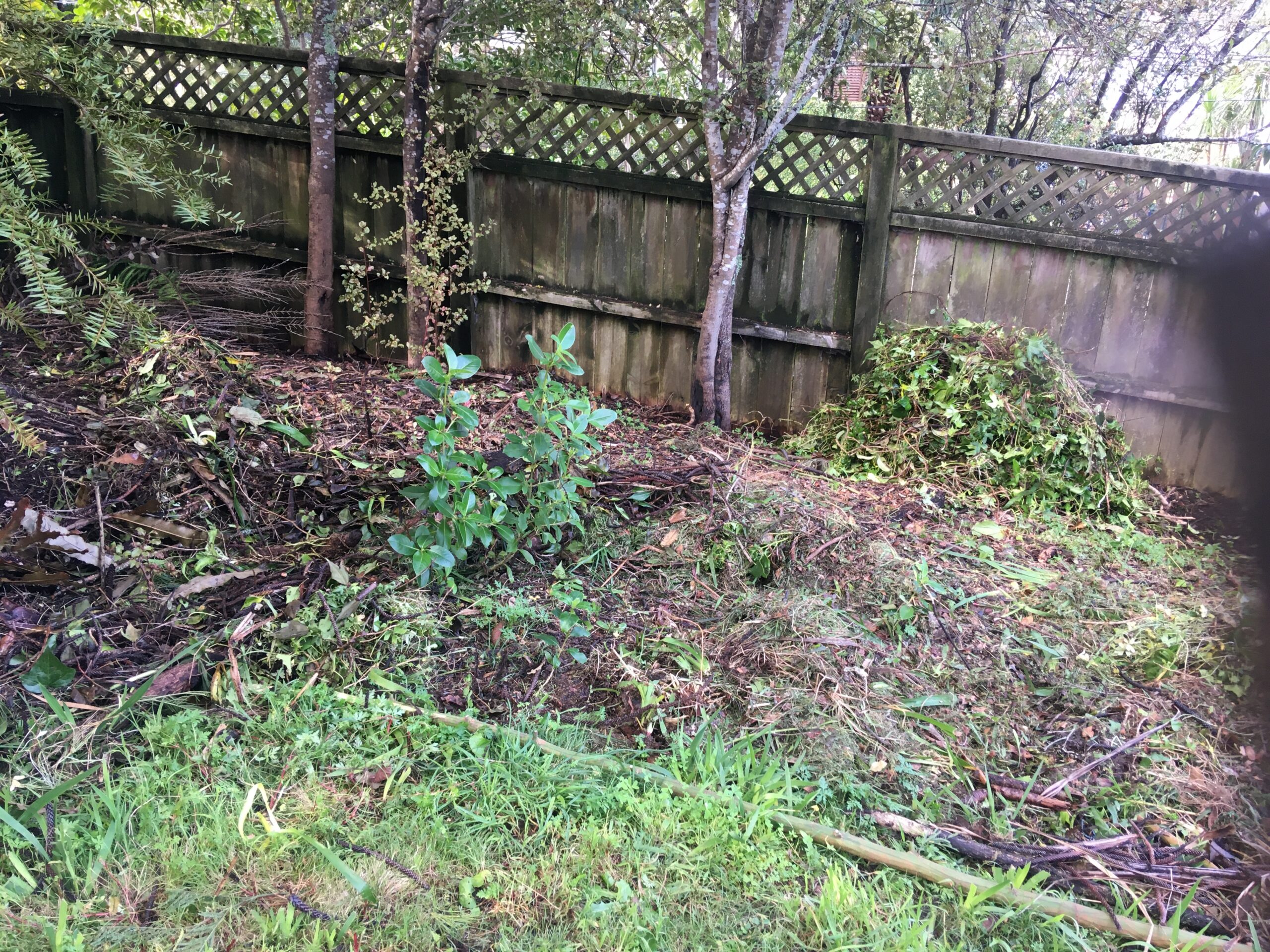
left of centre – the two tallest wild karamu seedlings under the totara and Norfolk pine, with cut ivy piled against the fence
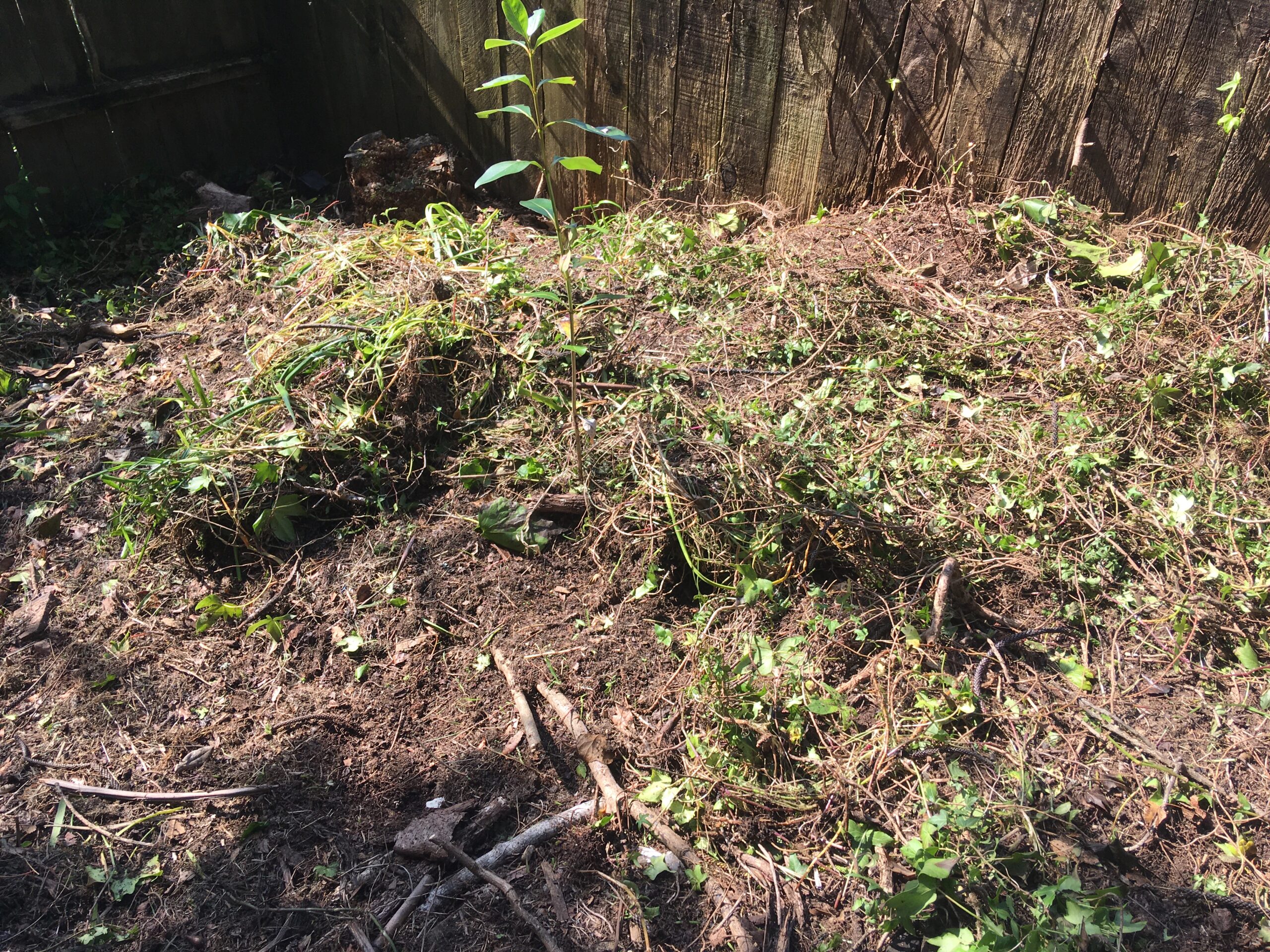
Today we were able to uproot most of the remainder of the weeds, and used the newly pulled weeds to mulch a little more of the lawn’s weedy edge. The soil after weeding is a lovely loose loam, full of composted weeds and lawn clippings, making a seed-bed that will support many more seedlings.
However, the soil surface is drying out fast now the prolonged rainy period is over, so we placed handfuls of weed-material around each of the native seedlings, and shaded small seedlings and bare soil (potential seedbeds) with the woody ivy branches which had been cut and piled over the last few months.
The leaves still hanging from the cut ivy branches provide a scattered partial shade, and the woody branches will keep their shape well into summer, providing a “tent-frame” over which other plant materials can be hung once the ivy leaves fall from their branches.
a karamu seedling found wild elsewhere in the garden has been transplanted here in the rich, friable soil formed from decomposing grass clippings and weeds, and now partially shaded by some cut ivy
Not all seedlings survive, especially outside of the shade and protection of a compatible plant community. We hope to update you on the fate of these two pigeonwood seedlings in a future post.
“Hedycarya arborea, commonly known as pigeonwood, porokaiwhiri, and poporokaiwhiri[1] is an endemic tree of New Zealand. Found on both the North and South islands of the country, the tree grows to a height of 15 metres. The leaves are oval shaped with shallow serrations. Ripe fruits turn red and the plant received its common name back when it was assumed that the New Zealand wood pigeon particularly favoured them, based on observations of the birds eating the fruit. It has since been discovered that the New Zealand wood pigeon does not prefer these berries, and tends to eat them as a ‘famine food’ when better fare is not available”.
Chemical-free weed control for two of our major garden restorations has now been completed and those projects now only need monthly maintenance. This means we will have 8-10 hours a week free for an intensive start to one or two new garden restoration projects where some rapid transformation is needed in addition to the longer term transition to a low-maintenance outdoor environment.
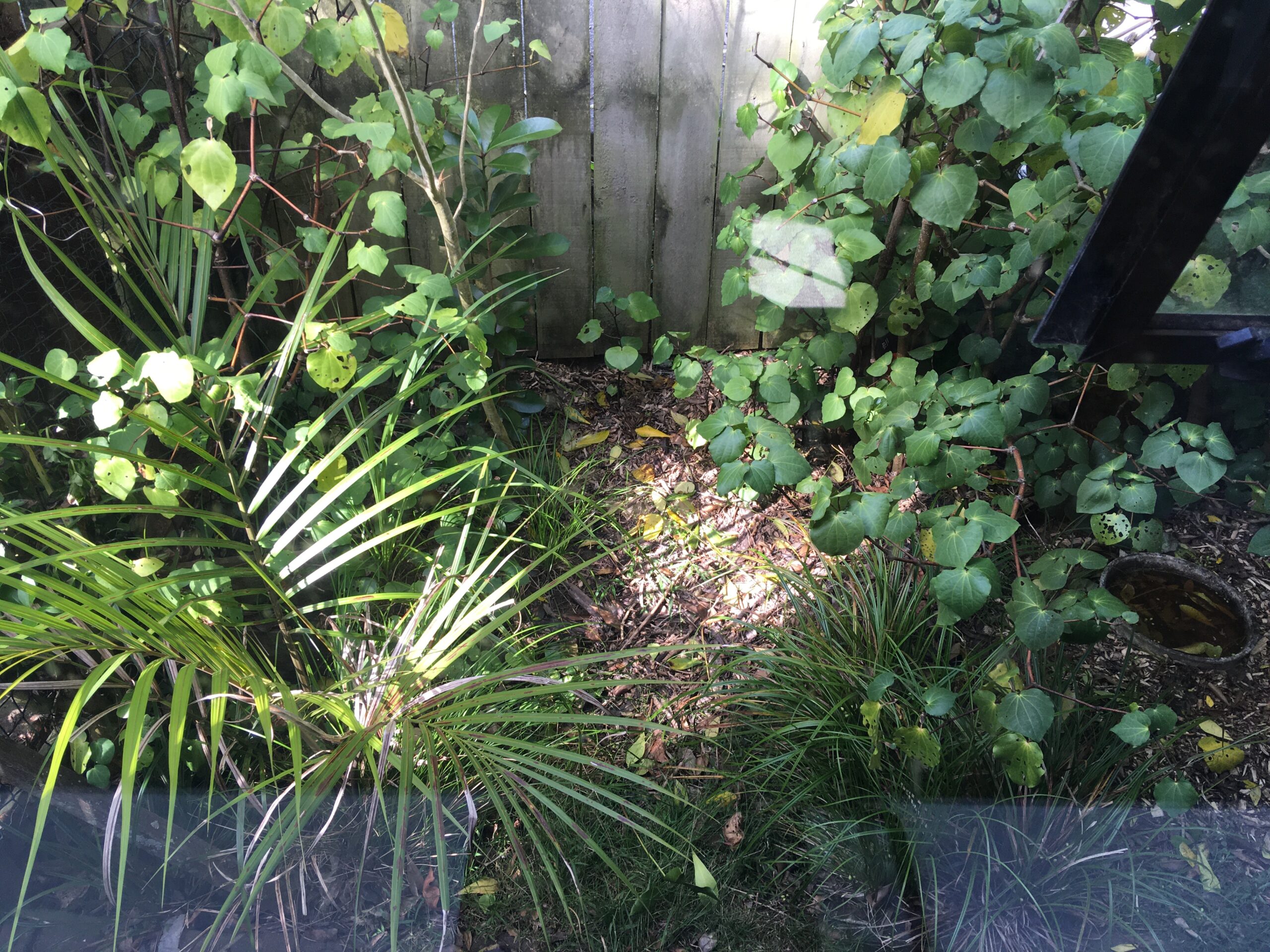
Below: the narrow space between house and fence (1.5m including a paving block path, out of view in the foreground) has been transformed from kikuyu, bare clay and weed trees to native shrubs and trees that need only annual pruning to maintain access along the path directly beneath the windows, from where the residents can watch kereru, tui and songthrushes eating kawakawa fruit in summer.
Foreground left is a nikau, about 10 years old and a metre high. Each year for the next 20 years, one of its 2 or 3 new leaves a year will grow towards the house, obstructing the path, but in this seldom-used area it can be pushed aside, or if necessary tied back or even cut off.
Much later, it will present only a single trunk, and each year two or three of the leaves, canopying the path and surrounding garden from above, will fall to the ground and be carried down the back to add to the natural environment (and invertebrate habitat) under larger trees.
There’s nothing more splendid to watch from your kitchen table than a kereru feasting on nikau fruit an arm’s length away, but if the big leaves are not for you you could skip the nikau and just have karamu, kawakawa and smaller shrubs and groundcovers, such as the sedges (Carex lambertiana) shown here. A couple of seedlings planted here have multiplied themselves by both seed and division, and will continue to spread until they cover the ground without further intervention.
We started this business just before Christmas last year, encouraged by comments from people who have enjoyed watching the progress of Gahnia Grove, the restoration project in Eskdale Reserve which we began in 2018 for pleasure and for our own further research into the most economical way to control weeds and restore the plant communities native to this area.
Our methods of restoring or creating outdoor order and beauty are very different from what is commonly practised commercially.
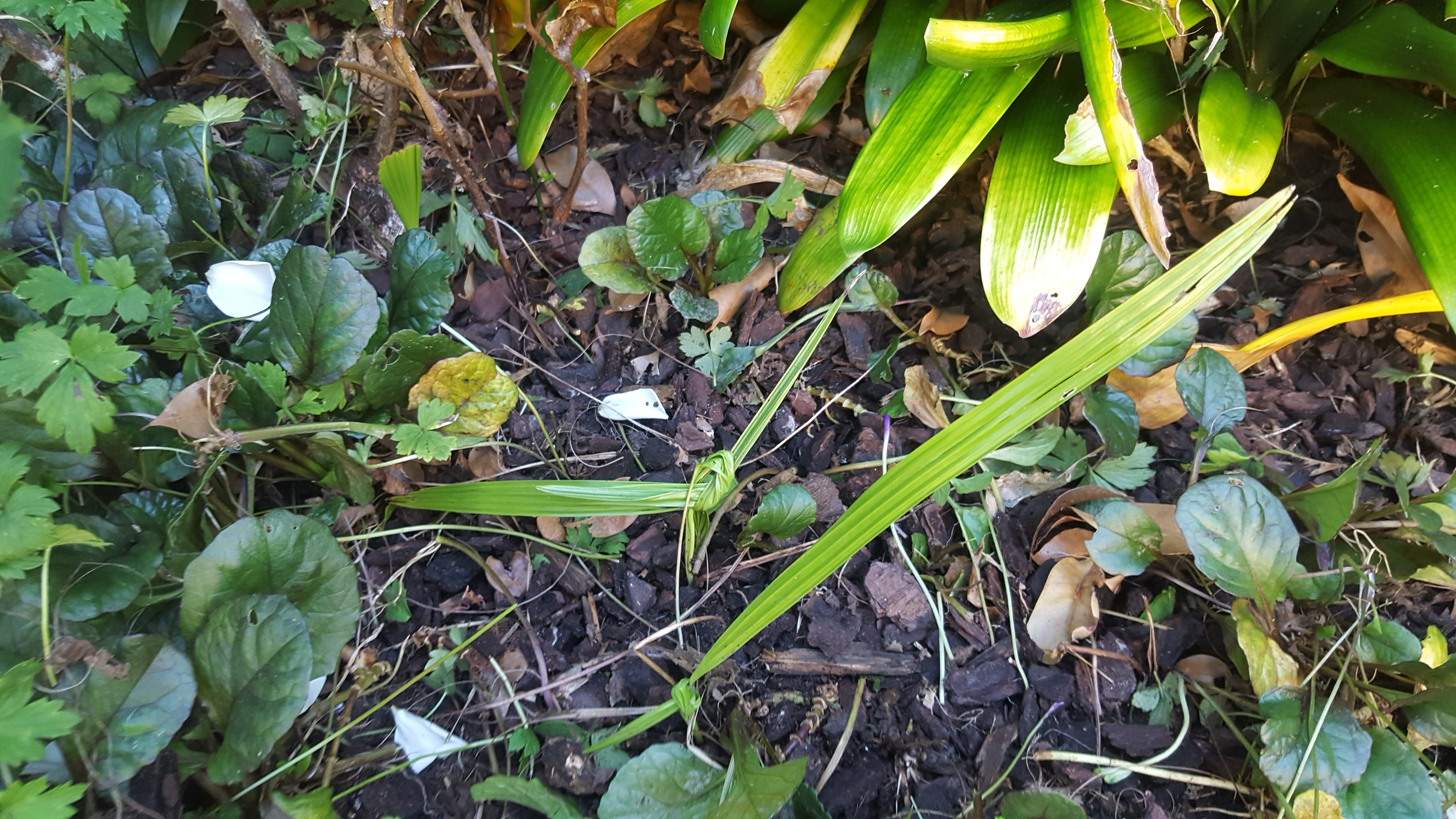
For example, Phoenix palm seedlings quickly become deeply rooted. We never dig them out. The photo below shows two of them, each controlled within seconds by knotting its few leaves.
phoenix palm seedlings knotted
Learn more about what to expect, based on our experience over the year and the feedback of our customers:
North Shore Wilds is an independent landcare and conservation education enterprise owned and operated by Jenny Christianson. Prior to advertising the current services of North Shore Wilds to the public, as a resident she initiated and led two well-known restoration projects on land owned by the public and managed by North Shore City Council until 2009 then by Auckland Council:
1997-2002
Kaipatiki Creek Restoration Project,
Witheford Scenic Reserve and Kaipatiki Esplanade Reserve, Kaipatiki Rd, Glenfield
2018 – ongoing
Gahnia Grove Chemical-free Restoration Methodology Trial Project
Eskdale Reserve, Glenfield Rd, in the neighbourhood of Glenfield, Hillcrest and Birkenhead
Wild revegetation does not disturb existing plant roots or soil, is generally perfectly sited both in terms of its genetic adaptation to the area and the micro-site. Compared to seedlings grown in a loose potting mix, wild seedlings have diverse root structures developed to follow the micro-channnels of moisture, nutrients and sub-surface fungal networks, holding them fast to dense clay and making them resilient to drought. They are also the survivors of the battle to germinate and grow at all, often among hundreds of seeds which failed.
And the first wild regeneration is, naturally enough, largely composed of the “pioneer” species; those that are hardy, resilient and quick-growing, producing the shelter and shade, and eventually a low canopy, for longer-lived and more sensitive species.
Provided for free through handweeding, and needing no transportation or planting, wild seedlings and sporelings are the most cost-effective way to cover an area with a diverse locally-native plant community.
But where there is a large space to fill as quickly as possible, the planting of some larger specimens will definitely hasten the development of full soil coverage — ie shade and protection for wild regeneration, and habitat for critters… and reduce weed reinvasion.
In bare, ie weeded, areas where you can easily dig a trowel-depth for easy planting of a small plant, it can be well worthwhile.
As to a wider variety of suitable plants, you will find lots of suggestions from the people who sell them
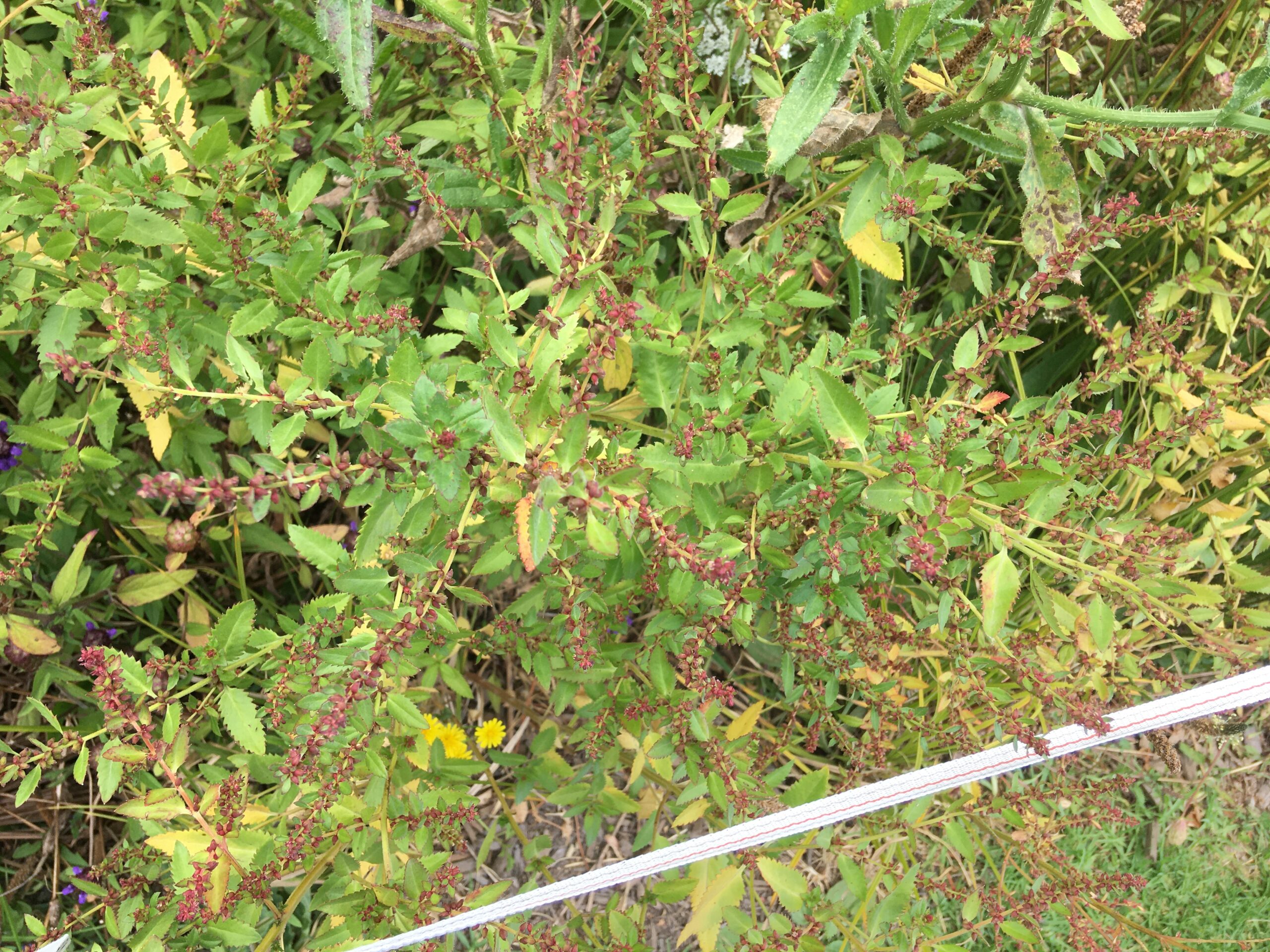
Shrubby toatoa/Haloragis erecta – the busiest volunteer, and the restorationist’s friend
This modest plant was pointed out to me on the Kaipatiki Creek restoration site in 1998 by NZ native nursery pioneer Geoff Davidson : a very quick growing and self-spreading short-live perennial, extremely beneficial in restoration as it provides shelter that nurses wild or planted seedlings.
The bright green foliage is very pretty when bushy and leafy.
It gets leggy in the the first year or two, but can be kept compact with pruning if time permits. The stems are slender, becoming woody after about a year, when they can be snapped off or pruned with secateurs or shears, maintaining their leafiness if wanted, for instance in an ornamental garden border.
The tiny red flowers of toatoa are not obvious, but the bush acquires a reddish colour as the seeds mature.
toatoa seeds almost ready to drop or be collected
An unpruned toatoa bush in full sun in moist soil can grow up to 2 metres high, but they are often kept smaller by the development of surrounding vegetation, and even the well-fed specimens usually die out out after a few years, exposing the native seedlings which by that time will be up to about a metre high, large enough for pioneer species like karamu, manuka or ti kouka (cabbage tree) to look after themselves.
Once you have it in your garden or forest margin, hundreds of seedlings will arise wherever soil is undisturbed under the toatoa plant itself or between other plants, with full or partial light.
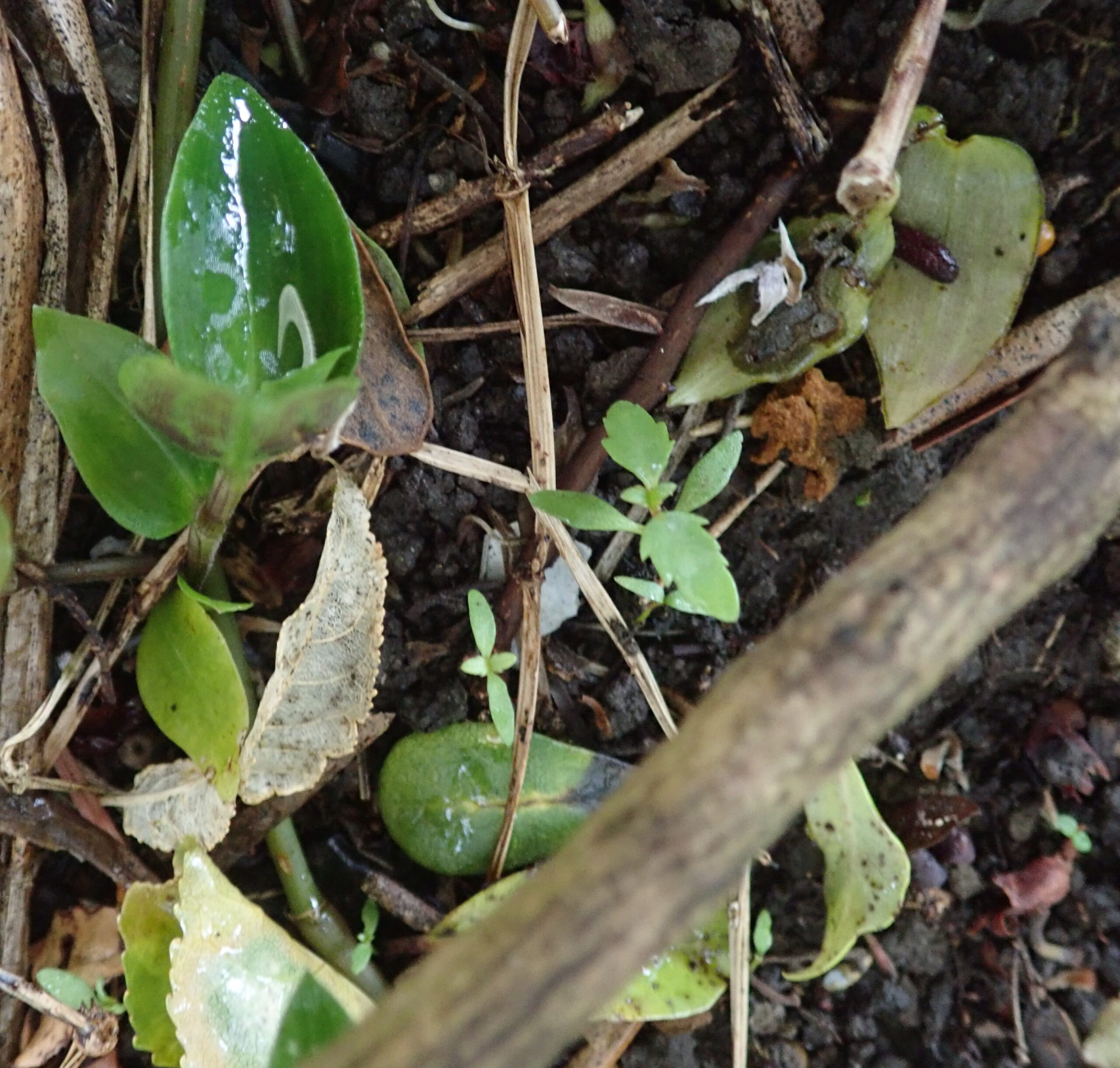
two toatoa seedlings, centre, in Tradescantiaseedlings of Haloragis erecta (shrubby toatoa)
The seedlings are easily transplanted to new areas when small.
We have not noticed – or perhaps not recognised – an adult dragon tree in the Kaipatiki area, and wonder where the birds are getting these seeds? Does anyone know of a mature Dracaena draco (dragon tree) in the Glenfield/Birkdale area?
Of course, the parent tree does not need to be close by, as kereru can fly up to 20km and back to feed. From our own observation, kereru droppings usually contain the undigested portion – eg seeds – from a very recent meal. But maybe dragon tree seeds take a while to be excreted.
Anyway we would be interested to hear if there are dragon trees growing in this neighbourhood…and if so, whether many seedlings are being found in the gardens around them.